

This post in 30 seconds.
- What you'll learn: two ways a walkaround video moves the needle at a dealership: following up internet leads and explaining service work so customers approve it.
- The number: dealers using personalized video report an 81% response rate to their video messages.
- Who this is for: sales managers, service advisors, and dealer principals who want faster replies, fewer declined repairs, and reps who actually send the video.
- Next step: See how VentaVid works. A 15-min walkthrough on your inventory.
Most internet leads don't pick up the phone. They filled out the form, they're interested, and then they go back to scrolling. Your rep leaves a voicemail. Then another. Then an email that reads exactly like the email from the dealership across the street.
A 30-second walkaround video of the actual car they were looking at lands differently. It's personal, it's specific, and it shows up in their texts, not their spam folder.
That's the gap this post covers: how dealerships use video walkarounds as a follow-up tool for internet leads, and how service advisors use the same idea to explain recommended work and get faster approvals.
Walk through both, and you'll have a clear picture of what to say, how long to keep it, and how to get your team to actually do it.
This post is written by the VentaVid team. We build personalized video for sales and service teams who want shorter sales cycles and fewer declined repairs. If you run a BDC or a service drive and the follow-up problem sounds familiar, book a 15-min demo and we'll walk it through on your inventory.
What a dealership walkaround video actually is (and what it isn't)
A walkaround video at its most useful is a short, personalized video sent directly to one customer about one car. That's different from what most people mean when they talk about "dealership video."
Two kinds of video get called "walkaround" in the industry, and they're not the same thing.
The first is an inventory video: an automated recording (sometimes AI-voiced) that lives on your vehicle details page so any shopper browsing your site can see the car move. Useful for the website. Doesn't create a conversation.
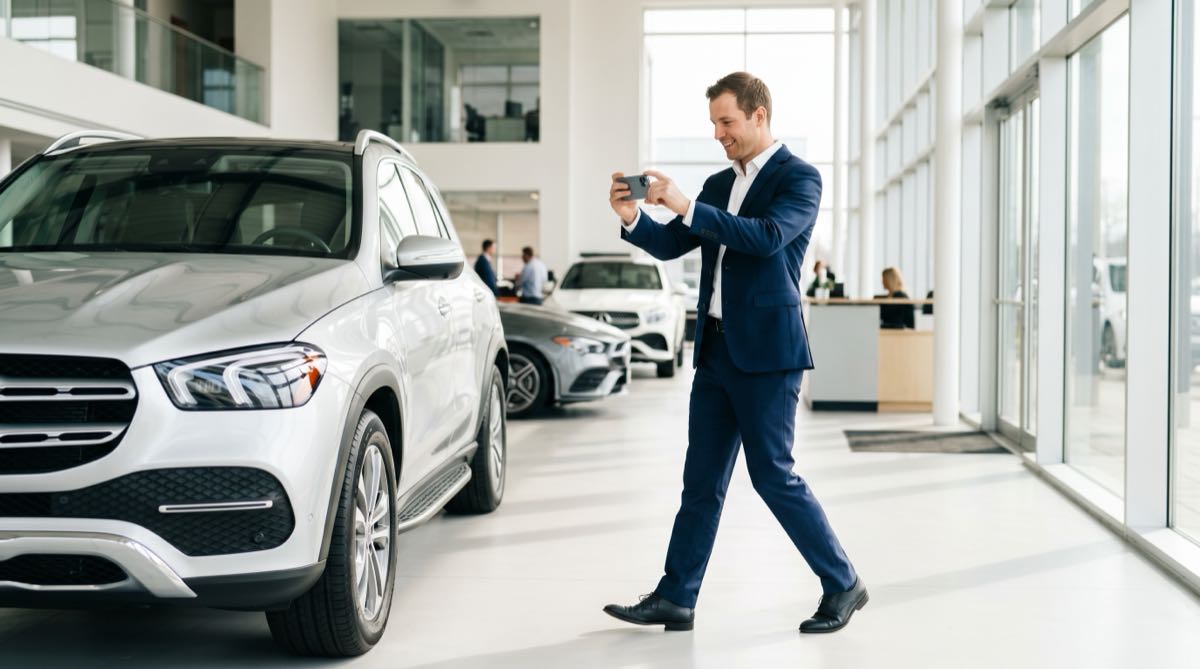
The second is a personalized walkaround: a rep picks up their phone, introduces themselves by name, walks around the specific car the customer enquired about, and sends it directly to that person via SMS, WhatsApp, or email. That's the one that gets replies.
Both have a place. But if your team is only building inventory videos for the VDP and wondering why internet leads aren't converting, they're using the right format for the wrong job.
The same principle extends to service. When a technician shoots a 30-second video of the worn brake pad under a lifted car and sends it to the customer waiting at home, the customer can see exactly why the work is recommended. That's a walkaround, too. Just from a different angle.
For more on how automotive sales and automotive aftersales teams use video differently, start with those pages.
The sales walkaround: follow up an internet lead in under 2 minutes
When 78% of buyers go with whoever responds first, a fourth voicemail is not a follow-up strategy. A 30-second video of their car, in their texts, with their name in the intro, is.
According to industry data on dealership internet sales benchmarks, speed to lead is the single biggest predictor of whether an internet lead converts to an appointment. Responding within five minutes puts you 100x more likely to reach the buyer than responding an hour later. Most dealerships don't get there with a phone call.
A personalized walkaround video closes that gap in a different way. The rep isn't racing to beat an automated system. They're giving the lead something specific to respond to: their car, their face, a clear CTA.
Dealers using personalized video report an 81% response rate to their video messages. That's not a generic email metric. It's replies: customers texting back, booking test drives, asking questions about the car they just watched.
The message itself doesn't need to be elaborate. It needs to be personal and fast. A rep who spends four minutes editing a walkaround will do it twice. A rep who shoots it in 90 seconds and sends it as a link will do it every time.
The interactive page also tells you when the customer watched the video. When your rep sees that notification, they know exactly when to follow up. That's a different conversation than "did you get my voicemail?"
To see how VentaVid turns a recorded video into a trackable, shareable link, read how to turn a video into a link. For the broader case on video software for dealerships, that post compares the main options.
Step by step: how to shoot a walkaround video for a car lead
The reps who stick with video walkarounds are the ones who've made it a 90-second habit, not a production. Here's the sequence that works.
I've watched dozens of dealership sales teams get this right and wrong. The difference is almost always the same thing: the ones who keep doing it have a consistent structure they can run without thinking. The ones who stop improvised every time and burned three minutes per video on setup.
Keep this under 60 seconds total. You're not making a commercial. You're making a reason to reply.
- Step 1: Introduce yourself (10 seconds). Say your name, your dealership, and why you're sending the video. "Hi Sarah, it's James from City Ford. I saw you were looking at the blue F-150 and I wanted to show it to you properly."
- Step 2: Walk the exterior (20 seconds). Start at the front, move to the driver side, the rear, and the passenger side. Keep the camera moving but steady. Don't narrate every panel: point out one or two things specific to what the customer asked about.
- Step 3: Highlight one feature (10 seconds). Whatever they mentioned in the form or enquiry. The sunroof, the tech package, the towing capacity. One specific thing, not a full features list.
- Step 4: Quick interior look (10 seconds). Open the driver door, show the dashboard and seats briefly. If they asked about a specific interior feature, show that.
- Step 5: Clear call to action (5 seconds). "The link below takes you straight to our booking page. Pick a time that works for you and I'll have the car ready."
As for equipment: a smartphone and a steady walk. No gimbal, no ring light, no additional kit for a follow-up walkaround. The personal feel is part of what makes it work. A production-quality recording looks like an inventory video, not a message from a specific person.
Send it on the channel the customer is most likely to check: SMS or WhatsApp typically outperform email for open speed. VentaVid sends via SMS, WhatsApp, or email using the same shareable link, so the rep doesn't need to choose.
The service walkaround: how video gets repairs approved on the drive
"Show me why I need that" is probably the most expensive sentence on the service drive. Most advisors try to answer it over the phone. The customer can't see anything, they say they'll think about it, and the car goes home with the work declined.
A service walkaround flips that. The technician shoots 20-30 seconds of the actual worn part: the brake pad at 2mm, the filter caked with grit, the tyre with visible sidewall damage. They send it to the customer on their phone. The customer watches it on their lunch break and approves the work.
The mechanic doesn't have to wait. The bay doesn't sit blocked. The service advisor doesn't have to make three follow-up calls to get a yes.
Mohsin Haider Darwish, a Suzuki dealer, saw customer approval rates climb from 68% to 88% after implementing VentaVid. Salah Al Rahbi, their Service Manager, reported that parts and labour upselling went from 55% to 91%.
"VentaVid helped us to increase Parts and Labour upselling from 55% to 91%. Customer Approval rates increased from 68% to 88%."
by Salah Al Rahbi, Service Manager, Mohsin Haider Darwish
Those numbers come from one straightforward change: the customer could see the problem instead of just hearing a number over the phone.
For a full breakdown of how to build personalized video into your aftersales workflow, that post covers the MPI and service write-up flow in detail. If you're focused on the fixed ops side, the automotive aftersales videos post and the guide on how to boost repair sales are worth a read next.
VentaVid's service video solution covers the full service-drive flow from inspection to approval.
What a faster reply is worth on your sales floor (the ROI math)
Speed to reply matters because your gross depends on who gets to the appointment. Here's the shape of the math. Plug in your own numbers.
A 30-second walkaround that lands in the customer's texts beats a fourth voicemail. Even two or three extra appointments a month on the same lead count moves real gross. Dealers who have switched lead follow-up to personalized video report a 1.5x faster sales cycle.
Your figures will differ. But the shape of it holds: more replies on the same lead count means more appointments, and more appointments means more vehicles. The marketing spend doesn't change.
Book a 15-min demo and we'll show it on your inventory. We can map the video step into your current follow-up sequence in the same call.
For broader context on measuring what works, the virtual sales strategies post covers the full follow-up playbook.
Why your reps won't do it (and how to fix that)
The #1 barrier to dealership video walkarounds isn't capability. It's compliance. Most sales managers already know this format works. They've seen the numbers. The reps just don't consistently send.
Three things kill adoption:
- It feels slow. If recording and sending a walkaround takes more than 90 seconds, reps will skip it during a busy afternoon. The process has to be fast enough to fit between the email and the phone call.
- There's no accountability. If sending a video is optional, it doesn't happen consistently. Dealerships that mandated video use (with leaderboards and some form of tracking) outperformed opt-in programs, according to a February 2026 report in the Dealership Guy newsletter. Hyundai of Cool Springs saw 87.5% customer engagement after requiring video for every lead within five minutes.
- The rep never sees whether the customer watched. When reps get a "video viewed" notification, the whole dynamic changes. They know when to follow up. They see the results directly. That's the feedback loop that builds the habit.
Eastern Cape Ford is closing 20% of sales where videos are used. Dale Cuthbert, their Sales Manager, put it simply:
"VentaVid helps us build trust and our relationships with customers. Customer responses have been outstanding and has developed a whole new level of confidence in how our salespeople interact with customers."
by Dale Cuthbert, Sales Manager, Eastern Cape Ford
The fix for adoption is usually the same: pick a tool that makes the shoot-to-send loop fast, build in tracking so reps see the payoff, and make it part of the standard process rather than a suggestion.
For ideas on the marketing and outreach side, the automotive marketing tips post covers how video fits into the broader dealership marketing stack. If you want to compare tools, the video software for dealerships roundup is worth a look.
VentaVid's analytics and coaching tools are built specifically to solve the accountability problem. Managers can see which reps are sending videos, how many were watched, and which led to appointments, all in one dashboard.
Frequently asked questions
What is a vehicle walkaround video?
A vehicle walkaround video is a short recording that shows a car's key features from the outside and inside. In a dealership context, it can be either an automated inventory video on your website or a personalized follow-up video sent to a specific customer who enquired about that car. The personalized version is the one that drives replies and appointments.
How long should a car dealership walkaround video be?
For a personalized lead follow-up walkaround, aim for 45-90 seconds. Long enough to introduce yourself, show the car's relevant features, and include a clear call to action. For a service inspection video explaining recommended work, 20-30 seconds showing the specific worn part is usually enough. Shorter than you think.
Do I need special equipment to shoot a walkaround video?
No. A smartphone is enough for a personalized follow-up walkaround. Walk steadily, keep the camera at a natural height, and make sure the lighting is reasonable. A phone stabilizer helps for longer inventory videos on the website, but for a quick lead follow-up video, a steady hand works fine.
What should I say in a dealership walkaround video?
Introduce yourself and your dealership by name, reference the specific car the customer enquired about, walk the exterior and one or two features they asked about, and end with a clear action: "Book a test drive using the link below." Keep it under 90 seconds. Don't try to cover everything about the vehicle. Your goal is to get a reply, not replace the test drive.
How is a personalized walkaround different from an inventory video on my website?
An inventory video is automated and lives on the vehicle details page for any shopper to view. A personalized walkaround is shot by a rep, addressed to one specific customer, and sent directly to them via SMS, WhatsApp, or email. The inventory video is a brochure; the personalized walkaround is a conversation. They serve different purposes and get very different response rates.
Can I use walkaround videos for service, not just sales?
Yes. A service walkaround (or video MPI) is a short video of the specific repair being recommended: the worn part, the issue, the reason the technician is flagging it. The customer watches it on their phone and can approve the work without coming back to the dealership. Service teams using video inspections consistently see faster approval rates and fewer declined repairs.
How do I know if the customer watched the video?
With a platform like VentaVid, the video is delivered as an interactive page link. When the customer opens it, the rep gets a real-time notification: who watched it, when, and how much of the video they saw. That "viewed" notification is the prompt to follow up. Compare that to a YouTube link sent in a text, which gives you no visibility at all. See VentaVid pricing to compare what's included at each plan level.
Talk to us
If you run sales or service at a dealership and you're losing deals to slow follow-up or declined work, a 15-minute demo is the fastest way to see what video changes.
What it takes to start.
- 7-day free trial, no credit card required. Shoot and send real videos before you commit.
- No editing skills needed. Your reps use the phone they already carry.
- We'll show it on your own inventory on the call. Not a generic demo.
The VentaVid team builds personalized video for sales and service teams.