

This post in 30 seconds.
- What you'll learn: how the full automotive video messaging workflow runs, from a 30-second recording on a rep's phone to the customer opening the link on theirs.
- The key number: according to CDK's 2026 Friction Points Study, dealers using personalized video achieve an 81% lead-to-contact rate and sell twice as many cars as those who don't.
- Who this is for: sales managers, BDC managers, and service managers at car dealerships who want a better response rate than a fourth voicemail can deliver.
Most internet leads fill out a form and then go quiet. The rep calls twice, sends a follow-up email, leaves a voicemail, and the customer never responds. Three days later, they've bought from the dealer down the road.
The problem isn't the lead. The problem is that your follow-up looks identical to every other dealer's follow-up. Automotive video messaging changes that by putting the rep's face and the customer's name into the message, and by letting the rep know the exact moment the customer opens it.
If you run sales or a BDC at a dealership and you're watching internet leads go dark after the first contact, send one video message before your next voicemail. Book a 15-min demo and we'll walk through what that looks like on your own inventory.
In this post:
- What automotive video messaging actually is
- Why dealership follow-up keeps failing
- The shoot-to-send workflow: what actually happens
- Video messaging on the service drive
- What makes it work (and what kills adoption)
- ROI math: what a better response rate is worth
- The right tool for automotive video messaging
How this workflow was built
The steps in this guide come from one place: real implementation work with dealership sales and service teams using personalized video, not from reading other people's blog posts.
For the workflow section, I documented the actual loop: a rep opens the app on their phone, records a 30-second walkaround of the vehicle a customer inquired about, sends it via SMS to that customer's phone, and waits for the view notification. Where I describe a step, it reflects how teams actually run this on the floor. Where the workflow differs at your store (different CRM, different channel mix), the steps are the same but the screens won't match.
No result I describe was fabricated. Where a VentaVid stat appears in this post, it's one of our confirmed figures. Where I cite an industry figure, it carries a source.
What automotive video messaging actually is
Automotive video messaging is a 1:1 communication method where a dealership rep records a short video specifically for one customer and sends it as a personal message, not as a marketing broadcast. It's not a YouTube ad. It's not an inventory video on the website. It's the sales rep recording a 30-second walkthrough of the exact vehicle the customer asked about, saying the customer's name in the opener, and sending it directly to that customer's phone.
What separates automotive video messaging from just "texting a video" is what the platform adds around it. In a dedicated platform, the video becomes a branded interactive page: the customer clicks one link and arrives at a page with the video playing, plus buttons to book an appointment, reply with a question, or approve work. That page also tracks opens, so the rep knows when to follow up.
According to CDK's 2026 Friction Points Study, 72% of dealership sales teams already use video in some form. The gap isn't awareness. It's between teams who send a generic inventory video and teams who send a personalized message to one specific customer, and the results reflect it.
The automotive sales teams seeing the biggest response-rate improvements are using the second approach.
Why dealership follow-up keeps failing (and where video changes it)
The fourth voicemail is not a strategy. Neither is the third "just checking in" email that lands between two newsletters the customer didn't subscribe to. Dealership follow-up has a structural problem. Every lead in the CRM gets the same sequence: call, voicemail, email, voicemail, email. The rep is following the process. The customer is ignoring it because the messages look like what every other dealership sent.
Industry data shows that 78% of buyers purchase from whoever responds first. The race isn't won by the fifth attempt. It's won by whoever sends something that gets a response on attempt one or two.
When a customer receives a 30-second video of the exact car they inquired about, with the rep saying their name in the first three words, the message does something a generic email can't: it makes the rep a real person before the customer has set foot in the showroom. Trust before the first handshake.
CDK's 2026 study found that dealers using video in their sales process reach an 81% lead-to-contact rate and sell twice as many cars as those who don't. The comparison group, dealers relying on calls and emails alone, is the control most stores are still running.
Video software for dealerships has moved from a differentiator to a baseline expectation at the top-performing stores.
The shoot-to-send workflow: what actually happens
The full loop: shoot, send, notify, call. Most guides describe the first two steps and stop there. The third step is where the response rate actually changes. Here's how a rep runs a video message from start to reply:
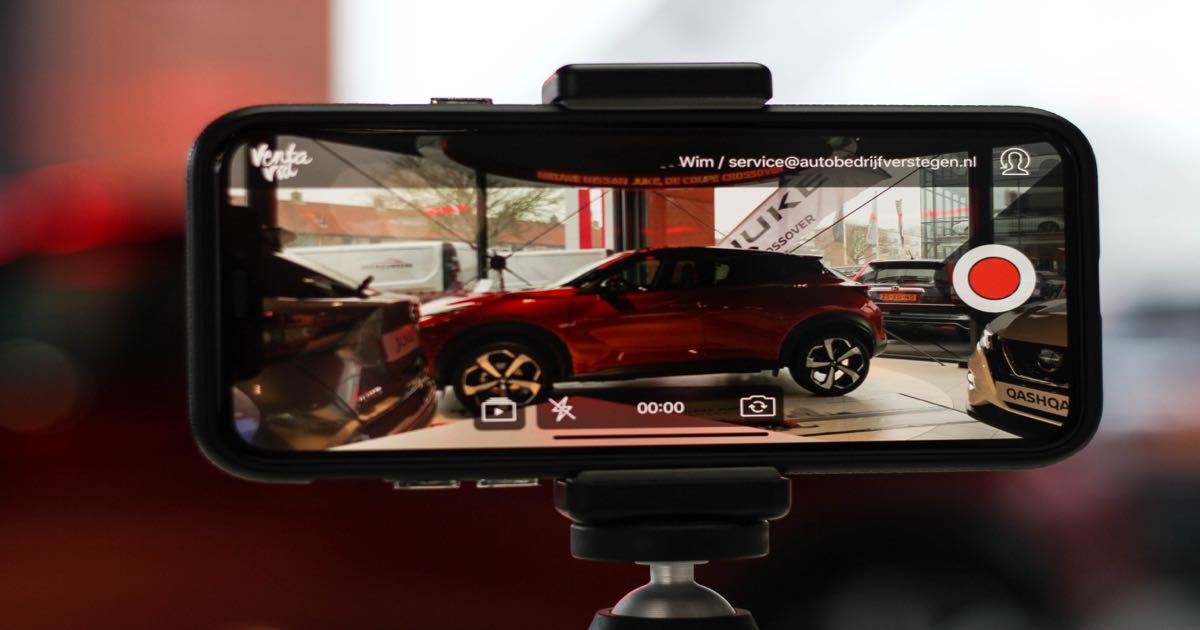
Step 1: Record. The rep opens the app on their phone while they're still at the car. Sixty seconds max. They say the customer's name, walk around the exterior, and point out the specific feature the customer asked about. No editing. No studio. Most reps are comfortable with this routine within a week.
Step 2: The page builds. When the rep hits send, the platform turns the video into a branded landing page. The customer gets a link, not a video file. The page has the dealership's branding, the rep's photo, and call-to-action buttons: book an appointment, send a message, or in service cases, approve the work.
Step 3: Share on the right channel. The rep sends the link via SMS, WhatsApp, or email, depending on how the customer first reached out. Send where they already are. SMS if they texted, WhatsApp if they WhatsApped.
Step 4: The view notification fires. This is the step most guides don't cover. The moment the customer opens the video, the rep's phone gets a real-time alert. The customer is watching right now.
Step 5: The rep calls. Not 20 minutes later. Now. Call when the customer is literally looking at the car, and you have a different conversation than voicemail number four would start.
VentaVid's sharing channels work across SMS, WhatsApp, and email. The view notification is real-time. Those two mechanics together are why personalized video messaging achieves different response rates than a text with a photo attached.
Want to see the workflow on your own inventory? Book a 15-min demo and we'll run through it live.
Video messaging on the service drive
Declined service work doesn't just mean a lost sale. It means the bay sat empty, the technician's time went unbilled, and the car leaves with a problem that becomes a complaint. When a service advisor calls a customer to recommend a rear brake job, the customer hears a number. Without visual proof, a lot of them say no. They don't get a second opinion. They just don't come back.
A 40-second video of the actual worn brake pad, shot by the technician while the car is on the lift, changes the conversation. The customer watches from wherever they are. They can see the problem. The "show me why I need that" objection becomes unnecessary before it's even raised.
The interactive page lets customers approve the work, ask a question, or book a follow-up appointment directly from the video link, without calling back or waiting on hold. VentaVid reports that 85% of service videos are viewed within 15 minutes of being sent.
Mohsin Haider Darwish lifted parts and labour upselling from 55% to 91% with VentaVid, and customer approval rates from 68% to 88%. That's the service-drive version of what the view notification does for sales: it replaces a guess with a moment of real transparency, and customers approve work they can see.
If this is your use case, VentaVid's aftersales platform covers the workflow in depth. The guide on building personalized video into your aftersales workflow covers practical rollout steps for service teams.
What makes automotive video messaging work (and what kills adoption)
The tool your reps won't use doesn't generate results. Adoption is the hidden variable behind every failed video-messaging rollout.
What works:
- Short videos. Under 90 seconds, closer to 30-60. The goal is a conversation starter, not a presentation. If the rep is still talking at 90 seconds, they've lost the customer.
- The customer's name in the first five words. "Hey Sarah, this is Marcus at [Dealership]..." takes two seconds and does more for engagement than anything else in the message.
- The specific vehicle or repair. Don't send a generic walkaround of a car they didn't inquire about. Point the camera at the actual vehicle on the lot, or the actual worn part on the lift.
- Sending on the right channel. A video link sent by email to someone who only checks WhatsApp will not get watched.
What kills adoption:
- Tools that require editing. If the rep has to do anything to the video after shooting it, most reps won't do it. The workflow has to be: shoot, tap send, done.
- Tools that only work on one channel. A platform that only sends via email, when 40% of your leads come in over SMS, is leaving responses on the table.
- No view notification. Without knowing when the customer opened the video, the rep treats follow-up like any other cold outreach. The notification is what makes the timing work.
Virtual sales strategies for car dealerships covers the broader digital-first playbook for teams building a multi-channel sales process.
ROI math: what a better response rate is worth
The math here is simpler than most vendors make it. It's not about video views. It's about conversations that wouldn't have happened otherwise.
These are illustrative numbers. Plug in your own.
VentaVid users report a 1.5x faster sales cycle with personalized video. On the same lead count, faster cycles mean more closed deals per month without increasing ad spend. The send volume doesn't change. The response rate does.
Book a 15-min demo and we'll show what this looks like on your actual monthly lead count.
The right tool for automotive video messaging
Not every video tool is built for a dealership sales floor. The gap between a general video email tool and an automotive-specific platform shows up in the three places that matter most: the interactive page, the channel mix, and the view notification.
General tools like BombBomb and Vidyard work for video email. If email is your only channel, they do the job. What they don't have is the interactive page (where the customer can book, approve, or pay without calling back) or the real-time view notification that tells the rep when to pick up the phone. For automotive, those two gaps cost appointments.
VentaVid is built for automotive sales and service teams. Reps shoot in-app on their phone, the platform builds a branded interactive page, and the link goes out via SMS, WhatsApp, or email with one tap. The view notification fires in real time. The analytics dashboard shows which reps are using it, who's watching, and how long. There's a coaching layer for managers who want to improve rep consistency.
VentaVid works across automotive marketing, sales, and service. The 7-day free trial means your team can send real videos to real customers before committing.
Covideo is the most established name in the US market. If you run a large dealer group with a BDC-heavy operation and most of your outreach is email-first, it's worth evaluating. Rated 4.8/5 on G2 across 100+ reviews. The reported limitations are template customization and billing practices, so read the terms before signing.
CitNOW is strong in the UK and EU market, particularly for service. If your business is EU-based or heavily fixed-ops focused, it's a common alternative to evaluate.
TradePending Video is a newer US-focused entrant. The sales workflow is similar but the interactive page and service-drive features are less mature.
"VentaVid helps us to connect more with (potential) customers through personal videos. The platform is stable and has beautiful, personal templates."
by Daniel Wexler, Branch Manager, Pinetown Audi
For the mechanics of turning a video into a shareable tracked link, the guide on how to turn a video into a link covers this in full.
Frequently asked questions
What is automotive video messaging?
Automotive video messaging is when a dealership sales rep or service advisor records a short, personalized video for a specific customer and sends it directly via SMS, WhatsApp, or email. Unlike a generic marketing video, this is a 1:1 message: the rep uses the customer's name, references the specific vehicle or repair, and sends a link that opens as a branded interactive page with action buttons.
How do car dealerships send video messages to customers?
Most dedicated platforms work the same way: the rep records a video in-app on their phone, the platform builds a branded page around it, and the rep taps to send the link via SMS, WhatsApp, or email. The customer receives one link, clicks it, and watches the video on a page with booking and approval buttons. No app install required on the customer's side.
Does video messaging work for the service department, not just sales?
Yes, often better on the service side because the use case is direct: a customer can't approve work they can't see. A 40-second video of the worn part or the actual repair closes the "show me why I need that" objection before the customer declines over the phone. VentaVid's aftersales platform is built specifically for this workflow.
How long should a dealership video message be?
30 to 60 seconds for most sales messages. Under 90 seconds for a detailed service explanation. The goal is a conversation starter. If the rep covers the opener, the specific vehicle or repair, and a clear next step, 45 seconds is usually enough. The customer will ask for more detail on the call.
What channel should I send the video on: SMS, WhatsApp, or email?
Send on the channel the customer used to contact you. If they texted, send via SMS. If they came in via WhatsApp, send via WhatsApp. Sending a video email to someone who only checks text messages means the video never gets watched. VentaVid's sharing feature lets reps choose the channel with one tap.
How do I know if the customer actually watched the video?
A dedicated automotive video platform sends the rep a real-time notification the moment the customer opens the video. This is the feature most generic video email tools don't have. On VentaVid, the "video seen" alert fires immediately, so the rep can call back while the customer is watching, not 20 minutes later.
Can my reps do this without video production experience?
Yes. The videos that perform best in automotive look like a real person shot them on a phone in a showroom, not a polished ad. Reps with zero production background do well because the authenticity is the point. Most teams are comfortable with the workflow within a week. No editing, no special equipment beyond the phone they carry.
Talk to us
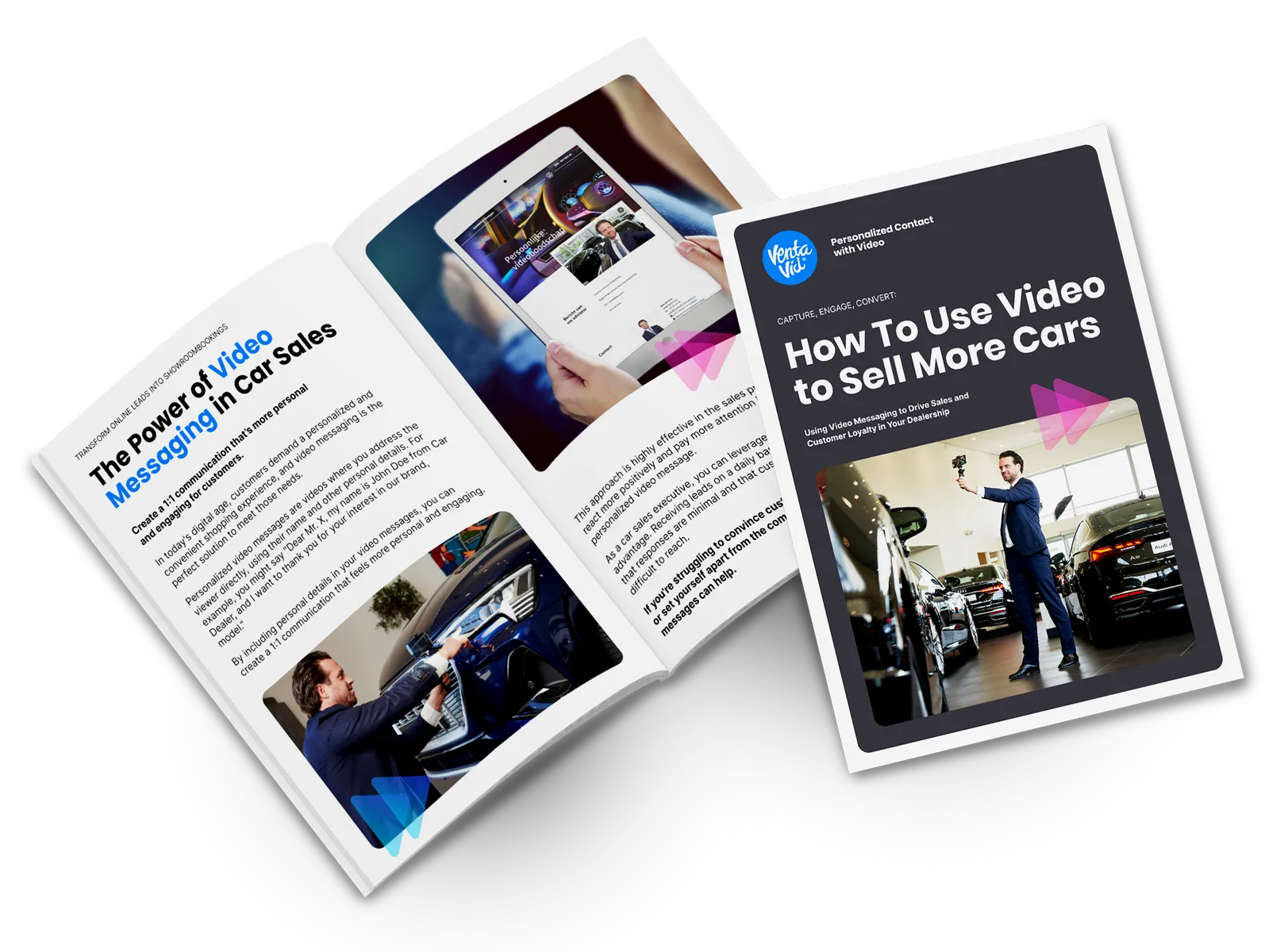
If you run a sales team or service drive at a dealership and your follow-up is getting ignored, a 15-minute demo is the fastest way to see what video messaging changes on your own inventory.
What it takes to start.
- 7-day free trial, no credit card required.
- No editing skills needed. Your reps shoot on the phone they already carry.
- We'll show it on your own inventory on the call.
The VentaVid team builds personalized video for sales and service teams so they can sell and service more with a human face.