

This post in 30 seconds.
- A pre-visit assessment is a short, guided visual capture the customer completes before anyone drives out, so the job is understood before it is allocated.
- Field service first-time fix rates sit at a median of 75%, with the top fifth of companies at 86% and the bottom fifth at 53%. Most of that spread is preparation, not talent.
- Written for planners, dispatch managers, and operations leads whose board is a wall of one-line tickets.
The work order says "unit not heating." Four words. From those four words a planner has to pick a technician, guess at parts, and block out a slot that half the route depends on.
Sometimes the guess lands. When it doesn't, the technician spends twenty minutes diagnosing something the customer could have shown in ninety seconds, then leaves to order a part and books a return visit that nobody wanted.
If you run dispatch for a field service team, a pre-visit assessment is the step that closes that gap. The visit still happens. It just leaves the yard knowing what it is walking into.
This one is written for planners and service managers whose first-time fix number has been flat for two years and whose call notes still arrive as a single sentence. Nothing below asks you to cancel visits, only to ask what you could see before one leaves. If you would rather test the mechanic than read about it, start a free account and build one capture flow.
What a pre-visit assessment is, and what it isn't
A pre-visit assessment is a structured look at the job before the job is allocated. The customer, tenant, or site contact records what an expert would want to see, guided step by step, and someone qualified reviews it before the board is set.
Five steps, in order:
- Report. The customer raises a fault, a booking, or an installation request.
- Capture. They complete a guided visual capture on their own phone, at their own convenience.
- Review. Someone qualified looks at the footage and the answers remotely.
- Prepare. Skills, parts, duration, and priority get decided from evidence rather than a description.
- Visit. Physical attendance happens where it is needed, with the right van and the right person.
That fifth step is the one people misread. Remote-first, not remote-only: the promise is narrower and more useful than eliminating visits, which is to see first, act second, and send the remaining vans out better informed.
Buyers use other names for the same step. Software vendors tend to call it pre-dispatch triage, and some support teams call it remote visual triage, because the reviewer looks at footage instead of reading a ticket. This post sticks with pre-visit assessment for one reason: triage implies a fault call, and the step is just as useful for installations and site readiness checks, where there is nothing broken yet and the question is whether the site is ready for the crew.
The room for that is large. In Aquant's 2025 Field Service Benchmark Report, built from 21 million service events across 157 organisations, the median first-time fix rate measured at 30 days is 75%.
The top fifth of companies hit 86%, the bottom fifth sit at 53%. That is a 33-point spread between companies fixing the same kinds of equipment, and very little of it is technician skill.
One more thing worth saying plainly. When I went looking for what "pre-visit assessment" means in field service, the search results were healthcare appointment-prep templates and aptitude tests for hiring technicians.
The operational step barely exists as written-down practice, and most teams still treat the first site visit as the assessment. The same idea is already routine in other queues, including the digital service intake flow a dealership runs on its service lane.
Why technicians arrive blind
Not because anyone is careless. Because of what happens to information as it travels.
- The customer describes a fault in the words they have, which are rarely the words an engineer needs.
- A call agent compresses that description into a ticket field, usually one line, often while the customer is still talking.
- The planner allocates from the compressed version, adding assumptions about duration and skill.
- The technician interprets the allocation on arrival and finds something adjacent to what the ticket promised.
By the time a four-word work order reaches the van, three people have translated a problem none of them could see. That is the whole failure, and it happens before anyone has done anything wrong.
Look at what dispatch is actually being asked to decide from that one line:
The cost of guessing wrong, which is what dispatch without any pre-dispatch triage amounts to, shows up in two places. The first is the customer.
In a Fortune report on a ServiceMax survey of 4,122 US and UK adults, more than three-quarters of people who were unhappy with a recent service experience named the same reason: the problem wasn't fixed on the first visit. It was twice as common as the next complaint.
The second is the P&L. Smarty's cost analysis of truck rolls puts the commonly cited range at $150 to $500 per roll, notes that TSIA models the fully loaded cost closer to $1,000, and works its own example out at $292.51. Whichever figure fits your fleet, a second visit is a full-price visit that produced no new revenue.
The pre-visit capture step, in practice
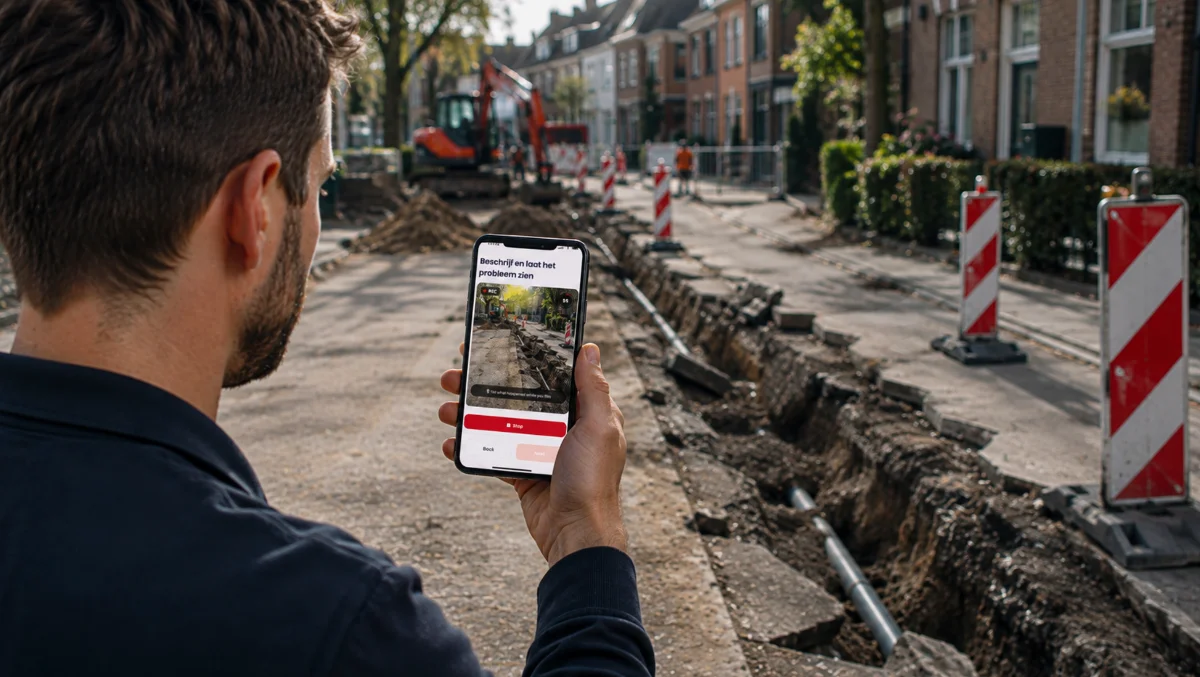
This is where Venta Capture, a product of VentaVid, fits into a dispatch process. It is guided visual capture for field service teams: the customer records on their own phone, in the mobile browser, with no app to install and no account to create.
Three steps, and none of them need an appointment.
- Send the link. At the moment the job is reported or the booking is confirmed, by SMS, email, WhatsApp, or a QR code. Nothing to download.
- They capture, guided. Step by step: the installation, the fault area, the display or error code, the surroundings, the access route. Conditional questions branch based on what they answer.
- The case lands in a shared inbox. Video, photos, typed answers, a transcript of what they said out loud, and timestamps, together as one case rather than eight loose attachments in an email thread.
The asynchronous part matters more than the remote part. Remote visual triage over a live video call still needs two people free at the same moment; here nobody has to be on the other end of the camera. The customer captures at nine in the evening when the machine is off, and your planner reviews it at seven the next morning while the board is still quiet.
Five hundred customers can capture at once without five hundred appointments.
What gets asked is your decision, not theirs. In the flow builder you turn your best engineer's mental checklist into the sequence the customer walks through, so the information you would have phoned back for arrives the first time. If a step comes back unusable, you request a retake instead of sending someone.
Venta Capture reports that 4 out of 5 issues are handled and closed the same day on the platform, a figure published on its customer support page. Read it as what better visual access to a queue makes possible, not as a promise about yours.
The tool doesn't diagnose anything. It gives the person with the expertise something to look at before they commit a van to it.
There is an evidence layer underneath as well. Each submission is sealed on receipt with a server-side receipt time and a hash, which is useful later in a dispute about what the site looked like. Worth being precise about what that proves: the timestamp proves when the submission arrived, not when the fault occurred.

Site readiness and pre-installation capture
Installations fail differently from repairs. The van arrives, the equipment is on it, and the room isn't ready. The old unit is still plumbed in, the access route is blocked, or the prep the customer agreed to do never happened.
A readiness capture is a short flow sent a few days before the slot, asking for the things that abort jobs:
- What the location actually looks like, not what it looked like at the quote.
- Whether the working area is accessible, including doorways, stairs, and where the van can park.
- What equipment is already in place, with model plates and serials visible.
- What preparation has been completed, shown rather than confirmed over the phone.
- Anything physically obvious that the installation team should know before loading.
Venta Capture doesn't make the readiness call. A qualified employee makes it, from the footage, and can decide to push the slot, send different equipment, or send clearer instructions to the customer.
Run the arithmetic on your own numbers rather than mine. Forty installations a month with one in ten aborted on arrival is four wasted rolls, which is around $1,170 a month at Smarty's worked figure of $292.51 and nearer $4,000 at the TSIA figure closer to $1,000.
Neither number is yours, and that is the point: the range is wide, the input costs nothing to check, and right now most teams check it by driving there.
Want to see what a readiness flow would ask on your equipment? Book a demo and bring one job type you keep having to revisit.
Run the queue on evidence, not guesswork
Once captures come in ahead of visits, the morning board changes shape. You are ranking jobs you have looked at.
- Severity you can see. A leak on video sorts differently from a leak described as "a bit of water."
- The right technician first time. Fault type and equipment model are visible before allocation, so the specialist goes where the specialism is needed.
- Parts staged, not guessed. A visible serial plate and wear state means the part travels with the van instead of being ordered from the customer's driveway.
- Honest promise windows. Duration estimated from what the job looks like beats a default two-hour slot repeated forty times.
- Fewer avoidable rolls. Aquant puts the average avoidable dispatch rate at 14%, roughly one on-site visit in seven, with top performers down at 3% and the bottom fifth at 24%.
Resolution time moves with it. In the same benchmark, top-performing companies close service events in about three days against roughly eleven for the bottom performers. Preparation compounds: the visit you set up properly is also the visit that doesn't come back.
Rolling it out doesn't need a project. Five steps:
- Pick one job type. The one that generates the most repeat visits. One, not five.
- Build the flow from your best engineer's questions. Sit with them for twenty minutes and write down what they always end up phoning to ask.
- Attach the link to the booking confirmation. The message the customer already receives, so nothing new gets remembered.
- Review and request retakes. Give the reviewer permission to send it back rather than accept a blurry photo and dispatch anyway.
- Measure two numbers only. First-time fix on that job type, and repeat visits on that job type. Ninety days is enough to see it.
The same guided flow gets reused elsewhere once it exists. Teams run it after the work as completion evidence, and the warranty claim inspection process is the same mechanic pointed at a different decision.
Two neighbouring posts cover the ends of this chain. The customer video intake step is where the footage the assessment relies on gets collected, and why technicians arrive without the right parts is the failure a good assessment is there to prevent.
Frequently asked questions
What is a pre-visit assessment in field service?
It is a structured review of a reported job before a technician is allocated to it, usually built from a guided visual capture the customer completes on their phone. The output is a decision about skills, parts, duration, and priority made from evidence instead of a written description.
Do customers need to download an app?
No. The link opens in the phone's mobile browser with no app and no account, which is the main reason completion rates hold up. Venta Capture supports 15 languages, so international sites are not a separate problem.
What happens if a customer skips the capture?
You dispatch the way you do today. Nothing in the process breaks when a capture is missed, which makes this a low-risk change: your worst case is your current baseline.
Is this the same as remote diagnostics?
They overlap but the goal is different. Remote diagnostics tries to resolve the issue without attending. A pre-visit assessment assumes the visit is happening and works to make it land right the first time.
Is pre-dispatch triage the same as a pre-visit assessment?
Mostly, yes. Pre-dispatch triage is the name software vendors and support teams use for reviewing a job before a van is allocated, and the mechanic is the same: guided capture from the customer, reviewed by someone qualified. Pre-visit assessment is the broader term because it also covers installations and readiness checks where nothing is broken yet. If you search for either, you are looking for the same step.
Who decides whether a site is ready?
A qualified employee, always. Capture collects the visual information and organises it, and the readiness or technical judgement stays with the person who is accountable for it.
Can a capture be verified later?
Each submission is sealed on receipt with a server-side timestamp and a hash, and the session events are recorded, so the case can be checked against later. The same integrity layer is what makes it useful in the remote claim inspection workflows insurers run.
What does Venta Capture cost?
Prices are not published. There is a free account with no credit card required, which is enough to build one flow and send it to a real customer: start there.

Talk to us
If your board is full of one-line tickets and your repeat-visit rate has not moved in two years, the fastest thing to test is not a new scheduling system. It is whether the person standing next to the machine can show you what you are about to send someone to look at.
Cheap to find out.
- A free account, no credit card, so you can build one flow and send it this week.
- Nothing to install at your end or the customer's end.
- If a customer skips the capture, you dispatch exactly as you do today.
A real person from the VentaVid team helps you build the first pre-visit flow.
Start a free account and build one, or book a demo if you would rather we walked through your queue first. Teams already running video in their service operation usually start with one job type and one flow.