
What is claims triage: claims triage explained for claims operations
Claims triage is the process of sorting incoming claims by what each one actually needs, complexity, value, urgency and risk, then routing each to the right handler, channel and level of investigation before substantive work begins. The word comes from emergency medicine, where triage sorts by urgency and appropriate response rather than treating every case identically.
For insurers
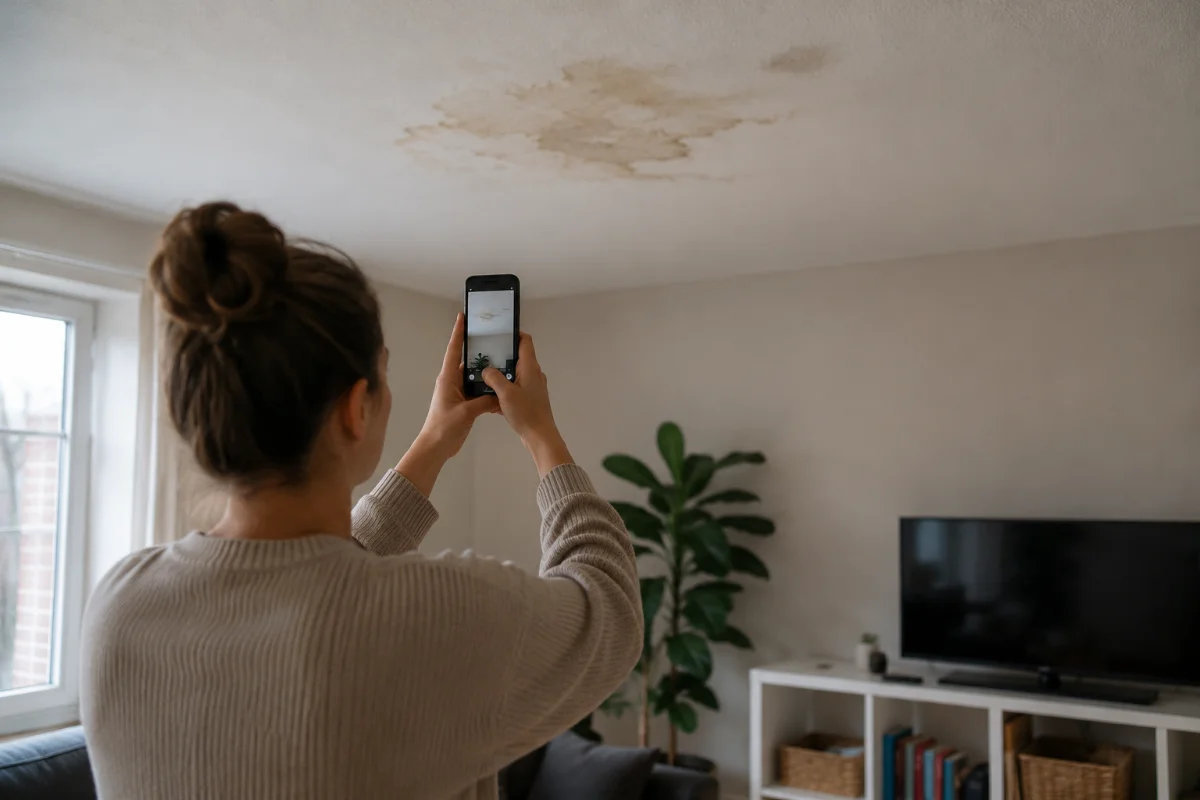
See the damage before you send anyone
Venta Capture, a product of VentaVid, sends the policyholder a link. They film the damage on their own phone, guided step by step, and the evidence lands with the claim.
In claims the sorting question is narrower, and it is asked once, early: given what we know about this claim right now, who should own it and what should happen to it next?
How does claims triage work?
Triage sits immediately at or after first notification of loss, and it produces a routing decision rather than a settlement decision. A working triage step answers four questions in order:
- Is it covered? A quick policy and peril check, enough to spot the claims that should never enter the handling queue at all.
- How big and how complex? Estimated value, number of parties, injury, and whether liability is clear.
- Does anything look wrong? Fraud indicators, timing against policy inception, inconsistency between the report and the evidence.
- Who handles it, and how? Straight-through settlement, a desk adjuster, a field attendance, a specialist, or a referral to investigation.
Some of this is rules-based and automated. Some is a human reading the file. Most operations run a hybrid, and the automated part is best understood as a way of ranking what a person looks at, not as the decision itself.
What claims triage actually sorts on
Segmentation varies by book, but the dimensions are consistent: severity band, coverage certainty, liability clarity, injury presence, fraud signal, customer vulnerability, and urgency of mitigation. A burst pipe still running is urgent regardless of its value. A large but stable commercial loss is not.
Two of these deserve care. Vulnerability changes the service path, not just the handling path. And a fraud signal is a reason to look more closely, never a verdict.
Claims triage explained: a worked example
Two motor claims arrive within an hour of each other, both reported as "damage to the front of the car". The first arrives with clear images of the bumper, the plate, the odometer and a walk around the vehicle, no injury reported, single vehicle, cover confirmed. It routes straight to desk handling and settles in two days. The second arrives with one dark photograph and a description mentioning neck pain and a second vehicle. It routes to a field attendance and an injury handler, and it will run for months. Same reported words at the front door. Completely different files.
Why triage quality depends on the evidence available at that moment
Here is the constraint that decides whether triage works: triage can only sort on what it can see when the decision is made. Every claim arrives with some information attached, and the accuracy of the routing is capped by that information, not by the sophistication of the rules applied to it.
A claim described over the phone, in words, by a person who is upset and has never seen a claim form before, is a thin input. Sorting it correctly is guesswork dressed as process. The same claim with a structured set of images of the actual damage sorts itself almost immediately.
That is why so much effort in claims operations has moved forward, to the front door. The industry channel mix shows it: photo estimating reached 26.4 percent of auto claim inspections in 2025, up 0.8 points year on year, per CCC Intelligent Solutions' Crash Course 2026 report (reported by Claims Journal). Getting a look at the loss earlier changes what triage can do with it.
How is claims triage measured?
Track these together, because each one is easy to improve on its own by making another worse.
- Routing accuracy: of the claims triaged to a given path, how many stayed on it? Re-routing after triage is the clearest failure signal.
- Time to first decision: how long the customer waited to find out what happens next.
- Straight-through rate: claims closed without touching a specialist queue, measured next to reopen rate so it cannot be gamed.
- Leakage on triaged files: money paid above what the claim should have cost, split by triage path.
- Effect on claims cycle time, by segment rather than as a single blended average.
Where triage goes wrong
Triaging on words alone. A verbal description is exactly the input that produced the misrouting you are trying to eliminate.
Optimising for the cheap path. If triage is measured only on how many claims stay off the expensive route, borderline files get pushed down the cheap one, come back worse, and cost more than the visit would have.
Letting the model decide. Automated signals rank and flag. The qualified handler decides. That distinction matters most on the files where the model is most confident.
Reading a timestamp as proof of an event. A system recording when a submission arrived proves receipt, not when the damage occurred. Useful, and routinely over-read.
On tooling, the gap is usually evidence rather than rules. Venta Capture, a product of VentaVid, sends the policyholder a link at notification, guides them step by step through what to record, and returns a structured case with answers, transcript, timestamps and integrity information, so the triage decision is made against something real. It does not triage the claim or judge it. It changes what the person doing the triage is looking at. More on that approach on the remote claim inspection page.
In practice: see how insurers use Venta Capture for remote claim inspection.