
What is a service level agreement: SLA meaning explained
A service level agreement is a contractual commitment defining the service a provider will deliver, how that performance is measured, and what the customer receives when a commitment is missed. In field service an SLA typically fixes a response time, a resolution time, a coverage window, a priority scheme and a remedy for failure.
For field service
Know what the job needs before the van rolls
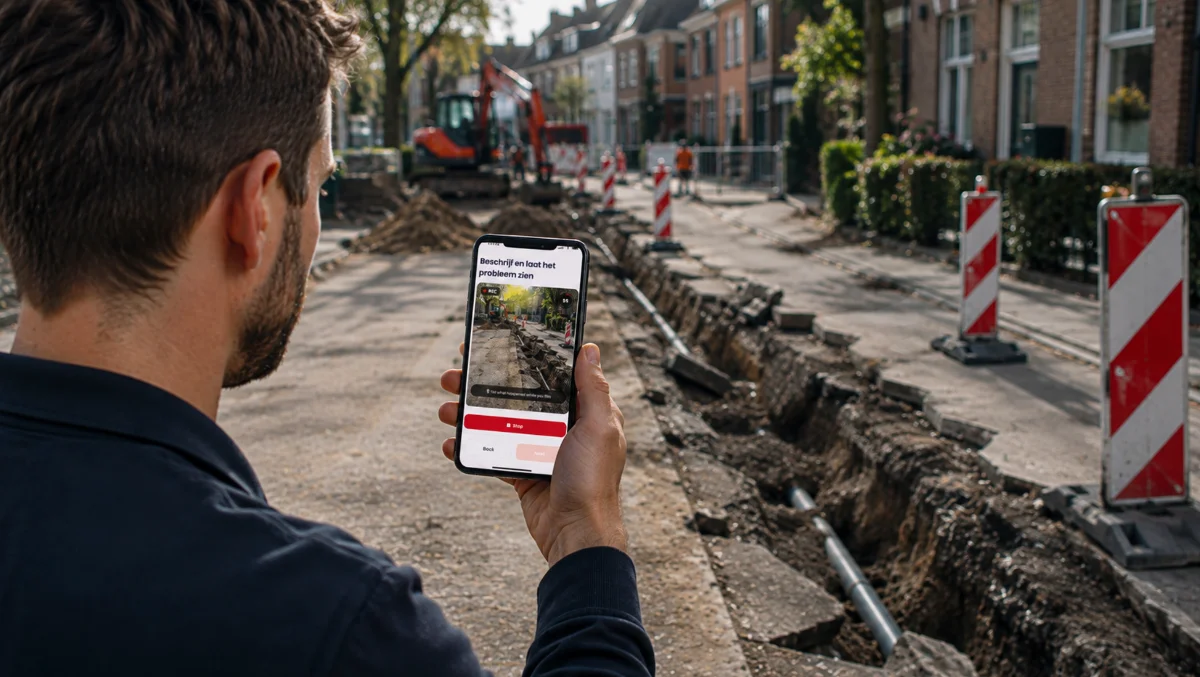
Venta Capture, a product of VentaVid, lets the customer show you the fault first, so the engineer arrives with the right part or does not need to arrive at all.
Shortened to SLA, and sometimes written as service-level agreement. The hyphen is a style choice. Everything else in the document is negotiable and consequential.
What does a service level agreement actually commit you to?
A usable SLA has five parts, and an argument about performance is almost always an argument about one of them:
- Scope. Which assets, sites and fault types are covered, and what is explicitly excluded.
- Priority definitions. What makes a fault P1 rather than P2, written so that the customer and the provider classify it the same way at 02:00.
- Targets. The response and resolution commitments per priority level.
- Measurement rules. When the clock starts, when it pauses, and what evidence closes it.
- Remedies. What happens when a target is missed.
An SLA without measurement rules is not an agreement. It is two parties with different spreadsheets.

Response time versus resolution time: the difference people get wrong
This is the distinction that causes more disputes than any other clause in the document.
Response time is how long before the provider acknowledges the issue and commits to it. The clock starts when the fault is reported and stops at a defined acknowledgement: a call back, an assigned engineer, or in some contracts an engineer physically arriving on site.
Resolution time is how long before the problem is actually fixed and the service restored. The clock runs through diagnosis, parts, the fix and confirmation.
Two failures follow from confusing them. Customers sign contracts believing a four-hour response means it will be working in four hours, and providers report a strong SLA performance built almost entirely on acknowledgement while resolution quietly drifts. A four-hour response with a next-business-day resolution is a completely different service from a four-hour resolution, and it usually costs a fraction as much.
The safeguard is simple. Report the two separately, always, and never publish a blended "SLA attainment" figure without saying which of the two it measures.
How the SLA clock is measured
Details in this section decide whether reported performance means anything:
- Calendar hours or business hours. A 24-hour resolution target on a 09:00 to 17:00 contract is three working days, not one.
- The start event. Customer report, ticket creation, or triage completion. Each shifts the number.
- Pause clauses. Time waiting on customer access, a third-party supplier, or a part on backorder is often excluded. Generous pause rules can turn a poor service into a compliant one on paper.
- The stop event. Service restored, permanently repaired, or customer confirmed. A temporary bypass that keeps a line running is a restoration, not a repair, and the contract should say which one stops the clock.
SLA explained: a worked example
A facilities contract sets P1 at a four-hour response and an eight-hour resolution, business hours 08:00 to 18:00. A chiller fails at 16:30 on a Friday, an engineer is assigned at 17:10 and arrives at 18:40, and the compressor is replaced at 11:00 on Monday. Response is met at 40 minutes, resolution consumes 1.5 hours on Friday plus 3 hours on Monday, so both targets are met even though the customer waited from Friday afternoon until Monday morning.
Nobody in that example did anything wrong. It is a good illustration of why customers should read the coverage window before they read the headline numbers.
What happens when an SLA is breached?
Remedies escalate, and the first tier is usually financial:
- Service credits. A defined rebate against the fee, often capped at a percentage of the monthly or annual charge. Credits are the standard remedy and are deliberately not compensation for consequential loss.
- Escalation obligations. Named management contact, incident review, a written root cause report within a set period.
- Remediation plans. A formal improvement plan triggered by repeated breaches over a rolling window.
- Termination rights. Persistent or material failure gives the customer an exit, sometimes without the usual notice period.
In regulated industries the remedy is set by a regulator rather than negotiated. Under Ofcom's automatic compensation scheme, UK providers pay £10.34 for each calendar day a total loss of broadband or landline service is not repaired, starting after two full working days from the fault being reported, £32.31 for a missed engineer appointment, and £6.46 for each day a new service starts late (Ofcom). The payments are made automatically, without the customer having to ask.
Note the missed-appointment figure. A no-show costs the provider roughly three times what a lost day of service does, which tells you what the regulator thinks of unreliable commitments.
SLA, SLO and KPI: what is different
- SLA. External, contractual, enforceable. Breaching it costs money.
- SLO. An internal objective, usually set tighter than the SLA so the team has margin before a contractual failure.
- KPI. A management measure with no contractual force. First-time fix rate is a KPI, not an SLA, though it is the single biggest driver of whether resolution targets get met.
- OLA. An internal agreement between teams that has to be tighter than the customer-facing SLA for the SLA to hold.
Two practical points to close on. SLA performance is only as trustworthy as the completion record behind it, so structured proof of work matters more as credits get larger. And every avoidable truck roll consumes capacity that the next P1 was going to need.
In practice: see how field service teams use Venta Capture.