


The short version.
- The problem: claimant-selected photos arrive with wrong angles, missing context, and no provenance, and every gap costs your team a follow-up round-trip.
- The fraud angle: Allianz UK logged a 300% rise in manipulated images and documents; Aviva flagged 18,400+ suspect claims worth £233M in 2025.
- The fix: define the required views, set provenance minimums, and guide the claimant through capture instead of hoping they guess right.
- Who this is for: claims operations leads and team leads at insurers who own cycle time, handler capacity, and leakage.
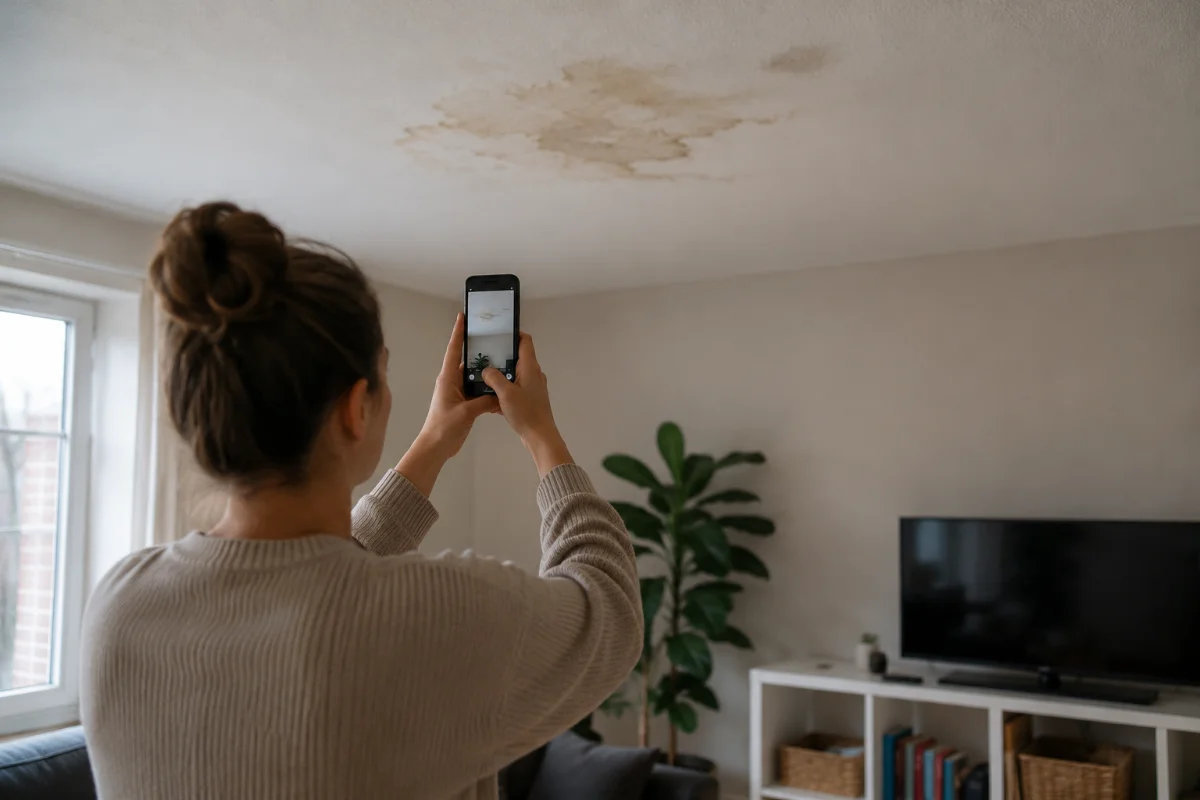
Open a fresh motor damage claim and look at what came in. Three photos of a scratched bumper, all close-ups, all slightly blurred. No wide shot, no registration plate, nothing that places the damage on a specific car in a specific place. Nothing in it rules out photo fraud either, which in insurance claims comes in four familiar forms: a picture reused from a prior loss, an image downloaded from the internet, an edited photo, or one generated by AI, each sent in as if it was taken yesterday.
If you lead a claims team, you've seen that file a hundred times. Photo evidence for insurance claims carries most of the weight of remote assessment, and most of what claimants send can't hold it.
This guide covers what your team should require instead: the views, the context, the provenance signals, and a practical way to get all three from claimants without dispatching anyone.
We wrote this for the person who owns cycle time and handler capacity at an insurer: the claims operations lead whose handlers spend their afternoons chasing the photo that should have arrived the first time. We build guided capture for exactly this problem, and you can start a free account and build your first damage-capture flow today.
Why "send us some photos" keeps failing claims teams
A claimant doesn't know what a desk assessor needs to see, and no request template fixes that on its own. They're standing next to the damage with a perfectly good camera, deciding for themselves what looks relevant. The failure modes are predictable:
- Wrong distance. Everything is a close-up, or everything is shot from across the street. Neither supports an assessment.
- No anchor views. The dented panel is there. Where that panel sits on the vehicle, and whether it's even the insured vehicle, is not.
- Missing context. The water stain gets photographed; the pipe above it doesn't. The machine appears; its display doesn't.
- Words where pictures should be. "It makes a grinding noise" typed into a form, when a 20-second video would have settled it.
- Gallery files. Photos picked from the camera roll, taken who knows when, possibly for another purpose entirely.
Each gap triggers the same loop: a handler reviews, spots what's missing, writes a supplementary information request, and the file goes idle while everyone waits. Then the new photo arrives and answers half the question.
That loop is expensive at both ends. Handlers burn touch time on chasing instead of assessing, and the claim ages while nothing happens, which is exactly the part of cycle time claimants remember. Meanwhile the stakes on getting evidence right keep climbing: insurance fraud costs an estimated $308.6 billion a year in the US alone, according to the Coalition Against Insurance Fraud.
Try it on your own phone
Want to see what a guided capture looks like?
Request a capture link and we email you one. Open it on your phone, follow the steps, and see exactly what your customer or field team would see. No app, no account.
The photo evidence a claims team should actually require
Write the requirement as layers, not as a shot list. A shot list tells the claimant what to photograph. Layers tell your team what each item is for, which is what makes the standard reviewable.
For a motor damage claim, the layers translate into a fixed sequence: full front, full rear, both sides, the damaged area from a distance, the damage close up, the dashboard with mileage visible, and the claimant talking through what happened while recording. Ten to twelve steps, in order, with a short instruction before each one.
Two details matter more than teams expect. The spoken account is evidence in its own right, because a claimant narrating while filming commits to a version of events at the scene, in their own words. And the order of capture matters, because context-first sequences stop the close-up-only submission before it happens.
This sequencing logic is the core of a remote claim inspection flow. Insurers aren't the only ones running it: the same guided structure handles trade-in appraisals and lease returns on the automotive retail side, where damage disputes follow the same shape.
Photo evidence for insurance claims has a provenance problem
An emailed JPEG tells you almost nothing about itself. Before your handler even judges what the photo shows, there's a list of things nobody in the file can answer:
- Was it recorded for this claim, or pulled from a gallery? (Or from someone else's gallery?)
- Was it edited before it reached you?
- When was it actually taken? The phone's clock and the EXIF data are claims, not facts.
- Is the file in the case a year from now identical to the file you first received?
- What happened between the camera opening and the submission arriving?
That used to be a tolerable blind spot. It isn't anymore. Allianz UK recorded a 300% rise in cases where apps were used to distort real images, videos and documents, and its fraud team has found claims built on photos of other people's cars scraped online, with AI-generated damage added on top.
The scale is not marginal. Aviva flagged more than 18,400 suspect claims worth £233 million in 2025, the equivalent of £638,000 in detected fraud every day, with the value of detected motor fraud up 39% in a year.
So the evidence standard needs a third layer beyond views and context: provenance. In practice, that means requiring submissions where these signals exist by construction:
- Capture, not upload. The material is recorded in the session, not selected from a camera roll.
- Receipt time on your side. A server-side timestamp of when your organisation received the submission, independent of the phone's clock.
- A fingerprint. A cryptographic hash (SHA-256) of each file at receipt, so anyone can prove later that the file hasn't changed.
- A session record. What happened during capture: steps completed, retries, interruptions, device signals.
- Location, where relevant. A recorded capture location, accurate to roughly 11 meters, checked against where the loss supposedly happened.
Two honest limits belong in the same policy, because provenance is not a magic wand. A genuine recording made in the session can still show a staged scene, so a technical signal is a reason to look closer, never an automatic verdict.
And a receipt timestamp proves when you received the submission, not when the damage occurred. The decision stays with your handler; the job of the evidence layer is to hand them context worth deciding on.
How insurers check claim photos for fraud: after upload or at the source
Most "how to spot fake damage photos" advice describes one model: take the file the claimant sent and examine it. A second model moves the check to the moment the photo is made. Claims teams end up needing both, so it pays to know what each one can and cannot tell you.
The pressure behind the question is real. In a fraud survey by the Association of Certified Fraud Examiners and SAS, only 7% of anti-fraud professionals said their organization was more than moderately prepared to detect or prevent AI-charged fraud. Among insurance respondents, none expressed more than moderate confidence.
Forensic checks after upload work on files that already exist. Someone reads the EXIF data, runs a reverse image search to see whether the picture appears online, matches it against earlier claims for duplicates, and may pass it through a detector that returns a probability that the image was AI-generated. Our guide to AI-generated insurance fraud walks through those checks step by step.
Controlling creation works the other way around. The insurer sends a link, the claimant records photos and video in the session on their own phone, and the submission is sealed on receipt. The question shifts from "is this file fake?" to "was this made here, now, for this claim?"
The two combine. A claimant who already has a photo of last night's damage can still add it as an upload, where it gets the after-the-fact checks and is labelled as unverified provenance, while everything new is recorded in the session. That is how the insurance claims fraud workflow in Venta Capture, VentaVid's guided capture platform, is set up: each item shows what can and cannot be vouched for, and the handler decides.
Guide the capture: how to get the right photos from claimants
Everything above describes a standard. The harder question is how to apply it to thousands of untrained claimants, and the answer is to flip who decides what gets captured.
The insurer defines the required views, the order, and the instructions. The claimant just follows them.
When we designed the claims flow in Venta Capture, a product of VentaVid, the starting question was never "how do we get more photos out of claimants?" It was: what can a desk assessor not tell from the photos that already come in? The flow exists to close that list, and it works in three steps:
- Send a link. The claimant gets a personal link or QR code by email, SMS, or WhatsApp at FNOL. No app to install, no account to create.
- The claimant captures, guided. The flow runs in the phone's browser, in any of 15 languages, one instruction at a time: show the whole vehicle, now the damage from a distance, now up close, now explain what happened. Conditional questions route the flow, and the spoken explanation is transcribed into the case.
- The case arrives sealed. The submission lands in the team's inbox with server receipt time, a SHA-256 fingerprint per file, a session timeline, and a signed seal that can be verified outside the platform with a public key.
The platform records 28 control points around each submission: automatic signals, recorded session events, and the signed seal. Recording happens in the moment, inside the session, so the gallery-upload problem disappears by design rather than by policy reminder.
There's no appointment in any of it, which is the operational unlock. Send now. Capture later. Review when ready.
Five hundred claimants can capture independently on a storm weekend while your handlers spend their time on review, because capture capacity is no longer coupled to employee availability.
And when a submission comes back incomplete, nothing restarts. The handler sends a targeted retake request ("show the left side again, include the rear wheel") and the new material lands on the same case, marked as an addition, with the audit history keeping originals and retakes straight.
Once evidence arrives this way, review itself gets a shape. Five layers, checked in order:
- What can I see? The video and photos.
- What does the claimant say? The spoken account, transcript, and structured answers.
- When did we receive it? Server-side receipt time, not the phone's clock.
- Is this still the same file? The fingerprint check.
- What happened during capture? The session timeline and technical signals, graded by your own policy from ignore to red.
None of this makes fraud impossible; it makes the material your team decides on more structured, more contextual, and easier to verify later. That's the honest claim, and it's enough to change the daily work.
If your evidence standard currently lives in your best assessor's head, start a free account and turn it into a flow this week.

Try Venta Capture on your own process
Build one flow for your highest-volume case type. Free, no credit card.
What first-time-complete evidence changes in the workflow
The lever is not faster chasing. It's removing the chase. Run the shape of it with example numbers, then swap in your own.
Say the team handles 1,000 motor damage claims a month, and 4 in 10 photo submissions need at least one follow-up request. That's 400 round-trips.
At 15 to 20 minutes of handler time per chase (spot the gap, write the request, log it, re-open the file when something arrives), that's 100 to 130 handler hours a month spent on photos that should have arrived complete. The cycle-time cost stacks on top: every affected claim sits idle while the file waits on the claimant, and those idle days are the ones policyholders remember at renewal.
First-time-complete submissions turn that queue into a triage decision per case:
- Settle from the desk. The views are complete, the story matches the damage, the signals are quiet. A desk assessment closes it.
- Ask for exactly what's missing. One targeted retake instead of a vague "please send more photos" email.
- Escalate, better informed. Some claims still need a loss adjuster on site. Now they arrive knowing what they'll find, the same know-before-you-go logic field teams use to cut wasted visits.
The case file does quiet work long after settlement too. Each submission sits in a shared inbox with ownership, status, and an audit trail, so when a claim reopens in month eight, your team can show exactly which files supported the original decision and prove they haven't changed since. Capture today, verify later.
Want to pressure-test the math against your own claim mix? Book a demo and bring a real claim file; we'll build the flow for it on the call.
Write the standard down: a photo evidence policy that holds
The teams that get consistent evidence have one thing in common: the requirement is written, per claim type, and enforced by the flow rather than by reminders. A workable policy fits on a page:
- Required views per claim type. Motor damage, water damage, contents, glass: each gets its own sequence, built from the layer table above.
- Provenance minimums. In-session capture only, server receipt time, per-file fingerprint. Name the exceptions (historic photos as supporting material, clearly labelled) instead of tolerating them silently.
- A signal policy. Decide in advance what your team does with each technical signal: ignore, note, review, or refer. A signal prompts a look, never an automatic rejection.
- A retake protocol. Who may request one, how it's worded, and the rule that additions join the existing case rather than starting a new thread.
- An escalation rule. Define what a capture must contain before a field visit is booked, so every dispatch is a decision instead of a reflex.
- Retention and audit. How long evidence is kept, who can access it, and how the audit trail is produced when a dispute or regulator asks.
The same standard stretches past claims into warranty work and visual customer support, but claims is where the provenance layer earns its keep first.
Frequently asked questions
What is photo fraud in insurance claims?
Photo fraud is submitting images that do not honestly show the claimed loss: a photo reused from an earlier claim, a picture downloaded from the internet, an image edited to enlarge the damage, or one generated entirely by AI. Insurers check for it after upload with metadata review, reverse image search and duplicate matching. More of them now also ask for new photos recorded in the session on the claimant's phone, so the question of where an image came from is settled at capture.
What photos should an insurer require for a damage claim?
At minimum: wide views that place the damage on the insured asset, mid-range views showing the damage in its surroundings, close-ups from more than one angle, and identifiers such as the VIN, plate, or serial number. Pair the images with a spoken account recorded while the claimant shows the damage. The capture order matters as much as the list, which is why guided flows beat written checklists.
Are claimant photos enough evidence to settle a claim?
For many low-complexity claims, yes, provided the views are complete and the provenance holds up. The decision stays with the handler: photos inform the assessment, they don't make it. Where the file leaves questions open, a targeted retake or a field inspection fills the gap.
Can photo metadata like EXIF be trusted?
Not on its own. EXIF data is written by the device and can be edited or stripped before the file reaches you. Receipt-side signals matter more: when your system received the file, whether it was recorded in the session or picked from a gallery, and a fingerprint proving the file hasn't changed since.
How can a claims team tell if a photo was edited?
Often you can't tell from the pixels, which is why provenance has to be collected at capture time. A submission recorded in the session in the browser, timestamped on receipt, and sealed with a cryptographic fingerprint leaves far less room for after-the-fact editing than an emailed JPEG. Treat anomalies as signals for a closer look, not as verdicts.
Do claimants need to install an app to submit guided photo evidence?
No. With Venta Capture the claimant opens a link or scans a QR code and the guided flow runs in the phone's browser, in 15 languages, with no app and no account. Every installation step you remove keeps more claimants inside the process.
What happens if the claimant's photos miss something?
The handler requests a targeted retake, for example "show the left side again and include the rear wheel." The new material lands on the same case next to the original submission, so nothing gets lost in an email thread. The remote claim inspection workflow is built around that loop.
Does guided photo capture replace field inspections?
No, and it shouldn't. The model is remote-first, not remote-only: assess from the evidence where you can, and send an adjuster where you must, better informed about what they'll find. The goal is to make every remaining visit a deliberate decision instead of a default.
Talk to us
If your handlers spend more time chasing photos than assessing them, the fastest way to judge guided capture is to build one flow and send it to your own phone. One test claim tells you more than any feature list: you'll see exactly what comes back, sealed, transcribed, and ready to review.
What it takes to start.
- Free account, no credit card required. Build a capture flow and run a test submission before committing to anything.
- Nothing for claimants to install. The flow runs in the phone's browser from a link or QR code.
- Your evidence standard, in the flow. What your best assessor asks for, asked every time, in 15 languages.
The VentaVid team builds Venta Capture, guided visual capture for claims and inspection teams.
Start a free account and build your first claims flow today. Prefer to see it on your own claim types first? Book a demo.