

The short version.
- Most warranty claims are decided on a written description and whatever photos the customer thought to take, which is why the file so often proves nothing either way.
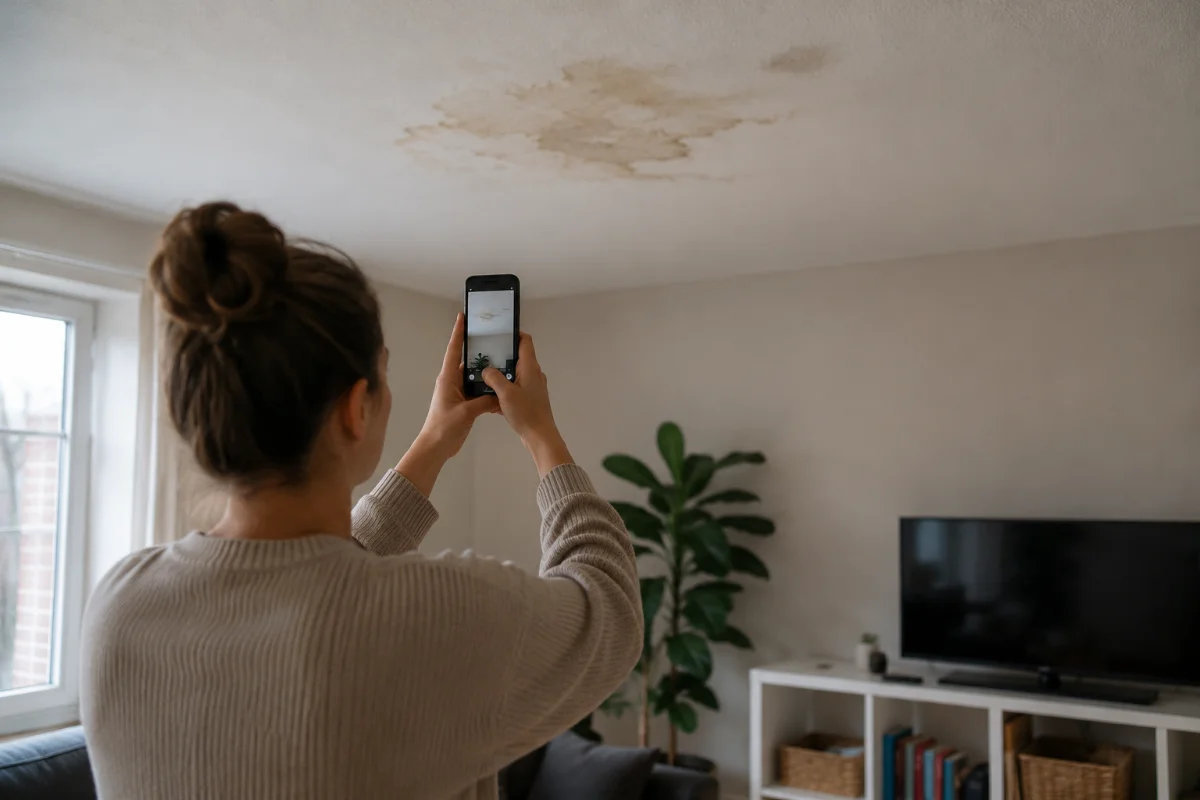
- A remote-first warranty claim inspection flips the order: the customer is guided through capturing exactly what your assessor needs, and the submission arrives timestamped, hashed, and sealed.
- Written for warranty managers at manufacturers, importers, and dealer groups who are tired of paying goodwill on thin evidence.
A warranty claim lands in your queue with a two-line description. "Customer reports gearbox noise. Requesting replacement under warranty." Attached: one photo, taken from a metre away, of a part that could belong to any machine in the country.
Now decide.
Approve it, and you carry the cost if the story is wrong. Reject it, and you start a dispute holding almost nothing.
Ask for more information, and the claim ages a week while three new photos arrive that answer none of your questions. Or dispatch an inspector, and spend real money to look at something a phone could have shown you on day one.
That queue is why warranty claim inspection is quietly being rethought. The bottleneck was never the decision. It is the evidence that reaches the person making it.
If you run warranty at a manufacturer, importer, or dealer group, you know the file that proves nothing either way, and the goodwill you pay out because of it. Venta Capture, a product of VentaVid, was built for exactly that file: the customer records the failure on their own phone, guided step by step, and the claim arrives as structured, digitally sealed evidence. Start a free account and send a capture request against a real claim this week.
Why warranty claims get decided on thin evidence
US-based manufacturers paid $30.37 billion in warranty claims in 2025, according to Warranty Week's 23rd annual product warranty report, and set aside $33.41 billion more in accruals. Nearly every one of those claims began the same way: someone described a failure in writing and attached the photos they happened to have.
That intake model has a built-in flaw. A customer doesn't know what an assessor needs to see, so "send us some photos of the fault" returns the damage without the surroundings, the machine without its display, or a close-up with no way to tell which product it belongs to.
So the file bounces. I've watched a claim thread go nine emails deep over one missing nameplate photo. Each round trip adds days, and on part returns it can add freight: several OEM programmes only scrap a failed part locally when the photos contain the required information, and ship it back at full cost when they don't.
Thin evidence leaks money in a quieter way too: goodwill. When the file can't prove the claim either way, most managers approve something to protect the customer or dealer relationship, which is why Toyota rebuilt its goodwill process around giving district reps the repair details, costs, and photos in one place, as WardsAuto reported. Most contested warranty claims come down to evidence gaps, not engineering disagreements. Close the gap at intake and everything downstream moves faster.
What a warranty claim inspection has to establish
Whoever looks at the claim, on site or on a screen, is trying to establish the same five things:
- Identity. Is this the product on the contract? Nameplate, serial number, VIN.
- Condition. The overall state and signs of use, not just the failed area.
- The failure itself. Close views of the problem, from more than one angle.
- Context. The installation, the environment, whatever surrounds the fault.
- The story. What happened, in the claimant's own words, tied to what the camera shows.
How you get those five answers is the real choice, and there are three routes, not two.
That 1-to-5-day scheduling window is not a worst case. Warranty provider Nova Warranty calls the inspection step the largest single share of delay on medium-to-large repairs, with complex claims stretching to two weeks.
The third route is the one most warranty teams haven't priced in yet. Remote video inspection usually still means a scheduled call. Asynchronous capture removes the calendar from the equation entirely: send now, let them capture tonight, review tomorrow morning.
How guided capture turns a claim into an inspectable case
This is the job Venta Capture was designed for. You, not the customer, decide what gets captured, in what order, with which instructions. The customer opens a link or QR code on their phone (no app, no account, guided in 15 languages in the mobile browser) and follows the steps your best assessor would have asked for anyway.
A warranty flow for a vehicle or machine might run:
- Show the whole product. Identity and overall condition, established first.
- Show the nameplate or VIN. The claim is now tied to one specific serial number.
- Show the problem area from a distance, then close up. Both views, in that order, every time.
- Record the fault in operation. The noise, the leak, the error code on the display.
- Explain what happened while recording. The spoken account is transcribed and searchable in the case.
- Answer the conditional questions. Usage, maintenance, when it started. An answer can branch into follow-ups.
A different product line gets a different flow. The point is that your assessor's checklist becomes the capture journey itself, so the right information arrives the first time instead of on the fourth email.
When something is still missing, the reviewer requests a targeted retake: "record the left side again and include the rear wheel" beats "please send more photos" in every language. Submissions land in a shared inbox where warranty cases can be assigned, commented on, approved, or routed onward by status, rather than sitting in whichever mailbox the customer happened to reply to.
What lands in your queue is more than a folder of attachments: a structured case holding video, photos, answers, transcript, timestamps, integrity data, and audit history in one reviewable place.
What a sealed submission tells you that an emailed photo can't
An emailed JPEG tells you one thing: someone sent you this file. It doesn't tell you whether it was recorded for this claim, whether it was edited first, or whether the file you open in month eight is the file you received on day one.
A guided capture platform wraps the submission in layers a reviewer can check:
- Server-side receipt time. It proves when you received the submission, not when the failure happened. That honest distinction is exactly what makes it defensible.
- A SHA-256 fingerprint per file. If the file ever changes, the fingerprint changes. Month-eight you can confirm it matches day-one you.
- A signed seal. Verifiable against a public key, outside the platform, by a third party if it comes to that.
- A session timeline. What happened during capture and submission, event by event.
- Capture, not upload. Video is recorded live inside the flow, not selected from a gallery of files with unknown histories.
Venta Capture's remote claim inspection page counts 28 control points per submission: 10 automatic signals, 21 recorded session events, one signed seal.
Signals (a device seen before, a virtual camera, a jailbroken phone, a location mismatch) come rated ignore, info, amber, or red against rules you set. A signal is a reason to look closer, never an automatic reason to reject. Your assessor still makes the call.
Worth being honest about the fraud question, because warranty attracts it. Warranty Fraud Management, the Wiley handbook on the subject, estimates fraudulent claims at 3 to 15% of the average company's warranty costs, on warranty spend that typically runs 1 to 4% of sales.
Sealed live capture makes that evidence harder to manipulate. Harder is not impossible: a genuine recording can still show a staged scene, and no platform should tell you otherwise. What changes is that your team reviews verifiable, contextual material instead of loose files, and the human decision stays where it belongs.
What remote-first review does to your cycle time
Run the shape of the maths on your own queue. These inputs are examples; swap in your numbers.
Thirty avoided visits is thirty inspector days, plus travel, that become review sessions your assessors fit around their existing work. And the claims that still need a physical inspection start it with the failure already on film, so the visit confirms rather than discovers.
Cycle time moves the same direction. WarrantyHub's 2026 benchmarks put average claim cycle times at 3 to 5 days against 7 to 14 for manual operations, and cost per claim at $15 to 25 against $35 to 50 or more. Evidence quality at intake drives a large part of that spread: a claim that arrives complete never joins the back-and-forth loop at all.
Capture's own numbers so far come from the support side of the platform: teams using guided capture for customer support and field service report 79% fewer field visits required. A warranty inspection visit is the same economics wearing a different badge: a person, a vehicle, and a day spent looking at something a guided capture could have shown them.
If your inspection queue is full of claims a video would settle, start a free account and run one guided capture against a live claim before you change anything else.
Rolling it out across product lines
You don't need one perfect universal flow. You need one flow per product type, each encoding what your assessors check:
- Vehicles. Walkaround, VIN, mileage, damage area wide and close, the fault under running conditions. If you sit in a dealer group, the same flow covers warranty intake on the aftersales side before the car ever reaches a bay, and Venta Capture has a dealership-specific setup for exactly that.
- Appliances. Model plate, installation context, the error display, the fault in operation, the water or power connections around it.
- Equipment and machinery. The whole machine, the affected component, the display, the environment, operating behaviour with sound.
Build the first flow around your most disputed claim type, not your most common one. That is where thin evidence costs the most per case.
Then think about month eight, because warranty decisions age: captured on day 1, reviewed on day 2, disputed in month 8.
A structured case still holds the original files, receipt time, fingerprints, seal, retakes, and the audit trail of everything done since. You can reconstruct what you knew and when you knew it without relying on a former colleague's memory.
Remote-first, not remote-only. Some claims should still get a physical inspection: teardowns, safety-critical failures, high claim values, or an amber signal your policy says gets verified in person. The difference is that those visits are chosen, prepared, and fewer.
Frequently asked questions
What is a warranty claim inspection?
It's the verification step between a warranty claim being filed and being decided: confirming the product's identity, its condition, the reported failure, and the surrounding context. It can happen on site, over a live video call, or asynchronously through guided capture reviewed by a qualified assessor.
How long does a warranty claim inspection take?
Scheduling a physical inspection typically takes 1 to 5 business days before anyone has even looked at the product, and complex claims can stretch to two weeks. An asynchronous capture request can go out in minutes and be reviewed the same day the customer completes it.
Can a warranty claim inspection be done remotely?
For a large share of claims, yes: guided video and photo capture gives the assessor identity, condition, failure, and context without a visit. Physical inspection remains the right call for teardowns, safety-critical cases, and high-value claims. Remote-first review decides which is which.
What evidence should a warranty claim include?
The product as a whole, the nameplate or serial number, the failure both wide and close up, the fault in operation where possible, and the customer's own explanation of what happened. A guided flow collects all of it in a fixed order, so nothing depends on the customer guessing what matters.
Do customers need an app to submit video for a warranty claim?
With Venta Capture, no. The capture runs in the phone's browser from a link or QR code, with step-by-step guidance in 15 languages, and no account needs to be created. That matters, because every install screen between a claimant and a submission costs you completed cases.
Does remote evidence hold up if a rejected claim is disputed?
Each submission carries a server-side receipt time, SHA-256 file fingerprints, an independently verifiable signed seal, and a session and audit history. None of that decides the dispute for you, but it lets you show exactly what you received, when you received it, and that the file hasn't changed since.

Try Venta Capture on your own process
Build one flow for your highest-volume case type. Free, no credit card.
See it on your own claims
The distance between "send us some photos" and a guided, sealed submission is one claim wide. Pick a live case this week, build the flow your assessor would run, and put the resulting file next to what you decide from today.
A free account is enough to try it, no credit card required, and your first capture request can go out the same day. Rather see it running first? Book a demo and bring your ugliest claim file.
The VentaVid team builds Venta Capture for the people who have to decide what happens next.