
Awaab's Law, defined: fixed legal timeframes for social landlords in England to investigate and fix hazards in tenants' homes, starting with damp, mould and emergencies.
Awaab's Law is the set of legal timeframes within which social landlords in England must investigate and fix hazards in their tenants' homes. It takes its name from Awaab Ishak, a two-year-old who died in 2020 from prolonged exposure to mould in a housing association flat in Rochdale, and it was written into the Social Housing (Regulation) Act 2023. The detail sits in the Hazards in Social Housing (Prescribed Requirements) (England) Regulations 2025.
The definition matters because the timeframes are implied into every social tenancy agreement. A tenant whose landlord misses them can take the landlord to court for breach of tenancy, so the clock is enforceable rather than a target in a policy document.
Who Awaab's Law applies to
Phase 1 covers social landlords in England: local authority landlords and registered providers such as housing associations. The private rented sector is not in scope of the 2025 regulations. Government has said it intends to extend the same kind of duty to private landlords through separate legislation, but until that is in force a private landlord is bound by the existing repair and fitness duties, not by these timeframes.

What the phase 1 timeframes require
Phase 1 came into force on 27 October 2025 and covers two things: emergency hazards of any kind, and damp and mould hazards that present a significant risk of harm. Once the landlord becomes aware of a potential hazard, the working-day clock runs as follows:
- Emergency hazards: investigate and make safe within 24 hours. This is calendar time, not working days.
- Investigation: a significant damp or mould hazard must be investigated within 10 working days of the landlord becoming aware of it.
- Written summary: the tenant must receive a written summary of the findings within 3 working days of the investigation concluding.
- Safety work: where the investigation confirms a significant hazard, the relevant safety work must be completed within 5 working days of the investigation concluding. Supplementary preventative work, which stops the hazard coming back, must begin within 5 working days, or where that is not reasonably practicable as soon as it is and in any case within 12 weeks.
- Alternative accommodation: if the home cannot be made safe in time, the landlord must offer suitable alternative accommodation at its own cost.
Later phases widen the list of hazards. Phase 2 has been set for 30 November 2026 and extends the duty to further Housing Health and Safety Rating System hazards, including excess cold and heat, electrical faults, pests and unsafe stairs. A third phase in 2027 is intended to bring in all remaining HHSRS hazards except overcrowding. Check the current GOV.UK guidance before quoting a date to a tenant or a board, because the phasing has already moved once.
Awaab's Law example: black mould behind a wardrobe
A tenant in a ground-floor housing association flat reports black mould on the bedroom wall behind a wardrobe. The contact centre logs the report on a Tuesday. The landlord now has until the Tuesday two weeks later to have someone investigate. The surveyor finds cold bridging on an external wall, a bathroom extractor that does not run, and mould over roughly a square metre. The tenant receives a written summary by the Friday, and a contractor starts the extractor replacement and mould treatment the following week, with the insulation works scheduled inside the twelve-week window.
Where teams get into trouble is the first ten days. A surveyor visit that slips because the tenant works shifts, or a report that sits in a shared mailbox for a week before anyone triages it, eats the investigation window before anyone has looked at the wall. The date the landlord became aware is the date the report arrived, not the date it was read.
What Awaab's Law does not do, and the mistakes landlords make
It does not change what counts as a hazard. The test is still whether the hazard presents a significant risk of harm to the tenant, assessed on the household living there. The same patch of mould is a different case in a flat with a baby and an asthmatic parent.
It does not accept lifestyle explanations as a reason to delay. Guidance is explicit that landlords must not blame the tenant for damp and mould as a first response. The investigation has to happen either way.
The recurring mistakes: treating the initial report as a repair ticket rather than a hazard report, so the investigation clock is never started; sending a contractor to treat the mould without investigating the cause, which resets nothing and usually brings the mould back; failing to send the written summary because the finding was passed by phone; and keeping the record of what was seen, and when, in a surveyor's phone rather than on the case.
Where the evidence goes
Every step in the timeline needs a dated record: the report, the investigation, the findings, the summary sent, the work ordered and the work completed. A photo of the wall with a timestamp the landlord controls, a written damp survey and an audit trail showing who did what on which day are what a housing ombudsman or a county court will ask for. Tenant-submitted photos at the reporting stage help triage: a clear picture of the affected wall, the window, and the extractor lets a surveyor decide whether this is a 24-hour emergency or a 10-day investigation before anyone travels. See tenant repair reporting with photos for how to structure that first request.
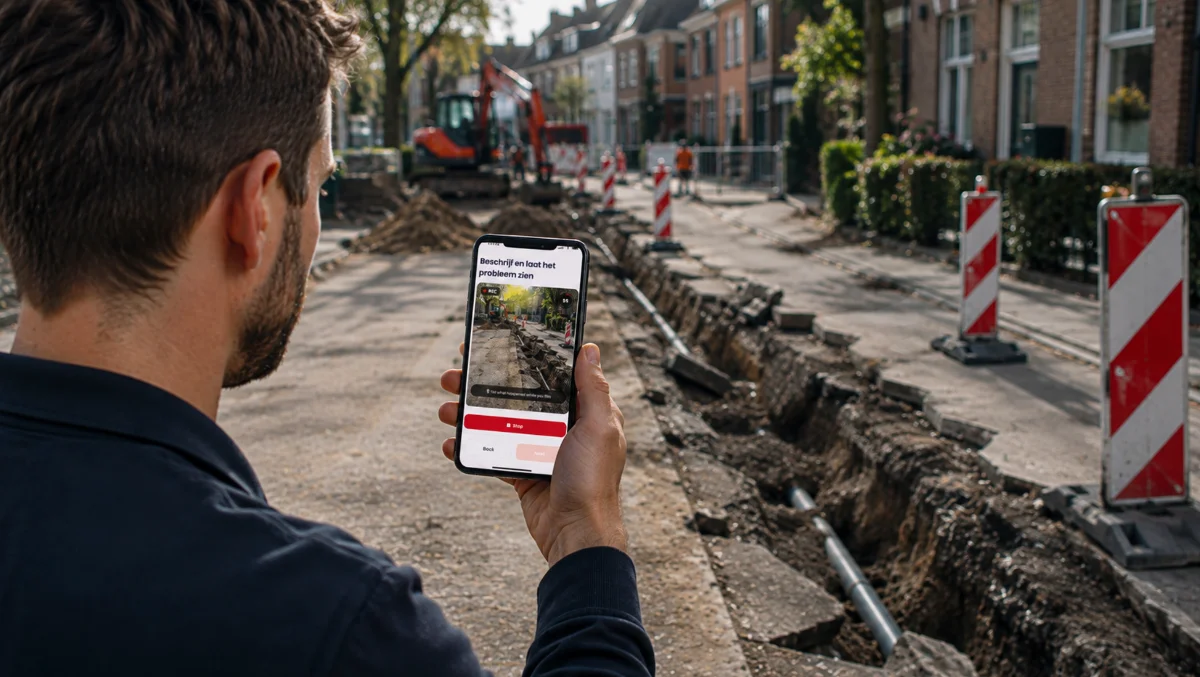
Venta Capture, a product of VentaVid, is used for that first step. The tenant is sent a link, follows guided steps in the mobile browser with no app to install, records the affected areas with a spoken explanation, and the submission arrives timestamped and sealed for the repairs team to review and route. More at the Venta Capture pages.
In practice: see how field service teams use Venta Capture.