
Dispatch explained: what happens when a job is released
Dispatch is the act of releasing a job to a named technician and committing them to travel to site, with the parts, permits and information the job needs. It is the point where a plan becomes a vehicle on the road, and the last moment at which a visit can still be avoided.
For field service
Know what the job needs before the van rolls
Venta Capture, a product of VentaVid, lets the customer show you the fault first, so the engineer arrives with the right part or does not need to arrive at all.
The word covers both the decision and the function. "Dispatch" is the moment a job goes out; "the dispatch desk" is the team making those calls all day, sometimes titled dispatcher, resource controller, or service coordinator depending on the industry.
What does dispatch mean in field service?
Dispatch is a commitment, not an assignment. Once a job is dispatched, four things are spent whether the visit succeeds or not: a travel slot, a technician's block of hours, the parts loaded for it, and the customer's expectation that someone is coming.
That is why dispatch is measured differently from the rest of the workflow. Nobody counts how many jobs were scheduled badly. Everybody counts how many vans went out and came back with nothing fixed.

How does dispatch differ from scheduling?
These two get used interchangeably, and the confusion is expensive because they answer different questions at different moments.
- Scheduling is planning. It decides, ahead of time, which jobs sit in which technician's day and in what order, weighing skills, travel, time windows and workload across the whole board.
- Dispatch is execution. It releases a specific job to a specific person now, and reacts to what the day is actually doing: a job overrunning, an emergency arriving, a technician stuck behind an incident, a site that turns out to have no access.
A schedule built at 06:00 is a hypothesis. Dispatch is what happens to it. In small operations one person does both, which is why the terms blur.
What a dispatcher actually decides
- Whether to send anyone. The first and most valuable decision, and the one most often skipped.
- Who. Skills and certifications first, proximity second. Sending the nearest technician who cannot fix it is a return trip with extra steps.
- What they carry. If the diagnosis is uncertain, the van is stocked on a guess.
- When. Against the contractual response window, the site's access hours, and everything already committed that day.
- What they are told. The information handed over is the difference between diagnosing on arrival and diagnosing before arrival.
Dispatch explained: a worked example
A telecom field team receives a no-service report on a business line at 09:40 under a same-day commitment. The dispatcher checks the line test, sees a fault pattern consistent with customer premises equipment rather than the network, and asks the site contact for photographs of the router, its indicator lights and the wall socket before releasing anyone. The images show the ONT unplugged behind a newly installed cabinet, and the job closes at 10:15 with no visit.
That is a dispatch decision, not a scheduling one. The schedule never had to change.
Why avoidable dispatch is the metric that matters
A visit that should never have happened still counts as a successful first-time fix in most reporting, because the technician arrived and the job closed. The cost is real and the metric hides it.
Aquant's 2025 Field Service Benchmark Report found avoidable dispatch rates of 3 percent for top performers against 24 percent for the bottom 20 percent, and that a failed first visit adds two more visits on average while extending resolution by 14 days (reported in TechNation). Roughly one visit in four, in the weakest operations, was avoidable.
Track it alongside the truck roll count and the first-time fix rate. On their own, each of the three can be improved by making one of the others worse.
When should you not dispatch?
The cases where a visit is the wrong answer are boringly consistent across industries:
- The fault is not yours. Customer equipment, power supply, consumables, a setting.
- The fix is a guided action. A reset, a reseat, a filter, a valve position the person on site can perform.
- The diagnosis is unclear. Sending someone to find out what is wrong is an expensive way to run a diagnostic.
- The site is not ready. No access, no isolation, no permit, no responsible person, work still in progress by another trade.
Each of those is an evidence question rather than a judgement question. Someone who can see the equipment already knows the answer. Structured remote triage and a proper pre-visit assessment exist to get that answer to the desk before the van is committed.
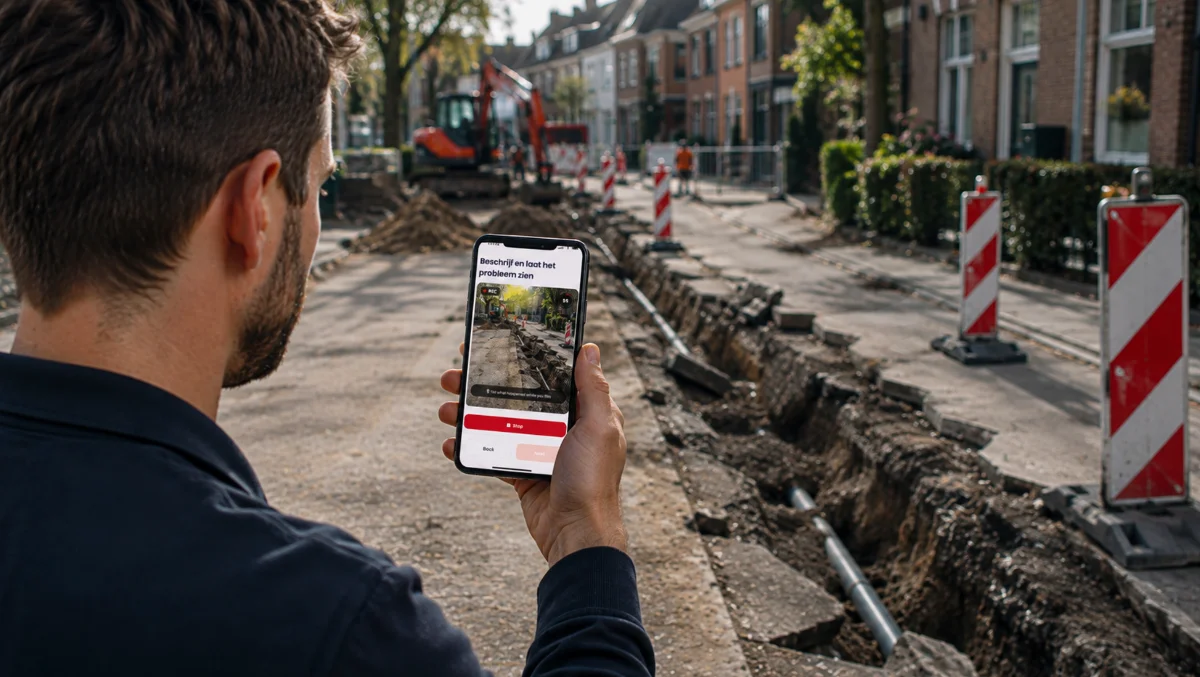
Getting the evidence is usually the hard part, because a phone description from an untrained caller is not a diagnosis. Venta Capture, a product of VentaVid, addresses that by sending the person already on site a link: they record the specific views and answer the specific questions your team defines, in the mobile browser, with no app and no account, and the case arrives structured and timestamped for a dispatcher to review. It does not decide anything. It gives the person who does decide something to look at before a vehicle leaves the depot.
In practice: see how field service teams use Venta Capture.