
Fleet telematics, explained: what it records and what it proves
Fleet telematics is the use of an in-vehicle device or a built-in connected system to record location, driving behaviour, fuel use and engine diagnostics and send it to the fleet office over a mobile network, so vehicles can be tracked, routed, maintained and reported on without anyone phoning the driver. It is an operational instrument first, and everything else it gets used for is downstream of that.
For field service
Know what the job needs before the van rolls
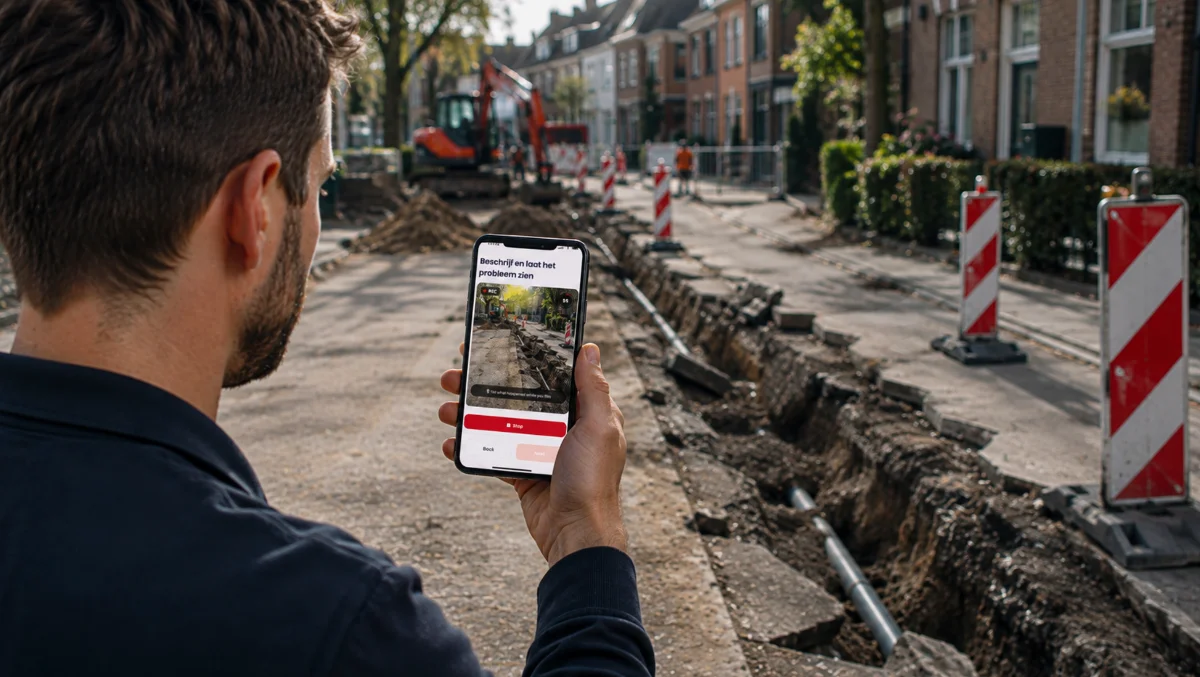
Venta Capture, a product of VentaVid, lets the customer show you the fault first, so the engineer arrives with the right part or does not need to arrive at all.
The same technology trades under several names: vehicle tracking, GPS tracking, fleet tracking, and, at the hardware level, the telematics unit, TCU or black box. Worth separating from insurance telematics, which uses overlapping data for a completely different purpose: rating risk and supporting claims decisions rather than running the fleet.
What does fleet telematics record?
- Location and route. GPS position, stop and start times, geofence entry and exit, distance covered.
- Driver behaviour. Harsh braking, acceleration, cornering forces, speed against the posted limit, seatbelt use.
- Fuel and energy. Consumption, idle time, refuelling events, and on electric fleets state of charge and charging sessions.
- Engine diagnostics. Fault codes, warning lamps, engine hours, coolant and oil readings pulled off the vehicle bus.
- Utilisation. Engine hours and working hours, which feed the asset utilisation rate and the fleet-sizing argument that follows it.
- Regulated records. On heavy vehicles, driver hours data from the tachograph or the electronic logging device.

How does fleet telematics work?
A telematics unit takes position from GNSS satellites, reads vehicle data from the CAN bus or the OBD-II port, adds its own accelerometer readings, and pushes the lot to a hosted platform over a cellular connection. Where the vehicle is factory-connected, the manufacturer's own module does the same job without anything being fitted.
Fault codes are the part fleet engineers care about most. Diagnostic trouble codes follow a standard structure defined in SAE J2012 and ISO 15031, which is why a code reads the same on any light vehicle sold in the United States since 1996 regardless of manufacturer. The standardisation is in the reporting, not in the diagnosis.
Fleet telematics used for maintenance: a worked example
A 30-van fleet moves from servicing every 12 months to servicing on mileage and engine-hour triggers pulled from the telematics unit. Two vans on motorway work turn out to be hitting the interval in seven months. Four on short urban runs are being serviced with 4,000 miles of interval left on them. Same policy, same annual spend, and the servicing was landing in the wrong place at both ends of the fleet.
Idling is the other line that pays for itself quickly. US Department of Energy figures put heavy-duty truck idling at roughly 0.8 gallons of fuel an hour, rising to about a gallon an hour with the heating or air conditioning running (Alternative Fuels Data Center, idle reduction research). Nothing in a fuel-card report separates that from productive running. The telematics feed does.
What fleet telematics cannot tell you
The limits matter more than the feature list, because most of the disputes a fleet manager gets pulled into sit exactly on them.
- It records the vehicle and the device, not the driver. Without a driver ID key, a login or a tachograph card, the data shows what the vehicle did. It does not show who was at the wheel, and a disciplinary built on the assumption tends not to survive.
- A fault code says there is a fault, not what it looks like. A misfire code names the symptom and not the cause, and nothing in the data stream shows a chafed loom, a cracked mounting or a coolant trail down the block. Someone still has to look at it.
- Behaviour scores need context. Hard braking to avoid a collision is good driving that scores badly. Urban multidrop and trunking routes are not comparable on the same scale.
- Coverage is not continuous. Underground car parks, tunnels, remote sites, flat batteries, unplugged units and dropped cellular coverage all leave gaps, and a gap is not evidence of anything.
- It says nothing about condition. Bodywork, tyres, load security, interior damage and the state of the equipment on board are invisible to the whole system.
Where telematics stops and something else has to start
The pattern that emerges once a fleet has run telematics for a year is a clean split. Telematics is very strong on what happened, when, where, and how the machine behaved. It is silent on what anything actually looks like, which is why condition disputes, damage at handover and "the code came back, what now" questions do not resolve on the strength of a data feed.
Those two kinds of information are strongest read together. A fault code plus a short guided video of the engine bay tells a workshop far more than either alone, which is the same logic behind structured remote diagnostics: get eyes on the problem before you commit a vehicle, a technician and a day to it. Telematics decides which asset to look at. Something else has to do the looking, and the judgement stays with the qualified person either way.
Read alongside fleet management, telematics is one instrument among several rather than the system of record. Treat its output as a reason to investigate, never as a verdict.
In practice: see how field service teams use Venta Capture.