
Third party claim explained: what is a third party claim?
A third party claim is a claim brought by someone who is not a party to the policy against the insurer of the person who caused their loss, which means the claimant and the paying insurer have no contract with each other. Liability has to be established before any payment is considered.
For insurers
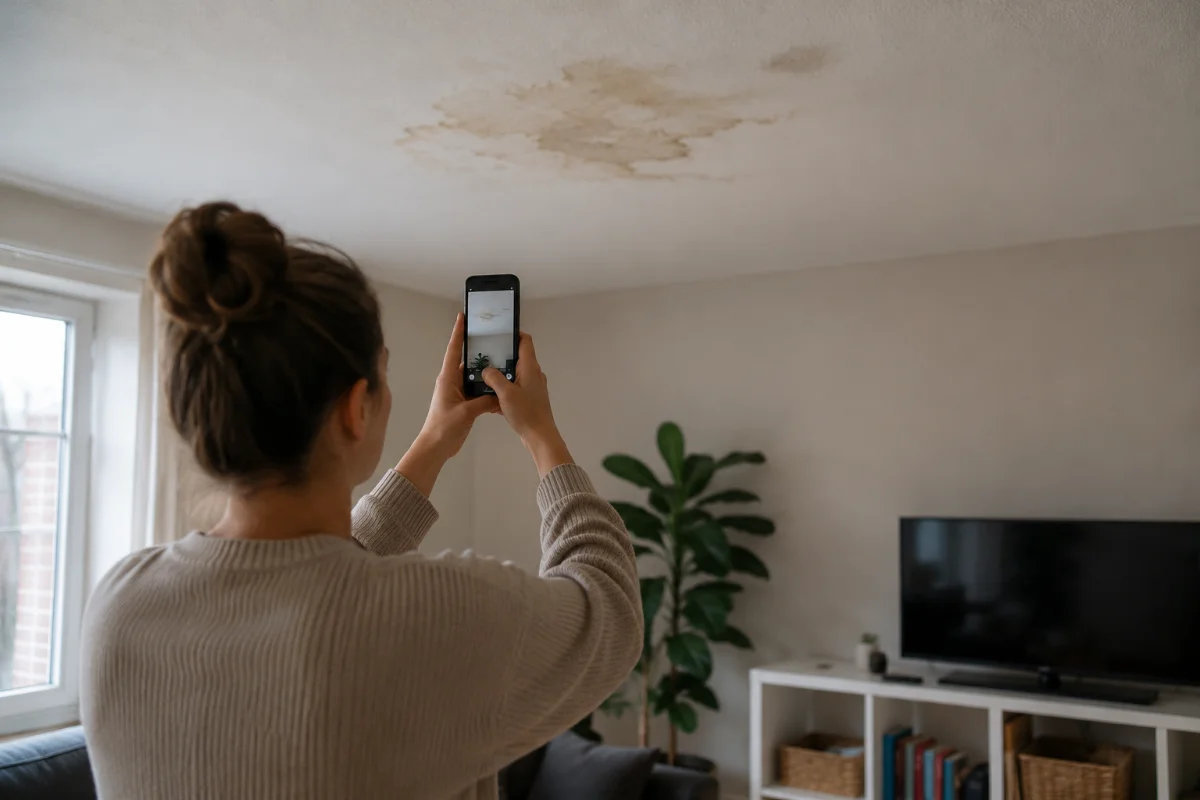
See the damage before you send anyone
Venta Capture, a product of VentaVid, sends the policyholder a link. They film the damage on their own phone, guided step by step, and the evidence lands with the claim.
Its counterpart is the first party claim, made by the policyholder on their own cover. The distinction is not academic: it decides who proves what, whose excess applies, and how long the file stays open.
Who the three parties are
- First party: the insured, named on the policy.
- Second party: the insurer, the other side of that contract.
- Third party: everyone else. The other driver, their passengers, a pedestrian, a neighbour whose wall came down, a customer injured on a business's premises.
Third party claims are paid from the liability section of a policy, which exists precisely to answer for harm the insured causes to other people and their property. Motor third party liability is compulsory in most of the world for that reason.
How does a third party claim work?
- Presentation: the claimant notifies the at-fault party's insurer directly, or their own insurer does it for them, or a solicitor or claims management firm does.
- Liability investigation: statements, scene evidence, dash camera footage, police reports, engineering opinion. Liability can be admitted, denied, or split by percentage.
- Quantum: once liability is settled, the value of the loss is assessed. Property damage, injury, hire, loss of earnings, and other consequential losses are usually valued separately.
- Settlement: paid to the claimant, often with an indemnity or release closing the file.
Two words matter throughout. Liability is a legal question about fault. Quantum is an arithmetic question about value. Handlers who let those two arguments run at the same time end up negotiating both badly.
How a third party claim differs from a first party claim
- The relationship: no contract exists between claimant and paying insurer, so the claim rests in tort or statute rather than in policy wording.
- The test: fault has to be proved. A first party claim only needs a covered peril and a covered loss.
- The excess: a third party claimant does not pay the at-fault insured's policy excess. It applies only on the insured's own claim.
- The duty: the insurer owes good faith handling to its own policyholder. To the claimant it is defending its insured's position, inside regulatory conduct rules.
- Evidence access: an insurer can compel its own insured to cooperate and allow inspection. It has no such hold over a claimant, so property is often repaired or scrapped before anyone from the paying side sees it.
- Duration: third party files run materially longer, because liability, quantum and injury each carry their own dispute.
The severity gap is real too. Insurance Information Institute data puts the 2022 average bodily injury liability claim at $24,211 against $5,313 for property damage liability. Frequency runs the other way: 0.78 bodily injury claims per 100 earned car years in 2021 against 2.28 for property damage. Rare, expensive, and slow is the third party injury profile in one line.
Third party claim example
A van driver pulls out of a junction and hits a car. The car owner presents a claim to the van's insurer for a $7,800 repair, twelve days of hire, and a soft tissue injury. The van's insurer investigates, admits liability at 100 percent after reviewing dash camera footage, then negotiates each head of loss separately.
The car owner pays no excess, because it is not their policy. Had they instead claimed on their own comprehensive cover, they would have paid their excess up front and their insurer would have pursued the van's insurer to recover both the repair and that excess.
Why third party claims take longer
- Liability has to be resolved first: nothing is valued until fault is settled, and split liability drags both sides into percentages.
- Evidence is on the other side: the damaged property, the vehicle, the medical records and the witnesses all sit with someone who has no obligation to the paying insurer.
- Represented claimants change the tempo: solicitors and claims management firms add correspondence cycles and protocol timetables.
- Injury needs prognosis: a claim cannot be valued reliably before the medical picture stabilises.
- Consequential losses multiply: hire, storage, recovery, loss of earnings and diminished value each have their own argument.
- Uninsured and untraced drivers: where no insurer stands behind the at-fault party, the claim moves to a national guarantee scheme with its own rules and timescales.
Where the evidence gap bites
Third party property damage is where paying insurers are most exposed to inflated and unverifiable quantum, because they usually never saw the item. By the time the claim is presented, the car has been repaired, the fence has been replaced, and what remains is an invoice and a few photographs of unknown origin.
That is an evidence problem, not a fraud verdict. Structured, dated, contextual images at the earliest possible point narrow the argument for everyone, including honest claimants who get paid faster for it. The intake side is covered in first notification of loss, and the assessment side in remote claim inspection.
In practice: see how insurers use Venta Capture for remote claim inspection.