What is workshop utilisation: the percentage of paid technician time that is spent clocked on a job rather than waiting, walking or idle.
Workshop utilisation is the share of the time a workshop pays for that is actually spent working on vehicles. It is calculated as productive hours divided by attended hours, and it answers a single question: of the hours we paid technicians to be here, how many did they spend with a job open?
The term is used across UK and Irish dealerships and independents. North American fixed operations use workshop utilization with the same formula, and some managers call it shop utilisation or labour utilisation. It sits alongside technician efficiency and productivity, and the three are confused with each other more often than any other numbers in aftersales.
Workshop utilisation formula
Utilisation = productive hours ÷ attended hours × 100
- Attended hours are the hours a technician is on site and paid, after lunch and agreed breaks. Eight hours attended is a normal day.
- Productive hours are the hours clocked onto a paying job of any kind: customer pay, warranty or internal. Time spent moving cars, waiting for parts, cleaning, training and standing at the parts counter is attended but not productive.
Nothing in the formula mentions what was sold. That is deliberate. Utilisation is a measure of how the day was used, and it is the same whether the technician beat the book time or lost to it. Sold hours enter the picture only in the other two ratios: efficiency compares sold hours with productive hours, and productivity compares sold hours with attended hours. Multiply utilisation by efficiency and you get productivity, which is the one figure that ties the three together.
Workshop utilisation is usually reported for the department and then broken down per technician. The department figure is what the aftersales manager reads. The per technician figure, which is the same thing measured for one person, lives in technician utilisation. A separate cousin, bay utilisation, measures the ramps rather than the people, and a workshop can have idle technicians and full bays at the same time when cars sit on ramps waiting for a decision.
Workshop utilisation example: a six technician workshop in one week
A franchised dealership workshop has six technicians attending 40 hours each, so 240 attended hours in the week. The clocking system shows 198 productive hours. Utilisation is 198 ÷ 240 = 82.5 percent.
The 42 lost hours are where the story is. Pulled from the clocking data they split roughly like this:
- 14 hours waiting for parts on jobs that were already on the ramp.
- 11 hours waiting for customer authorisation on identified work found during the vehicle health check, with the car up in the air and the technician clocked off.
- 9 hours of vehicle movement, valeting handbacks and washing.
- 8 hours of training, toolbox talks and a manufacturer webinar.
The training hours are planned. The parts hours point at stock holding and pre-picking. The authorisation hours are the ones a service manager can move fastest, because the fix is on the front desk rather than in the workshop.
What is a good workshop utilisation figure
Well run franchised workshops tend to sit in the high eighties to low nineties. The number is almost never 100 percent, and a workshop that reports it is usually clocking technicians onto jobs while they are doing something else.
Read utilisation with the other two ratios rather than alone. A workshop at 95 percent utilisation and 80 percent efficiency is busy and slow. A workshop at 80 percent utilisation and 120 percent efficiency has fast technicians and not enough work in front of them, which is a workshop loading problem rather than a technician problem.
What workshop utilisation does not tell you
- It does not measure revenue. A technician clocked eight hours onto a warranty job that pays five hours at a reimbursement rate is 100 percent utilised and losing money on the day.
- It does not measure quality. Comebacks and rework are clocked as productive time. A workshop with a rework problem can show excellent utilisation while doing the same jobs twice.
- It does not say why time was lost. Only the reason codes on the clocking system say whether the gap is parts, approvals, movement or absence.
- It is not efficiency. Managers who set a utilisation target and then reward technicians on it get technicians who stay clocked on. The target for the individual belongs in efficiency; utilisation belongs to the manager who controls the flow of work.
Mistakes teams make with workshop utilisation
The common one is counting non-productive internal codes as productive. If the DMS has a job card called workshop general and technicians clock onto it whenever they are between cars, utilisation is flattered and the manager never sees the idle time. The second is measuring attended hours from the rota rather than from the clock, so sickness and late starts vanish. The third is chasing the number with more bookings when the loss is in the middle of the day, not at the start of it: a full diary does not help if cars are up on ramps waiting for a yes.
The number is owned by the aftersales or service manager, and the raw data comes from the workshop clocking system inside the DMS. Most groups review it weekly per site and monthly per technician alongside efficiency and hours per repair order.
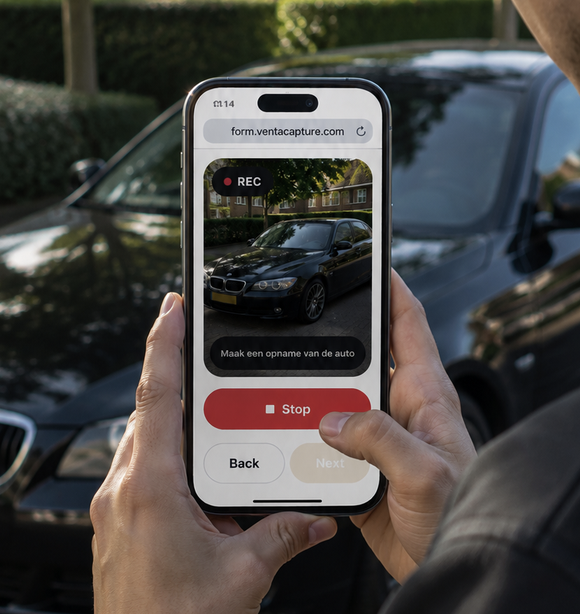
Where the gap is authorisation time, the fix reaches the workshop through the advisor. A technician who records a short video of the worn part on a phone, sent to the customer as a page with an approve button over SMS, WhatsApp or email, gets the decision while the car is still on the ramp, which is the practical reason Venta Video turns up in conversations about utilisation as well as about approval rates.