

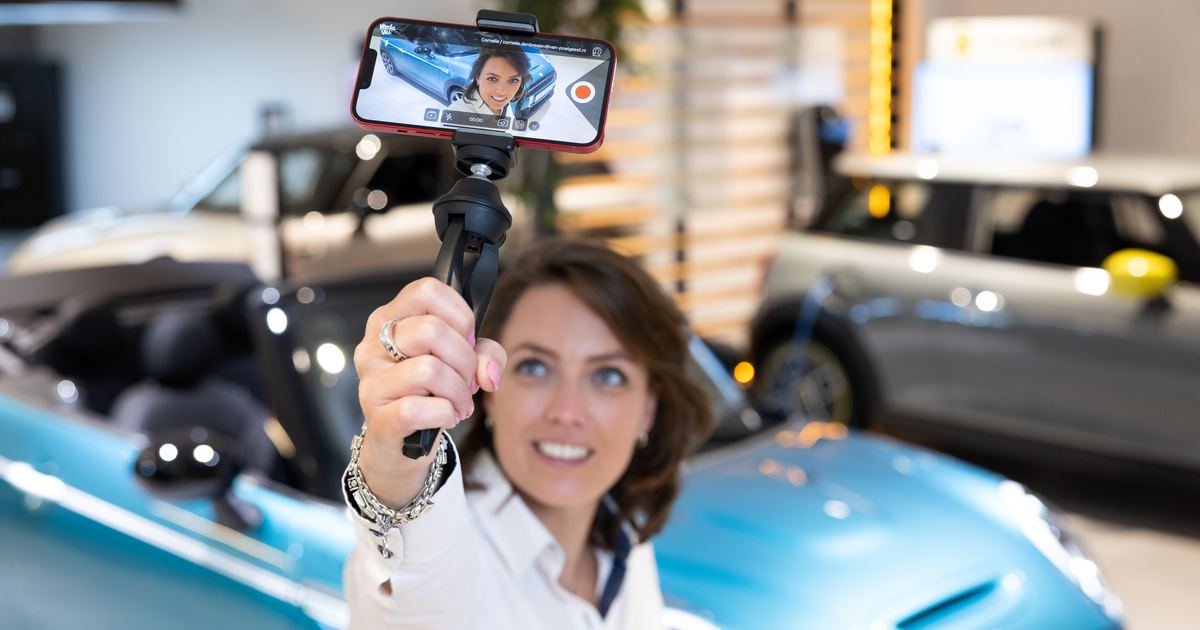
The short answer. A video MPI is a 60-second narrated walkthrough of your technician's inspection findings, sent straight to the customer's phone.
- What it changes: customers who get photo or video with their MPI approve the recommended work 51% of the time, against 24% without it (J.D. Power).
- Why now: 64% of customers say they want visual evidence with their inspection. Most service departments still don't send it.
- Who this is for: service managers, aftersales managers, and fixed ops directors who watch approvable work die in a voicemail.
There's a car on your lift right now waiting for an approval that isn't coming. The advisor called, read out the findings, quoted a number, and got "let me think about it." The multi-point inspection was done properly. The customer just couldn't see any of it.
That's the problem a video MPI exists to solve. Instead of a phone quote, the customer gets a short video of your technician pointing at the actual worn pad, narrating what they found, with an approve button underneath it.
If you run a service department or own fixed ops for a dealer group, this is the leak you can plug fastest. We build personalized video for sales and service teams, and inspection videos are where the declined-work number moves first. Book a 15-minute demo and we'll map it to your write-up flow.
What a video MPI is (and what it isn't)
A video MPI is a multi-point inspection with a short video attached. While the vehicle is up on the lift, the technician films 45 to 90 seconds on a phone: the tread depth, the seeping shock, the pad with 2mm left. They narrate as they go, the advisor sends it with the quote, and the customer watches on their own phone before deciding.
It sits one step beyond the tools you may already run:
- Paper MPI: a checklist with red, yellow, and green boxes. The customer sees marks on a form and takes your word for the rest.
- Digital MPI or DVI with photos: better. Photos prove the part exists, but a still image of a brake pad means little to someone who has never held one.
- Video MPI: the technician shows the part, explains the severity in plain words, and puts a face on the recommendation. The customer hears a person, not a line item.
The narration is the point: a photo shows a worn part, but the video explains why it matters and who found it. That difference is what moves approvals.
One more thing worth clearing up. In the US this is a video MPI. In the UK the same play is called a video VHC, short for vehicle health check. Same lift, same phone, same result.
And it's still rare. Fewer than a quarter of customers (23%) receive any photo or video documentation with their inspection, according to the J.D. Power 2024 U.S. Aftermarket Service Index Study. If your store sends video on every RO, you're doing something three-quarters of your market isn't.
Why a video MPI gets more work approved
Start with the number that settles the argument. In the same J.D. Power 2024 ASI Study, 51% of customers who received an MPI with photo or video had the recommended work done. Without it, 24% did.
More than double. Same inspection, same findings, same price. The only variable is whether the customer could see the problem.
Demand runs ahead of supply here, too. The J.D. Power 2026 U.S. Customer Service Index Study found that 64% of customers want photo or video evidence with their MPI results. Only 26% of mass-market customers and 44% of premium customers say they get it.
So why does seeing it change the answer? Because "show me why I need that" is a fair question, and a number read over the phone is a weak answer to it. Decades of consumer reporting have trained car owners to treat unseen recommendations as upselling, which means your most honest advisor still starts every approval call at a disadvantage.
Video flips the frame. The customer watches your technician, in your workshop, pointing at their car. Nothing is claimed that isn't shown. The same study data backs the satisfaction side: advisor satisfaction scores are highest (928 premium, 907 mass market) when photo or video evidence arrives while the service is in progress.
Dealers running video inspections see it in their own numbers, wherever they are in the world. Mohsin Haider Darwish, a Suzuki dealer, lifted customer approval rates from 68% to 88% after putting its inspections on video with VentaVid. No SERP-famous case study, just a service department that stopped asking customers to approve work they couldn't see. If declined work is a line you track, there are more plays like this in our guide to boosting repair sales in the service department.
"VentaVid helped us to increase Parts and Labour upselling from 55% to 91%. Customer Approval rates increased from 68% to 88%."
by Salah Al Rahbi, Service Manager, Mohsin Haider Darwish
What it's worth per repair order
Walk the math on one advisor. These are example numbers, not results. Swap in your own.
You won't recover all of it. Nobody does. But when the J.D. Power data says visual evidence moves approvals from 24% to 51%, even winning back a third of that column pays for the tooling many times over.
Vendor-published cases point the same direction. Kimoby, a dealership messaging vendor, reports that Porsche Centre Langley saw repair orders with videos average $1,993.58 higher than those without. Treat any vendor case (including ours) as a data point, not a promise, and run your own month.
Speed matters as much as the total. 85% of VentaVid service videos are viewed within 15 minutes of being sent, which means the approval conversation happens while the car is still on the lift, not after the third callback. Fewer blocked bays, more hours sold on the same traffic.
Track three numbers from day one, or you'll never know if it worked:
- Approval rate on recommended work. Your DMS already has the before; pull it for the trailing 90 days so the baseline is honest.
- Customer-pay dollars per RO. The J.D. Power approval gap shows up here first, because approved line items are the whole mechanism.
- Video view rate and time-to-view. If videos aren't being watched, the problem is the send (wrong channel, buried link), not the filming.
Give the pilot one advisor team and 60 days. A single month is noisy; a quarter hides the trend under seasonality.
Want the math run on your own RO count and average ticket? Book a demo and we'll do it live, then you can pull pricing against your own numbers.
How to film a video MPI customers actually watch
A bad inspection video doesn't lift anything. Dark footage of an unidentifiable part, shot over shop noise, with no explanation? The customer closes it and you're back to the phone quote.
In every rollout I've watched, the sticking point is never whether techs can film. It's whether anyone taught them what a customer needs to see. Seven habits cover most of it:
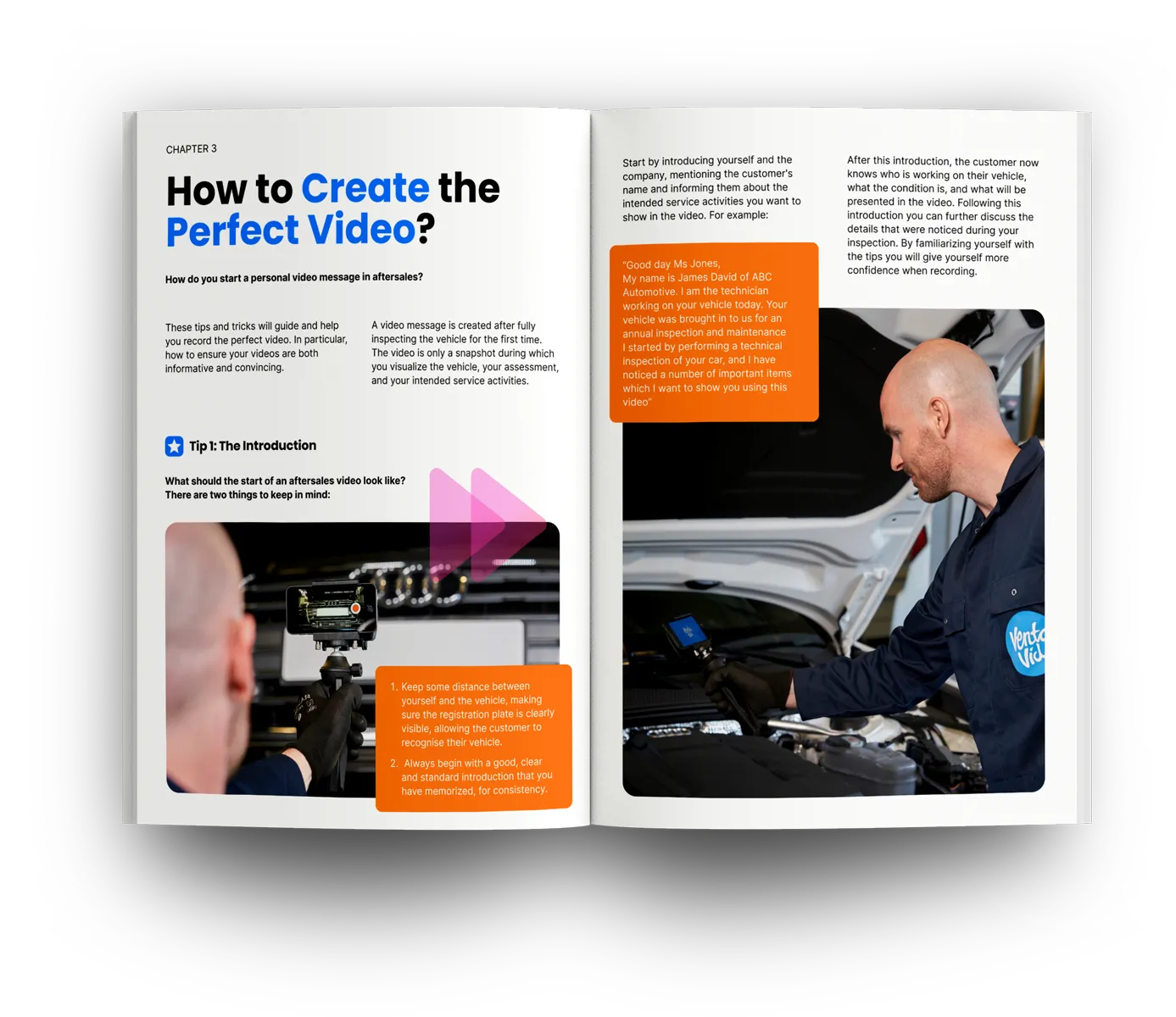
- Read the RO before you record. Know what you're going to show and in what order. A prepared 60 seconds beats a rambling three minutes.
- Open with the customer's name. "Mrs. Alvarez, this is Marco, I've got your Tucson up on the lift." A name and a face is the trust deposit everything else draws on.
- Lead with what's healthy. Good tires, clean fluids, solid brakes on one axle. Opening with good news proves you're not there to scare anyone.
- Light the shot. Under-car and under-hood footage goes dark fast, and a phone flashlight alone won't show a worn pad. Trade outlet Tomorrow's Technician covers this well in its digital video inspection tips: fix the lighting and kill the shop radio before you press record.
- Point and narrate. Hold the phone in one hand, point at the wear with the other, and say what the customer is looking at in plain words. "This groove should be twice as deep" lands. Torque specs don't.
- Show severity honestly. If it can wait until the next service, say so on camera. The fastest way to make the urgent items credible is to be relaxed about the ones that aren't.
- Close with the next step. "The quote's under this video. Tap approve and we'll have it done by four." Then stop recording.
Keep the whole thing under 90 seconds. If the finding list is long, a link that carries the video and the quote together beats three separate attachments.
Rolling it out on your service drive
The workflow slots into the write-up you already run. Nothing about the inspection itself changes.
- The tech films at the point of inspection. Car's on the lift, findings are fresh, phone is already in their pocket. No editing, no second visit to the bay.
- The advisor sends it with the quote. With VentaVid, the video becomes a branded page with the estimate and buttons to approve, pay, or book, sent by SMS, WhatsApp, or email, whichever channel the customer actually answers.
- The customer watches and taps approve. The advisor gets a notification the moment the video is seen, so the follow-up call (if one is even needed) is timed to the customer, not to hope.
Two rules make or break adoption. First, every car gets a video, not just the ones with big findings; the habit dies the day it becomes optional. Second, keep the bar at "clear and honest," not "cinematic." A steady 70-second clip from a gloved hand sells more brake jobs than anything your marketing team could produce.
Roll it out as a standard step in the write-up flow, not as a tool the keen techs use when they remember. Dealers who treat it that way are why the platform now runs in 1,000+ dealerships across 43 countries. For the wider playbook on wiring video through your department, see building personalized video into your aftersales workflow, or compare tools in our roundup of video software for dealerships.
The objections you'll hear, and what actually holds up
Every service manager who has rolled this out has fielded the same three pushbacks. Worth having answers ready before the Monday meeting.
"My techs don't have time to film." A narrated inspection clip runs 45 to 90 seconds, and the tech is already standing at the finding with a phone in their pocket. Compare that to the advisor's side of the old way: three approval calls, two voicemails, and a car blocking a bay until Thursday. The time argument runs in video's favor, not against it.
"We already send photos with our DVI." Photos beat nothing, and the J.D. Power approval data groups photo and video together. But a still image can't explain severity, and it can't put a person behind the recommendation. When the customer hears your technician say "this one can wait until winter, this one can't," the urgent item inherits the credibility of the honest one. That's a narration effect. No photo produces it.
"Customers will take the video and shop the quote." Some will, and they could shop a phone quote just as easily. What the video adds is a reason to stay: they've now met the person who found the problem, seen your workshop, and got an approve button that makes saying yes easier than driving elsewhere. Trust built at the lift is the retention play, which is the same reason advisor satisfaction scores peak when evidence is shared during the service.
One pushback deserves a straight concession. If your store films only the big-ticket findings, customers will notice the pattern and read every video as a sales pitch. Film every car or don't bother; consistency is what makes the evidence feel like evidence.
What to do when the customer still declines
Some customers watch the video and still say no. That's a different situation from a customer who never saw the evidence. They're informed, which means the follow-up conversation has somewhere to go.
A 90-day declined work list sits in most service DMS platforms. That list is money that was identified, documented, and then lost to a customer who said "not today." A personalized video follow-up is the most effective tool to recover some of it.
The play: when the vehicle comes back for its next service, or 30-60 days after the original visit, send a short video referencing the declined finding. "Hi Sarah, just a quick note: when your CX-5 was in last month, we flagged the front brake pads at 2mm. They're getting close to the minimum. We wanted to touch base before your next long drive." Attach the current DVI findings if you have them.
According to CBT News reporting on West Herr Automotive Group's service operations, stores leaning hardest into video follow-up are seeing closing ratios on declined work climb above 50%. That's money you've already identified, already priced, and simply hadn't found a way to recover.
The boost repair sales guide covers the wider declined-work recovery process. And the guide on building personalized video into your aftersales workflow walks through how to integrate video at each service touchpoint.
Frequently asked questions
How long should a video MPI be?
45 to 90 seconds. Long enough to greet the customer, show the healthy items, and walk the findings; short enough that they watch to the approve button. Past two minutes, completion drops.
Who records the video, the technician or the service advisor?
The technician, at the point of inspection, while the car is on the lift. The advisor then sends it alongside the quote and handles the conversation that follows. Splitting it this way adds under two minutes to the inspection.
Will customers actually watch a video MPI?
Yes, and most are asking for it: 64% of customers told J.D. Power they want photo or video evidence with their MPI. On VentaVid, 85% of service videos are viewed within 15 minutes of being sent.
Is a video MPI the same as a digital vehicle inspection (DVI)?
They overlap but aren't identical. A DVI is the digital checklist, often with photos; a video MPI adds a narrated video of the findings on top. Many service departments run both: the DVI for the record, the video for the approval.
What equipment does a technician need?
A smartphone and decent light. No gimbal, no microphone, no editing skills; the VentaVid app records, brands, and packages the video into a sendable page. If a tech can text, they can film an MPI.
What does video MPI software cost?
Most platforms, VentaVid included, price by team size and video volume rather than publishing a flat rate. Standard VentaVid plans come with a 7-day free trial, no credit card required, so you can put real inspections through it before spending anything. For anything beyond that, you'll need to talk to sales.
What's the difference between a video MPI and a VHC?
Terminology only. MPI (multi-point inspection) is the American term; VHC (vehicle health check) is the British one. The video layer works identically on both, which is why UK and US groups run the same process under different names.
Talk to us
If recommended work keeps dying in a voicemail, the fastest way to see what video changes is to watch it run on your own write-up flow, with your cars and your quotes.
What it takes to start.
- 7-day free trial, no credit card required, so your techs can film real inspections before you commit.
- No editing skills needed. They shoot on the phone they already carry.
- We'll show the approve-and-pay flow on your own inventory during the demo.
A real person from the VentaVid team runs these demos on your write-up flow.