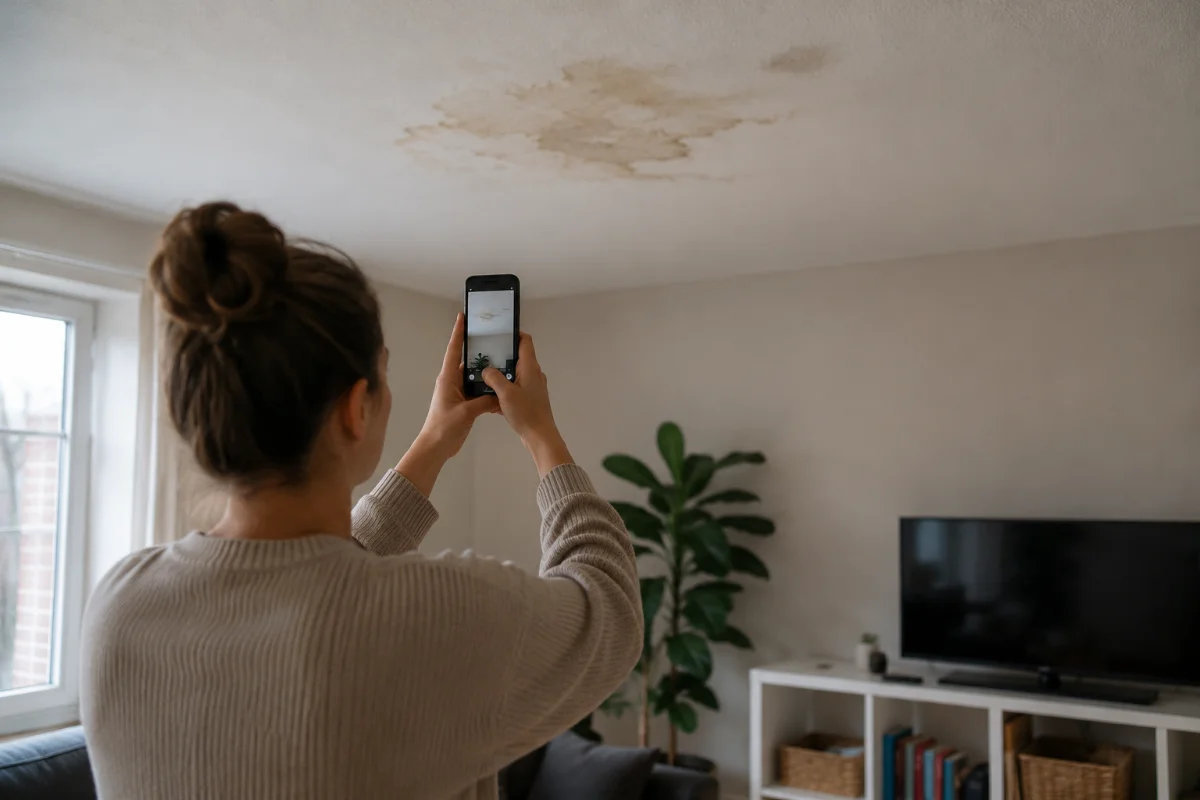
What is a claims examiner: the desk-based person at an insurer who reviews the evidence on a claim, checks it against the policy and the company's guidelines, and authorises, adjusts or declines the payment.
A claims examiner is the desk-based insurance professional who reviews a claim file, checks coverage, evidence and reserve against the policy wording and the company's authority limits, and authorises or declines payment. The examiner rarely leaves the office; the file comes to them.
The title is US wording. In the UK and Ireland the same work is done by a claims handler, and in a growing number of carriers by a desk adjuster. Whatever the title, the person is the point where evidence turns into a decision, which is why the quality of what reaches their screen decides the quality of the claim outcome.
What a claims examiner does
- Coverage check: is the loss within the policy period, the insured perils and the sums insured?
- Evidence review: do the photos, video, estimates and statements support the loss as described, and are there gaps?
- Reserve and authority: is the estimated cost within the examiner's authority, or does it go up a level?
- Referral: send the file to a field adjuster, an engineer, or the special investigations unit where something needs a closer look.
- Decision and record: authorise, partially settle or decline, and write down why.
On complex or high-value claims the examiner also audits the adjuster's work: were the right questions asked, does the settlement sit within guidelines, is the file complete enough to survive a complaint or a regulator's sample?
Claims examiner vs claims adjuster
The adjuster investigates; the examiner reviews and authorises. A field adjuster stands next to the damaged vehicle or in the flooded kitchen and forms a view. The examiner sits at a desk with the adjuster's report, the estimate and the policy, and decides whether the money leaves the building. In smaller carriers one person does both, and the labels blur. In larger ones the split is deliberate: the person who gathers the facts should not be the only person who signs off the payment.
Remote evidence has moved the line. When a policyholder submits guided photos and video themselves, the examiner often reviews the loss directly with no adjuster visit in between, which makes the examiner's evidence judgement more important, not less.
Claims examiner example: a rear-end collision file
A motor claim arrives after a low-speed shunt at a roundabout. The file holds the policyholder's submission: the whole car from four corners, the plate, the rear bumper and boot lid close up, the other vehicle's plate, and a 40-second spoken account. The repairer's estimate is for a bumper, a parking sensor and paint.
The examiner checks that the policy is live and the driver is named, compares the estimate line by line with what the photos show, and notes that the boot lid shows no deformation despite a line for "boot lid realign". She queries that line with the repairer, authorises the rest within her limit, and records the query in the file. Total desk time, a few minutes; no visit, no call to the policyholder.
What a claims examiner does not do, and the mistakes teams make
They do not gather evidence. The examiner works with what arrives. If the submission is three blurry photos from a gallery, the examiner's choices are a chase, a visit or a decision on weak grounds.
They do not prove or disprove fraud. An examiner spots inconsistencies and refers them. A technical flag on a photo is a reason to look, never a verdict on the policyholder.
They do not set the policy. Authority limits, referral triggers and evidence standards come from the claims operation, and the examiner applies them.
The recurring mistakes: authorising from an estimate without opening the images, accepting a file with no record of when and how the photos were taken, leaving the reasoning out of the notes so a complaint six months later has nothing to stand on, and letting authority limits creep so referrals stop happening.
Where the decision is recorded
The examiner's decision lives in the claims system against the claim reference, with the evidence it rested on and the notes explaining it. That record is what claims validation audits, what a complaint handler reads, and what the reinsurer or regulator samples. A file that holds the original media, the receipt time, the session context and the sequence of who opened and reviewed it is worth more than one holding a PDF of the estimate.
Venta Capture, a product of VentaVid, is built for the evidence side of the examiner's desk: the policyholder follows a guided flow on their own phone with no app and no account, and the submission arrives timestamped, located and sealed, with each item marked as recorded in the session or uploaded from a file and any signals shown with their caveats, so the examiner sees what the product can and cannot prove before deciding. Details at the Venta Capture page.