
Commissioning explained: what it is, and where it sits between installation and handover
Commissioning is the structured process of proving that an installed system performs the way it was specified to perform, verified through tests and recorded in documents, before responsibility passes to the people who will operate it. It is a verification stage, not a construction stage.
For field service
Know what the job needs before the van rolls
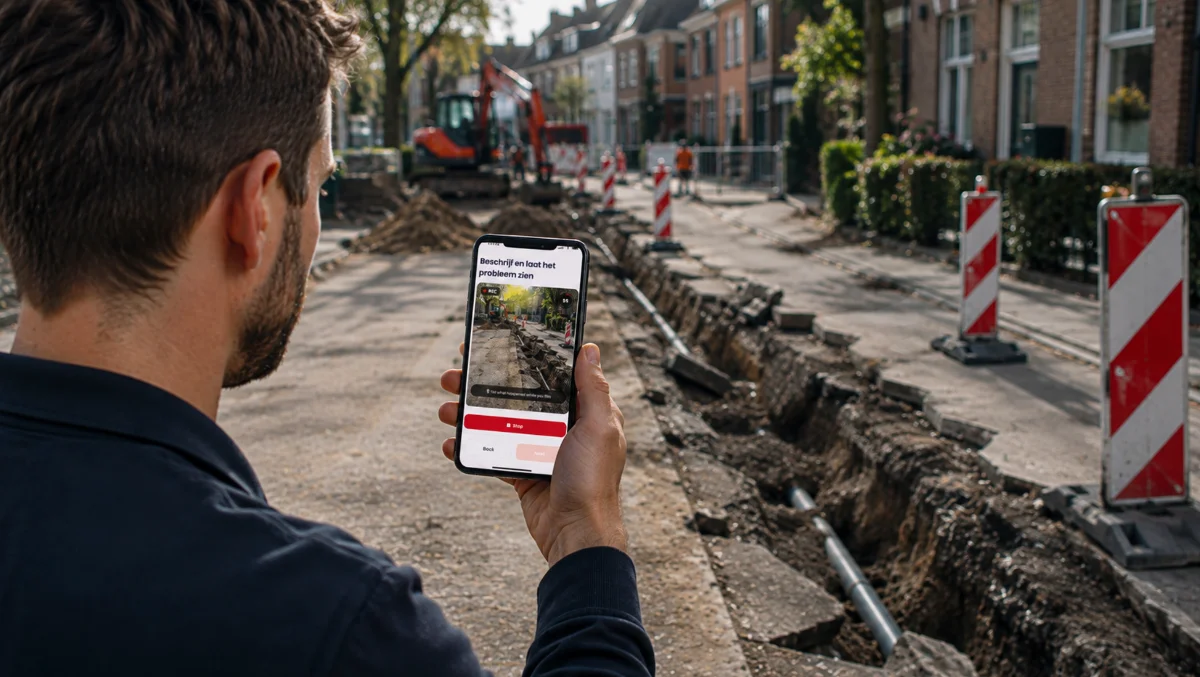
Venta Capture, a product of VentaVid, lets the customer show you the fault first, so the engineer arrives with the right part or does not need to arrive at all.
You will see it written as commissioning, Cx, or the commissioning process. Some sectors say commissioning and validation. The idea underneath is the same: install it, then prove it.
What does commissioning actually mean?
The word gets used loosely for switching something on for the first time. That is energisation, and it is one small part of the job.
Commissioning asks a harder question: does this system meet the requirements the owner set out, under the conditions it will really run in? ASHRAE Guideline 0, The Commissioning Process, builds the whole discipline around that question. A commissioning authority verifies the facility and its systems against the Owner's Project Requirements, phase by phase, from predesign through occupancy and operation.
A full commissioning scope normally covers five things:
- Static checks. Built as designed, correctly labelled, isolated, torqued, tested for insulation and continuity, before anything is energised.
- Functional testing. Each control sequence driven through its states, including the failure states, not only the happy path.
- Performance verification. Output measured under load and compared against the specified figures, not against a nod from the installer.
- Safety and protection tests. Trips, shutdowns, interlocks and alarms demonstrated, each result recorded.
- Records and training. Test sheets, as-built drawings, the operation and maintenance package, and operators who have actually been shown the system.

Installation, commissioning and handover: where each one stops
These three get treated as one blurry event at the end of a project. They are three separate responsibilities, and each answers a different question.
- Installation ends when the equipment is physically in place, connected and built as designed. The question is "is it in?"
- Commissioning ends when the system has been tested under operating conditions and the results are documented against the specification. The question is "does it do what it was specified to do?"
- Handover ends when the operator formally accepts the system together with the documentation, the spares, the training and the open defects list. The question is "who owns it now?"
Collapse the middle stage and you have handed over an unproven system with a signature on it. The BSRIA and Usable Buildings Trust Soft Landings framework exists largely because of that gap. Its six phases run from inception and briefing through design, construction and pre-handover into initial aftercare, with a team on site for the first four to six weeks, then extended aftercare and post-occupancy evaluation.
How does a commissioning process work?
The sequence is fairly consistent across sectors, whatever the equipment.
- Write down the requirements and the acceptance criteria while the design is still being made, not at the end.
- Produce a commissioning plan with named test scripts, pass criteria and who witnesses what.
- Run the static checks and clear the defects they raise.
- Run functional and performance tests, recording measured values rather than ticks.
- Issue the records, the training and the residual defects list, then hand over.
Sector standards give you the template. IEC 62446-1 for grid connected solar, for example, sets out both the documentation to hand to the customer after installation and the commissioning tests and inspection criteria expected to verify safe installation and correct operation.
Commissioning explained: a worked example
A contractor finishes a 250 kW rooftop solar array on a Thursday. Installation is done: modules mounted, strings landed, inverters energised. Commissioning is what happens on the Friday, when open-circuit voltage and insulation resistance are measured and recorded string by string, the inverter is proven to shut down on loss of grid, and every result is filed with the as-built drawings. String 14 reads 30 volts low, which turns out to be a failed bypass diode in one module. Caught at commissioning it is a warranty swap. Caught in month eight it is a site visit, a lost afternoon and an argument about who pays.
What commissioning gets confused with
Snagging. A punch list records what is unfinished or damaged. Commissioning tests whether what is finished actually performs.
Retro-commissioning. The same discipline applied to a building already in use, usually to recover drifted performance. It pays for itself faster than most people expect: an analysis of roughly 1,500 North American buildings by Crowe, Mills and colleagues, published in Energy and Buildings in 2020, found a median simple payback of 1.7 years for commissioning existing buildings, at a median cost near $0.26 per square foot.
Validation. In regulated manufacturing the equivalent runs as installation, operational and performance qualification, with a heavier documentation burden and a regulator as the audience.
Periodic inspection. A recurring condition check on a system already in service, closer to equipment verification than to commissioning.
For anyone signing the certificate, the useful test is simple. If a dispute arrives in eighteen months, the commissioning file is what settles it, so it needs measured values, dates, names and images, not a page of ticks. That is the same standard a good proof of work record has to meet, and it is why teams increasingly build a pre-visit assessment into the schedule before the commissioning engineer travels at all.
In practice: see how field service teams use Venta Capture.