
Emergency lighting test, defined: the routine test of emergency luminaires and exit signs required by BS 5266-1, consisting of a brief monthly function test and an annual test for the full rated duration, with every result recorded in a logbook.
An emergency lighting test is the check that the emergency escape lighting in a building will do its job when the mains fails: come on, light the escape routes and exits, and keep doing so for the rated duration, usually three hours. The regime is set out in BS 5266-1, the British Standard code of practice for emergency lighting, and is the accepted way of meeting the duty in the Regulatory Reform (Fire Safety) Order 2005 to keep fire safety equipment in working order.
The regime matters because emergency lighting fails quietly. A luminaire with a dead battery looks identical to a working one until the power goes off. The two tests exist to catch different failures.
The monthly function test
Once a month, each emergency luminaire and each internally illuminated exit sign is switched to emergency mode for long enough to confirm it lights, and then the supply is restored. This is often called the flick test because on a manually tested system it is done with a key switch or a test switch on the circuit. The tester walks the building and checks each fitting comes on, is clean and undamaged, and is not obstructed. The test is short on purpose: it should not drain the battery. On a self-testing system the fitting runs the test itself and shows a fault indicator, but the walk round to read the indicators and record the result still has to happen.

The annual full-duration test
Once a year, every luminaire is switched to emergency mode for its full rated duration, normally three hours, and checked to confirm it stayed lit for the whole period. This is the test that finds ageing batteries: a fitting that passes the monthly test every time can still fail at ninety minutes. Because the batteries are flat at the end, the test is planned for a time of low risk, typically outside occupied hours, and the building should not rely on emergency lighting until the batteries have recharged, which can take up to 24 hours. Where a building cannot be left with depleted lighting, the test is staged so adjacent areas are never discharged together.
Who carries out each test
BS 5266-1 does not require an electrician for the monthly function test; a trained member of staff who knows the building and the test switches can do it, and in most premises that is the caretaker, the facilities coordinator or the fire warden. The annual test is usually done by a competent contractor, partly because it means timing every fitting over three hours and partly because a fault found at that stage often needs an electrician. Responsibility for making sure both happen sits with the responsible person under the Fire Safety Order, normally the employer or the person in control of the premises. Delegating the test does not delegate the duty.
Emergency lighting test example: a three-storey office
An office building has forty emergency fittings across three floors and a stair core. The facilities coordinator does the monthly function test on the first Tuesday of the month with the key switch and records the result per fitting in the logbook. In August the fitting above the second-floor fire exit fails to light. It is logged as a fault, the contractor replaces the battery and the repair is written against the same fitting. In November the contractor runs the annual three-hour test overnight; three ground-floor fittings drop out before three hours and are listed for battery replacement. The logbook now shows, for every fitting, twelve monthly results, one annual result, the faults and the repairs that closed them. That is what the fire risk assessor will ask to see.
What an emergency lighting test does not do, and the mistakes teams make
The test does not prove the design is adequate. A building can pass every test and still have too few fittings or a stairwell below the required illuminance; that is a design question. Nor does the monthly test say anything about duration.
The usual failures: recording all OK without listing the fittings, so a missed fitting is invisible; running the annual test during working hours; treating the fire alarm test as if it covered the lighting; leaving a fault open until the contractor's annual visit; and having no record of the fittings that exist, so the tester walks past the one in the plant room. The entry on lighting check covers the wider inspection of lighting on a site, and inspection frequency explains how monthly and annual cycles are tracked.
The logbook: where the record goes
BS 5266-1 expects an emergency lighting logbook to be kept on the premises and available to the enforcing authority and the fire risk assessor. It should hold the commissioning certificate, every monthly and annual test with the date, the fittings tested and the result, every fault and the repair that cleared it, and the name of the tester. Paper or electronic is acceptable; what matters is whether the history of each fitting can be followed. Most premises keep it alongside the fire alarm logbook and the inspection reports from the fire risk assessment.
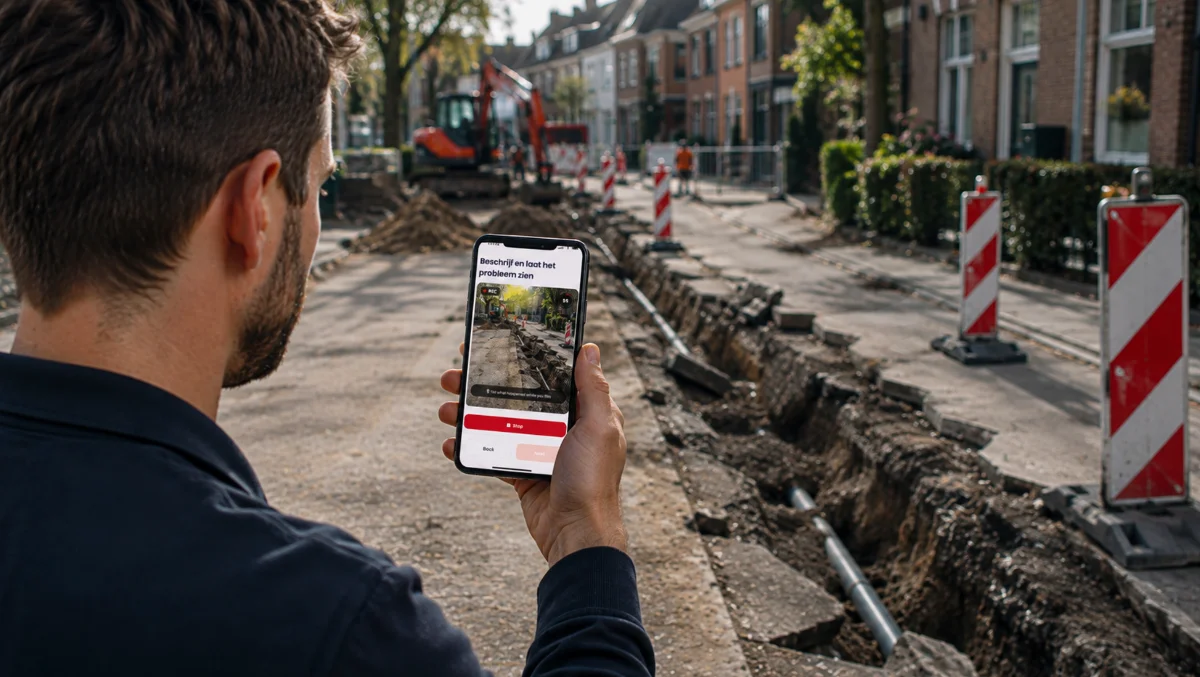
Remote capture cannot run the test; someone has to be in the building to operate the switch and watch the fittings. What it can do is carry the evidence of the monthly test where the tester is a caretaker, a tenant or a contractor rather than head office: a photo of each fitting lit in emergency mode, a photo of the failed fitting and its label, and a photo of the logbook page. With Venta Capture, a product of VentaVid, the person on site is sent a link, follows guided steps in the mobile browser with no app, and the submission arrives timestamped and sealed for review. See the Venta Capture pages.
In practice: see how field service teams use Venta Capture.