
What is field service management: FSM explained
Field service management is the coordination of work carried out away from the employer's own premises: raising and prioritising jobs, matching them to technicians with the right skills and parts, and closing out a verified record of what was done on site. It covers the whole loop from a customer request to a billable job.
For field service
Know what the job needs before the van rolls
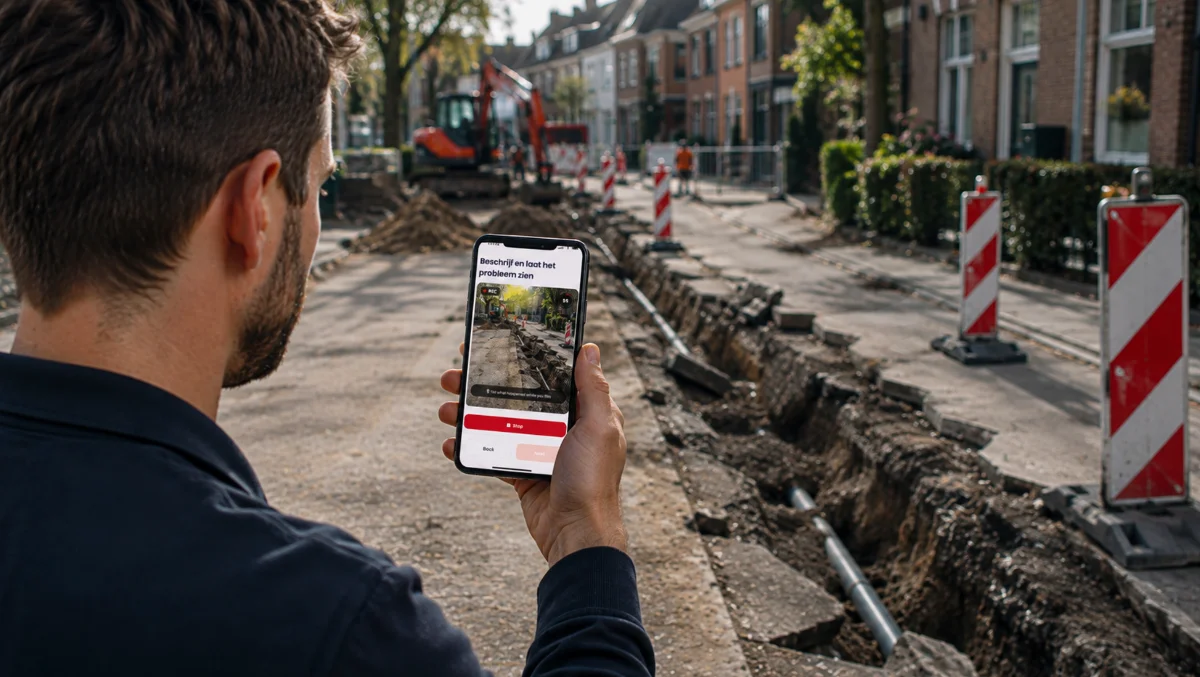
Venta Capture, a product of VentaVid, lets the customer show you the fault first, so the engineer arrives with the right part or does not need to arrive at all.
Written out in full or shortened to FSM, the term covers the same ground in utilities, HVAC, telecom, medical equipment, lifts and facilities. The assets differ. The operating problem does not.
What does field service management cover?
Strip out the software vocabulary and FSM is four questions answered over and over: what needs doing, who does it, when, and how you prove it happened.
- Intake. A fault report, a contracted planned maintenance task, an installation or an inspection enters the queue.
- Triage. Someone decides how urgent the job is against the contract, and whether it needs a site visit at all.
- Scheduling. Jobs are sequenced across the available workforce against skills, parts, time windows and working hours.
- Dispatch. The job is released to a named technician who then travels to site.
- Execution and close-out. The technician works the job, records findings, consumes stock, and captures completion evidence that feeds invoicing, warranty and compliance.
Each step leaves a record, and the work order is the spine those records hang from. That is why almost every FSM system is built around it rather than around the calendar.

How does field service management work end to end?
The chain is easy to describe and hard to run, because every step inherits the quality of the one before it.
A vague fault description produces the wrong skill assignment. The wrong skill assignment produces a failed visit. A failed visit produces a repeat truck roll, a contractual problem, and a customer who now discounts the next promise you make.
Aquant's 2025 Field Service Benchmark Report puts numbers on that chain: a failed first visit adds two more visits on average and extends resolution timelines by 14 days (reported in TechNation). One weak intake call is rarely one lost hour.
Field service management explained: a worked example
A commercial HVAC contractor takes a no-cooling call at 08:20 from a site with a four-hour response commitment. The coordinator triages it, confirms from photographs that the fault is a failed contactor rather than a refrigerant loss, and releases the job to a technician already routed to that industrial estate with the matching part on the van. The job closes at 11:05, inside the commitment and without a second visit.
Nothing in that sequence is clever. Each step simply handed the next one accurate information.
How FSM differs from CMMS, EAM and workforce management
These four overlap enough to cause long procurement arguments. The distinction that matters is what each system is organised around.
- FSM is organised around the visit: a person travelling to a location to do work at a point in time.
- CMMS is organised around the asset: maintenance history, condition and planned regimes, usually on sites you own.
- EAM widens the asset view to the full life cycle, including capital planning, spares strategy and disposal.
- Workforce management is organised around the person: shifts, availability, absence, certifications and pay rules.
Plenty of operations run all four. Trouble starts when two of them each hold a partial version of the same job and neither is authoritative.
The numbers field service managers actually watch
- First-time fix rate. The headline productivity measure. Aquant's 2025 report puts top performers at 86 percent against 53 percent for the bottom fifth.
- Avoidable dispatch rate. The share of visits that never needed to happen: 3 percent for top performers against 24 percent for the bottom 20 percent in the same report.
- Mean time to resolution. How long the customer actually waited, across however many visits it took.
- SLA attainment. The share of jobs meeting the contracted response and resolution commitments.
- Utilisation and travel time. How much of a paid day is spent working rather than driving.
Pick two or three and hold them together. Push any single one in isolation and you will quietly damage another, usually by closing jobs optimistically or by sending someone who was never going to fix it.
Where the FSM market is heading
Spending on the tooling is growing quickly. MarketsandMarkets values the global field service management market at USD 5.10 billion in 2025 and projects USD 9.17 billion by 2030, a compound annual growth rate of 12.5 percent (MarketsandMarkets).
The direction of travel inside that spend is toward deciding more before anyone travels, and proving more afterwards: remote diagnostics at the front, structured proof of work at the back. The visit remains the expensive part of field service. Most of the remaining gains sit in the decisions either side of it.
In practice: see how field service teams use Venta Capture.