
Quality assurance inspection explained: what QA inspection means, how it is run, and what it is not
A quality assurance inspection is a planned check that work or product conforms to a specified requirement, carried out at a defined point in the process, by a defined method, and recorded so the result can be relied on later. Three words carry the weight there: planned, defined and recorded. A supervisor forming an opinion while walking past is not a QA inspection, however experienced the supervisor.
For field service
Know what the job needs before the van rolls
Venta Capture, a product of VentaVid, lets the customer show you the fault first, so the engineer arrives with the right part or does not need to arrive at all.
Shortened to QA inspection, and closely tied to quality control inspection, QC check and quality audit. Those neighbouring terms are not synonyms, which is where most of the confusion starts.
Quality assurance or quality control: what is the difference?
The textbook split is simple enough. Quality assurance is about the process: procedures, competence, approved methods, calibrated equipment, inspection and test plans, so conforming work is what the system naturally produces. Quality control is about the output: checking the thing that was made or done, and rejecting it if it fails.
The term quality assurance inspection sits deliberately across both. It is a QC-style physical check, run under a QA framework that decides in advance what gets checked, when, by whom and against what. If nobody can point to the document that defines the acceptance criteria, what is happening is inspection, not quality assurance.

How does a quality assurance inspection work?
- An inspection and test plan (ITP) lists each activity, the acceptance criteria, the reference standard or drawing, who inspects and what record is produced.
- Hold points and witness points control the timing. At a hold point work cannot proceed until the inspection is passed. At a witness point the client or QA representative is invited but work may continue if they do not attend.
- Acceptance criteria are stated in advance and measurable: a torque figure, a tolerance, a coating thickness, a pressure held for a stated period.
- Sampling applies where checking everything is not feasible. Attribute sampling plans of the kind set out in ISO 2859-1, with an agreed acceptable quality limit, decide the sample size and the accept and reject numbers.
- Nonconformance handling closes the loop: a nonconformance report, disposition (rework, repair, use as is, reject), corrective action and verification of the fix.
Quality assurance inspection: a worked example
A contractor installs 40 rooftop condensing units across a retail estate. The ITP sets a hold point after the first installation: mounting, isolation, pipework, condensate route, electrical termination and commissioning readings are inspected before unit two starts. The remaining 39 are sampled, five units, with defined accept and reject numbers. Two of the five show the same condensate routing fault, which triggers a nonconformance covering the whole batch rather than the two that happened to be sampled. That is the point of sampling. It is a check on the process, not just on the units you looked at.
Where QA inspections apply
- Construction and fit-out: structure, services, finishes, at defined milestones.
- Manufacturing: incoming goods, in-process checks, final inspection before release.
- Field service and installations: commissioning checks, first-fix and second-fix verification, completion inspections.
- Facilities and maintenance: planned maintenance verification and contractor performance monitoring.
- Supplier management: pre-shipment inspection and factory acceptance testing.
The framework most of this hangs on is ISO 9001. The ISO Survey 2024 recorded 1,474,118 valid certificates to ISO 9001:2015 worldwide (ISO Survey), which is a reasonable proxy for how widely the underlying discipline is formally adopted. Certification is not the same as effective inspection, though, and plenty of organisations run rigorous QA without a certificate.
What poor quality inspection actually costs
The UK Get It Right Initiative, working with a study group of major construction organisations, found the direct cost of avoidable error to be in the order of 5 percent of project value. Adding unrecorded process waste, indirect costs and latent defects took the estimate as high as 21 percent of project cost (Get It Right Initiative).
The interesting part is not the headline. It is that the direct figure is small and the total is not, because most of the cost is in the errors nobody recorded. Inspection changes that ratio only when findings are captured in a form somebody can analyse later.
Mistakes worth avoiding
Inspecting only at the end. A final inspection on covered-up work finds what is visible. The hold point exists because some things can only be checked once.
Acceptance criteria written as adjectives. Neat, tidy and to a good standard cannot be passed or failed. They can only be argued about.
Letting the person who did the work sign it off unaided. Self-certification has a place, but it needs verification sampling behind it or it drifts.
Collecting findings nobody trends. The same fault appearing on three sites is a process problem. Recorded as three separate snags, it stays invisible.
Related reading: proof of work, snagging list, and proof of work in field service.
Inspecting work you did not attend
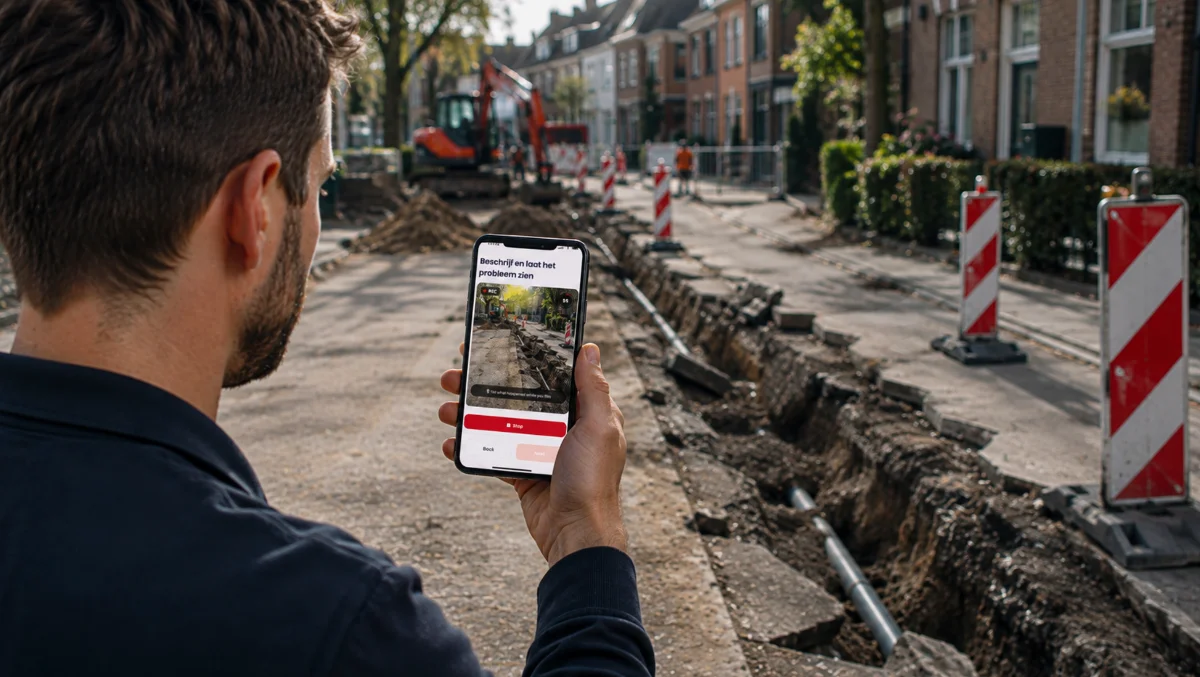
The hard case for most quality teams is not the inspection itself. It is that the work sits across dozens of sites and contractors, and the inspector cannot be at all of them. Venta Capture, a product of VentaVid, is used for that gap: the person already on site is walked through a defined sequence of views and questions, and the submission arrives as a structured case with the answers, transcript, receipt timestamp and integrity information attached, ready for review or a targeted retake request. It does not make the judgement. The qualified inspector still decides whether the work conforms, and where a physical inspection is required, it remains required. More on the approach on the Venta Capture field service page.
In practice: see how field service teams use Venta Capture.
When the QA inspector cannot be at the site, the check is often filmed by the person on site and reviewed remotely. See remote inspection software: which type do you need?.