
Service report: the definition, and what the document has to prove
A service report is the record a technician produces at the end of a visit, setting out what was found, what was done, which parts and labour were used, and the condition the asset was left in. It is written for two audiences at once: the customer who pays, and the file somebody reads months later.
For field service
Know what the job needs before the van rolls
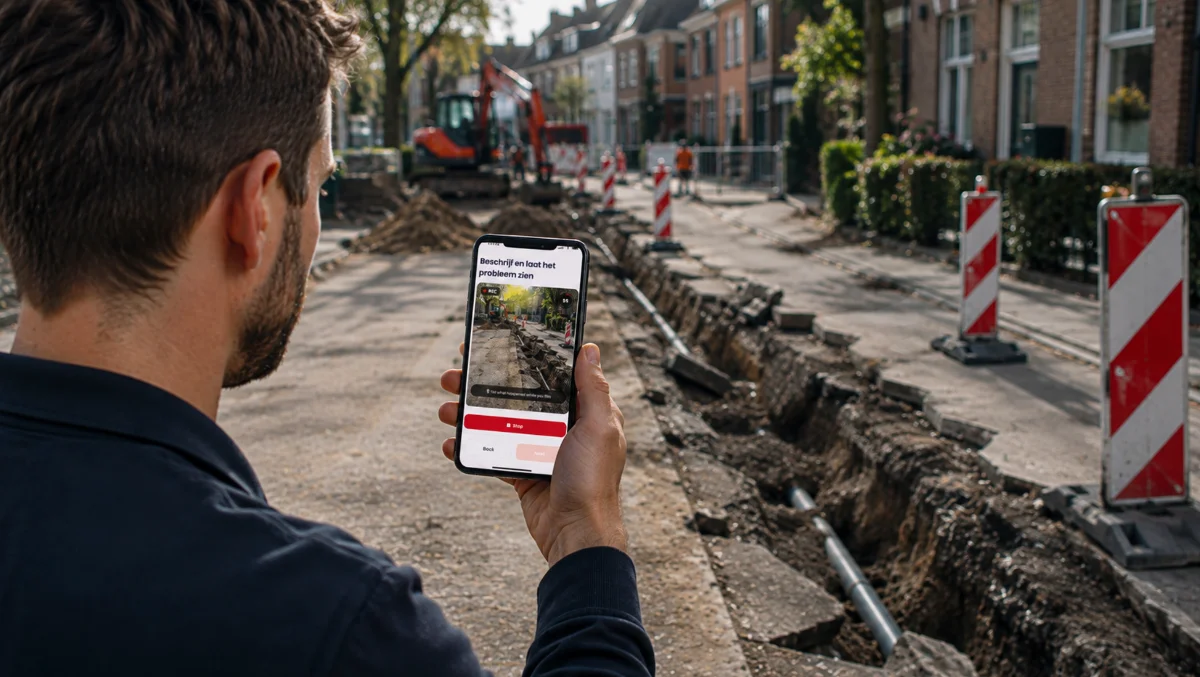
Venta Capture, a product of VentaVid, lets the customer show you the fault first, so the engineer arrives with the right part or does not need to arrive at all.
Also called a field service report, a service sheet, or a visit report. In maintenance contracts it is often the deliverable the invoice hangs on.
What goes into a service report?
A report that survives scrutiny carries seven things:
- Identity. Asset or serial number, site, date, arrival and departure times, technician name.
- The reported problem in the customer's words, kept separate from what was actually wrong.
- Findings. What was observed and measured, including readings that were normal.
- Work done. Actions in order, parts fitted with part numbers, labour time.
- Condition on leaving. Fully operational, running with a limitation, or out of service.
- Recommendations. Follow-up work, quoted or not, and the risk of leaving it.
- Acceptance. Customer signature or acknowledgement, and any dispute noted at the time.
Two of those seven do the heavy lifting. Findings and condition on leaving are what a manager, an auditor or a lawyer reads first, and they are the two most likely to be summarised into uselessness by a technician who wants to get home.
The condition line is the one most often fudged. "Job complete" and "running, with a recommendation to replace the pump within 30 days" carry very different liability, and only one of them helps anybody.

How a service report differs from a job card and a work order
Three documents, one job, and they get used interchangeably in conversation.
- A work order authorises the work. It comes first, and it says what is permitted and who pays.
- A job card is the internal, technician-facing record that travels with the job and captures diagnosis, parts and time as they happen.
- A service report is the outward-facing account of the completed visit, drawn largely from the job card, written for the customer and the contract.
In a two-van operation the same sheet does all three, and nobody suffers. Under a maintenance contract with penalties, the difference matters.
What makes a service report hold up months later
Quality systems treat the report as release evidence, not paperwork. ISO 9001:2015 requires an organisation to retain documented information on the release of products and services, including evidence of conformity with the acceptance criteria and traceability to the person who authorised release (ISO 9001:2015, clause 8.6). A service report is where a field organisation usually meets that requirement.
Three properties decide whether it holds:
- Specificity. Measured values beat adjectives. "Discharge pressure 4.1 bar against a 6.0 bar setpoint" survives a challenge that "pressure low" does not.
- Contemporaneity. Written on site, at the time. A report typed up two days later is a memory, and it reads like one.
- Attached evidence. Photographs of the fault, the serial plate and the finished state, tied to the visit rather than sitting loose in a phone gallery.
A service report explained: a worked example
A refrigeration engineer attends a supermarket for a high-temperature alarm. The report records a suction pressure reading, a photograph of an iced evaporator, a defrost heater tested open circuit, the heater replaced from van stock, and the cabinet back in range at a stated temperature before departure. Three months later the same cabinet fails for a different reason, and the report is what proves the first visit was a genuine first-time fix rather than a repeat of unresolved work.
Where service reports go wrong
Written for the invoice, not the file. A report optimised to justify hours is thin on findings, which is exactly what you need later.
Copy-paste narratives. Once "carried out routine service, all in order" appears on 200 reports, none of them are worth reading.
Recommendations without consequences. "Advised customer" protects nobody unless the report says what happens if the advice is ignored.
No photographs. The single cheapest upgrade to report quality, and the one most often left to the technician's discretion.
Better information before the visit reduces how much the report has to carry afterwards. Structured remote diagnostics often resolves the issue without a truck roll at all, and where a visit is still needed, the engineer arrives already knowing what to record.
In practice: see how field service teams use Venta Capture.