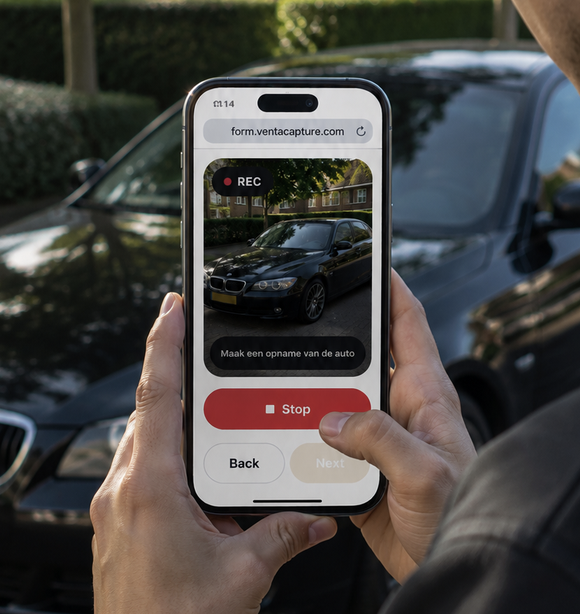
What is a video quote: a repair or service quotation delivered to the customer as a short video, in which the technician or advisor shows the part or the problem on the customer's own vehicle and the price for fixing it, with a way to approve the work from the same message.
A video quote is a quote for repair or maintenance work that arrives as a short video rather than a phone call or a line on a printed estimate. The technician films the worn tyre, the leaking gasket or the corroded brake pipe on the customer's own car, says what it is and what it costs, and the customer decides from the video.
It matters because a quote for work on a part the customer cannot see is a trust exercise. The phone call version asks the customer to believe the advisor; the video version lets them look. In the UK it is a video quote or video VHC; in North America the same thing is usually called a technician video or a video inspection, and the quote is the estimate attached to it.
How a video quote works
- Record. During the health check or after diagnosis, the technician records 30 to 90 seconds on a phone or tablet: the part in frame, the wear or the fault shown rather than described, and the registration in shot at some point so the customer knows it is their car.
- Price. The service advisor attaches the priced lines: parts, labour, VAT, and the total for each item, itemised so the customer can approve one item and defer another.
- Send. The customer receives a link by SMS, WhatsApp or email. The page holds the video, the priced items and the buttons: approve, defer, ask a question, sometimes pay.
- Decide. The customer watches, decides, and the decision returns to the workshop against the repair order. The advisor gets a notification when the video is opened and another when the work is approved.
The point of the sequence is that the explanation, the price and the decision live in one place. Where the video goes out first and the price follows an hour later by phone, most of the benefit is lost.
What a good video quote contains
- The customer's name and the vehicle, said out loud in the first five seconds.
- The part, in focus, with the wear visible: a depth gauge in the tread, a pad against a ruler, a torch on the leak.
- What happens if it is left: worn to the metal, an MOT fail, a breakdown. Stated plainly, without drama.
- The price, itemised, and the time it will take.
- Anything checked and found fine, in one sentence, because a quote that only lists problems reads as a sales pitch.
The tone that works is a technician talking to a neighbour. Scripts sound like scripts, and customers who have watched two of them can tell.
Video quote example: rear brakes on a family SUV
An SUV is in for a service. The technician finds the rear pads at 2 mm and the discs lipped and scored. Rather than write "rear brakes amber, advise replacement" for the advisor to relay, he records 45 seconds: the pad against the wear gauge, the lip on the disc edge, a finger across the scoring. "These are your rear pads and discs. The pads are at two millimetres, the discs are worn with them, and if we fit pads alone they will bed badly on that surface within a few weeks. Both together is the right job."
The advisor adds the price for pads and discs and the labour, and sends it at 10:40. The customer opens it at 10:52 in a meeting, approves it at 10:55, and the parts are ordered before the technician has moved to the next car. Without the video, the same customer would have been a voicemail at 11 and a call back at 3, with the car sitting on the ramp in between.
What a video quote does not do
- It does not replace the written estimate. The priced lines still need to exist on the repair order, and in some jurisdictions written or recorded authorisation is required before chargeable work starts.
- It does not fix a bad diagnosis. A confident video of the wrong part is worse than a phone call about the right one.
- It does not work as a monologue. Two minutes of a technician talking to a bonnet with nothing in frame is a phone call with worse audio.
The mistakes are mostly production habits: filming in a dark bay with the part out of focus, quoting a total with no breakdown, sending the video without the price so the customer has to ring, and recording only on cars with big-ticket findings so the practice never becomes routine. Workshops that get value from it send a video on every health check, including the ones where everything is green.
Where the video quote goes and who owns it
The video and the customer's response are stored against the repair order, in the video platform and usually in the DMS through an integration. The advisor owns the send and the follow-up, the technician owns the content, and the service manager reads the numbers: videos sent per repair order, view rate, and the approval rate on quoted work, read next to declined work and upsell rate. The wider case for video in the service department is set out in 5 strategies to boost repair sales.
Venta Video is built for this step. The technician records the clip on a phone, and the customer receives it as a branded page over SMS, WhatsApp or email with approve, book or pay buttons beneath the video, so the quote and the authorisation are one message. Details on the automotive aftersales page.