

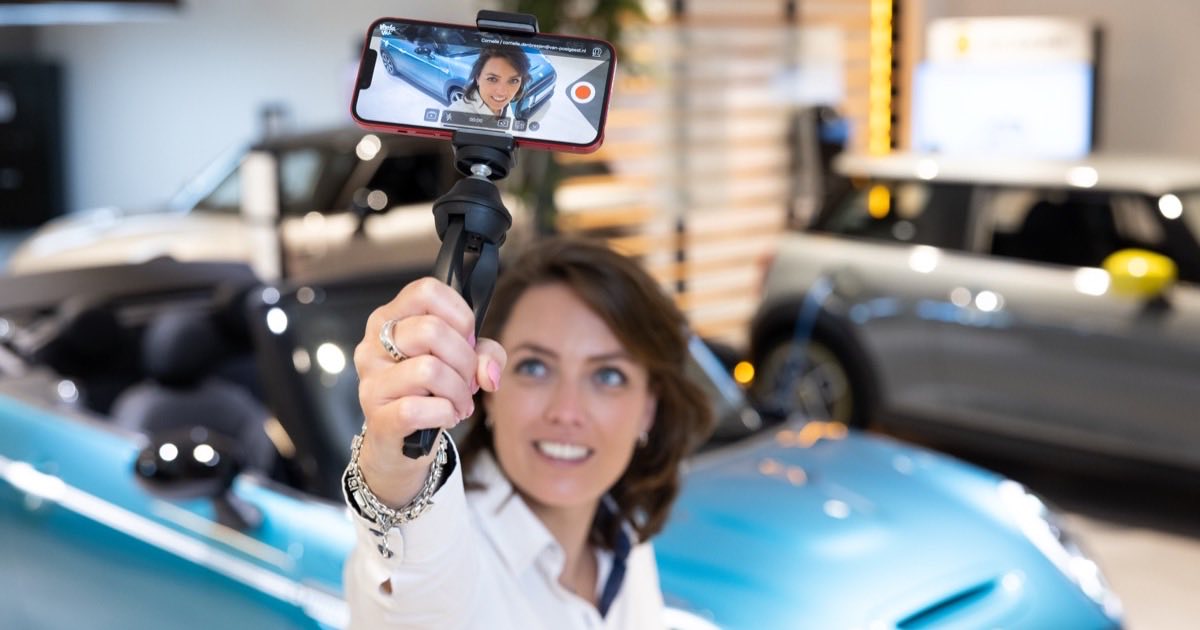
This post in 30 seconds.
- What it is: a short video shot on a phone, sent as a link to a branded page. Not an attachment, not a produced marketing clip.
- Why bother: VentaVid users see 300%+ more responses than standard email. A face beats a template.
- Who this is for: sales managers, BDC teams, and service managers at dealerships who want plays they can run this week.
Every dealership sends the same follow-up email. Same subject line, same "just checking in," same silence afterwards. The internet lead who filled out a form on Tuesday has heard from four stores by Wednesday, and every one of those messages looks identical in their inbox.
Video email breaks that pattern for one simple reason: the customer sees a person, standing next to the actual car, saying their name. This guide covers how it actually works (including why attachments fail), then walks through the plays that book appointments for sales, BDC, and the service drive.
If you run a sales floor or a service department and your team's follow-up emails keep disappearing into the void, this is fixable with the phones your people already carry. We build personalized video for exactly this problem. See how it works on your own inventory in a 15-minute demo.
What a video email actually is (and why attachments fail)
First, the mechanics, because this is where most dealerships get it wrong.
You can't just attach a video file to an email. A 60-second phone video runs 50 to 100MB, which blows past attachment limits, gets clipped by Gmail, or lands you in the spam folder. And embedded video that plays inside the inbox isn't reliably supported by most email clients either. (Our guide to embedding video in email covers the technical side in detail.)
So what does a video email actually look like when it's done right?
- The email itself stays light. A short line of text plus a thumbnail of the video. Because it's a normal email under the hood, it sails through filters like any other message, and with a DMARC-compatible platform it sends from your dealership's own domain.
- The thumbnail links to a video page. The customer clicks and lands on a branded page where the video plays instantly. No download, no login, no app.
- The page does the selling after the video ends. On a VentaVid page, the customer can book an appointment, approve work, pay, or reply right under the video. The video gets the open. The buttons on the page get the appointment.
That last part matters more than the video quality ever will. A video that ends with "call us back" still depends on a phone call. A video that ends with a booking button doesn't.
This isn't fringe behavior anymore. The CDK 2026 Friction Points Study found that 72% of dealership sales teams already use video in some form, yet only 49% of dealerships have salespeople sending personalized videos directly to customers. The gap between those two numbers is where the advantage sits.
The 60-second workflow on the phone your team already carries
The biggest objection to video isn't strategy. It's "my people don't have time for this."
Fair concern, and here's my honest answer. I've timed the full loop: open the app, film one 45-second walkaround in a single take, tap send. The typing takes longer than the filming. There's no editing step, because there's nothing to edit. The platform turns the video into a link and builds the branded page automatically.
The workflow, start to finish:
- Open the app and hit record. Phone in hand, standing at the car or in the bay. One take. Um's and background noise are fine; they prove it's real.
- Say the customer's name in the first five seconds. "Hi Sarah, it's Mark from the dealership, you asked about the grey RAV4." That sentence is the whole reason this works.
- Show one thing, make one point. The car they asked about. The worn brake pad. The trade-in figure. Under 60 seconds, always.
- Send it on their channel. Email is the classic route, but the same page link works over SMS and WhatsApp too.
- Watch for the open. You get a notification the moment the customer views it. That's your cue to call, while the video is still fresh in their mind.
And the camera-shy rep? Nobody needs to be a presenter. Customers respond to a real person who knows the car, not a polished performance. The reps who mumble through their first video usually send their fiftieth without thinking about it.
Sales and BDC plays that book appointments
Different moments in the deal call for different videos. These four plays cover the moments where dealerships leak the most money.
The internet lead that won't pick up the phone
Speed decides this play. The MIT Lead Response Management study found you're about 100 times more likely to connect with a lead within 5 minutes than at 30 minutes. But speed with a template email is still a template email.
So the play is a 30-second video sent minutes after the lead lands: the rep's face, the customer's name, and the actual car in frame. Video messages get an 81% response rate, which is a different sport from the single-digit reply rates most BDCs see on templated follow-up.
The walkaround before the test drive
An online buyer's quiet fear is that the car in the photos isn't really there, or isn't really that clean. A personalized walkaround kills that doubt in one send. Film the car they asked about, answer the two questions from their enquiry, and end with "want me to hold it for Saturday?"
This is the highest-value habit on the sales floor, and it pairs naturally with the virtual selling strategies that took over after buyers stopped defaulting to showroom visits.
The lead that went dark
Every CRM is full of leads that stopped replying three weeks ago. The fourth "just following up" email won't wake them. A 20-second video will at least get watched: "Hi James, still have the Golf you looked at, but I've also just taken in something I think fits you better. Have a look."
It works because it's impossible to mistake for automation. Nobody films a personal video for a lead they don't care about, and the customer knows it.
The handover and the no-show killer
Two smaller plays worth building into the routine. Send a short "your car is ready, here's what we did" video before delivery day to keep the excitement up. And send a quick confirmation video the day before an appointment; a face saying "see you tomorrow at ten" is harder to stand up than a calendar reminder.
Teams that run these plays consistently see it in the numbers. At Eastern Cape Ford, part of one of South Africa's largest privately owned motor groups, the sales team closes 20% of sales where videos are used.
"VentaVid is a far superior product. It helps us build trust and our relationships with customers. Customer responses have been outstanding and has developed a whole new level of confidence in how our salespeople interact with customers."
by Dale Cuthbert, Sales Manager, Eastern Cape Ford
The full playbook for the sales side lives on our video for automotive sales page.
Service drive plays that get work approved
Here's where video email quietly makes the most money, and where almost nobody in the "video email" conversation looks.
The approval video
A service advisor reads a $700 quote over the phone. The customer, who can't see the worn part, hears a number and a stranger asking for it. "Let me think about it" follows, and the work walks out the door.
Now run the same moment through video. The technician films the brake disc on the lift, points at the lip on the edge, and explains what happens if it stays on the car. The customer watches it on their phone and taps approve on the same page. 85% of service videos are viewed within 15 minutes of being sent, which means approvals come back while the car is still on the lift, not after the third voicemail.
The numbers from dealers who run this play properly are hard to argue with. Mohsin Haider Darwish, a Suzuki dealer, lifted customer approval rates from 68% to 88% after moving inspections to video, and parts and labour upselling went from 55% to 91%.
Declined work and the long game
Work that gets declined today isn't dead, it's deferred. A video of the actual worn component, saved against the customer's record, gives your follow-up in month three something honest to reference: "here's the tyre we flagged in March, worth another look before winter."
Status updates fit the same pattern. A 20-second "here's where your car is at" video answers the question before the customer rings reception to ask it. Fewer inbound calls, better CSI, and a customer who trusts the next recommendation more. Our guides on building video into your aftersales workflow and lifting repair sales in the service department go deeper on both plays, and the aftersales solution page shows how the approval flow works end to end.
What to measure (and what good looks like)
Video email is measurable in the KPIs you already track. Pick one number per department and watch it for 30 days.
Two honest framing notes on the math. First, use your own baseline; a store replying at 8% has more upside than one already at 20%. Second, don't expect every send to convert. The lift comes from running the plays consistently, not from one great video.
For context on the ceiling: Campaign Monitor's research on video in email found it can lift click-through rates by around 65%, and VentaVid users report a 1.5x faster sales cycle with personalized video.
When the response data starts coming in, the view notifications become a coaching tool too. You can see which reps send videos, which videos get watched, and where deals stall. If you're at the stage of picking a platform rather than testing the approach, our comparison of video email software for sales teams does the shopping legwork for you.
Want the math run on your own store's numbers? Book a 15-minute demo and we'll do it live, on your inventory.
Frequently asked questions
Does the video actually play inside the email?
No, and it shouldn't. The email carries a thumbnail that links to a branded page where the video plays instantly. That keeps the email light enough to reach the inbox and gives the customer buttons to book, approve, or reply after watching.
How long should a dealership video email be?
Under 60 seconds, one topic per video. Say the customer's name in the first five seconds, show the one thing they care about, and end with a clear next step. Longer walkarounds are fine when a serious buyer asks for detail.
What equipment does my team need?
A smartphone. No microphone, no gimbal, no editing software. Showroom or workshop background is an asset, not a problem, because it proves the video is real and recent.
Will video emails get flagged as spam?
Attachments might; a proper video email won't. Because the video lives on a page and the email is a normal lightweight message sent DMARC-aligned from your domain, deliverability behaves like any other email you send.
What results do dealerships see from video email?
VentaVid users see 300%+ more responses than standard email, and the cleared customer results run from a Suzuki dealer lifting approval rates from 68% to 88% to Eastern Cape Ford closing 20% of sales where videos are used. Your baseline and consistency decide where you land. Pricing is tiered by team size; every standard plan starts with a free trial.
Should we send video by email, SMS, or WhatsApp?
Send it where that customer already talks to you. The video page link is the same either way, so the channel is a delivery choice, not a strategy choice. A common pattern is emailing the first video, then moving to WhatsApp once the conversation is live.
Talk to us
If your follow-up emails go unanswered or your service quotes keep getting declined over the phone, video email is the cheapest fix available: same leads, same phones, different response rate. VentaVid is built for exactly this, and it's used by sales and service teams at 1000+ dealerships in 43 countries.
What it takes to start.
- 7-day free trial, no credit card required, so your team can send real videos to real customers before you commit.
- No editing skills needed. Your reps and advisors shoot on the phones they already carry.
- We'll set the demo up on your own inventory, not a canned example.
A real person from the VentaVid team runs these demos on your inventory.
Book your 15-minute demo and send your first video email this week.