

This post in 30 seconds.
- Where WhatsApp fits in a dealership: the setup choice (free Business app vs API), then a play-by-play for sales follow-up, test drives, service approvals, and the BDC.
- Why it's worth the effort: WhatsApp passed 3 billion monthly users in 2025, and it's the channel your customers already answer on.
- Who this is for: sales managers, service and aftersales managers, BDC managers, and dealer principals at a single rooftop or a group. Not for consumer car buyers.
Call an internet lead from the dealership landline and you get voicemail. Send the same customer a WhatsApp message and you'll often have a reply before the next write-up is done. That gap is why WhatsApp has quietly become the working channel for dealerships across Europe, the Middle East, Africa, Asia, and Latin America.
Most guides on this topic are written by messaging-software vendors, and they stop at "get the message delivered." This one goes further: how to set WhatsApp up properly, what to send by department, how to stay on the right side of opt-in rules, and why the content of the message decides whether the chat ends in a booked test drive or two blue ticks and silence.
We build personalized video for dealership sales and service teams, so we spend our days inside exactly these conversations. If you run a sales floor, a service drive, or a BDC and slow lead follow-up or approvals stuck in phone tag are costing your store money, see how VentaVid works over WhatsApp and judge it on your own inventory.
Why WhatsApp is a dealership channel, not a fad
WhatsApp crossed 3 billion monthly users in 2025, with more than 2 billion people opening it every day, according to Meta's Q1 2025 earnings call reported by TechCrunch. For most of the world, it isn't "a messaging app." It's where family, work, and yes, car-buying conversations already live.
Dealership customers have said as much. In Cox Automotive's 2025 Ownership Study, 79% of service customers rated message updates about upcoming or scheduled service among the most helpful things a dealer can do. And Cox's 2024 Car Buyer Journey Study found 71% of buyers expect to mix online and in-store steps on their next purchase. Messaging is the thread that holds that mixed journey together.
One honest caveat before you build a strategy on it. WhatsApp is the default customer channel in the EU, UK, Middle East, Africa, Asia, and Latin America, while US customers have the same conversations over SMS. We're a Dutch company working with dealers in 43 countries, and the pattern is consistent: the channel name changes at the border, the playbook doesn't. Everything below works the same way if your market texts instead.
WhatsApp Business app vs API: which one your dealership needs
This is the first real decision, and it's simpler than the vendor blogs make it sound.
The free app is genuinely fine for a one-person operation. It supports quick replies, a catalog, and away messages, and it costs nothing.
It breaks the moment a team touches it. The number is tied to one phone, there's no shared inbox, and when a rep leaves, every conversation leaves with them. That's also why reps quietly using their personal WhatsApp numbers is the worst version of this: zero oversight, zero history, and a GDPR headache waiting to happen.
The practical rule: two or more people answering customers means you need the API through a messaging platform. You get one number for the store, a team inbox, and message templates for reaching out first. Meta bills per delivered template message at rates that vary by country and category, and your platform charges on top, so ask both for real numbers before you sign.
One mechanic to understand before the playbooks: the 24-hour window. When a customer messages you, you can reply freely for 24 hours. After that, starting the conversation again requires a pre-approved template, which is Meta's way of keeping spam off the platform.
The WhatsApp sales playbook for car dealerships
Now the part that actually moves metal. Four plays, in the order most stores adopt them.
- Lead follow-up on the customer's channel: when an internet lead includes a mobile number, your BDC or reps follow up where the customer actually answers. Industry data has said for years that 78% of buyers purchase from the dealer that responds first, so speed to lead matters more than the perfect script.
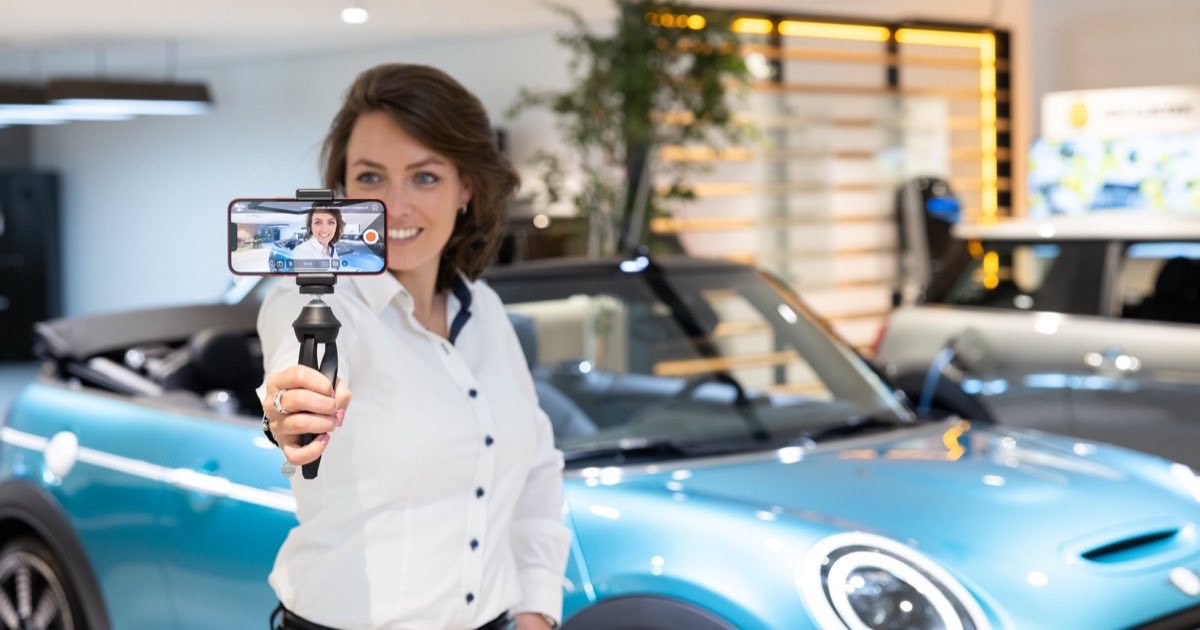
- The walkaround, sent as a link: instead of "give me a call back," drop a personalized walkaround video of the exact car into the chat. A video made for their WhatsApp thread does what a fourth voicemail never will: it puts a face and the actual car in front of the lead that never picks up.
- Test-drive confirmations: a short confirmation message the day before, ideally with a quick "your car is ready, see you at 10" video, cuts no-shows. It's low effort and reps can send it between customers.
- Trade-in and appraisal updates: send the valuation with a short video explaining how you got to the number. Customers who can see the reasoning argue less and show up more.
The response gap is the whole argument for the video versions of these plays. Video messages get an 81% response rate, which is a different sport from what your team sees on email follow-up.
Notice none of these plays involve a chatbot. Automation has its place for reminders, but a lead deciding between your sales floor and the dealer across town responds to a person, not a decision tree.
The aftersales playbook: approvals, updates, CSI
Service is where WhatsApp pays for itself fastest, because the service drive runs on approvals.
Picture the standard failure. The technician finds worn front pads during the multi-point inspection, the advisor calls the customer at work, gets voicemail, and the car sits on the ramp waiting. When they finally connect, the customer hears a number for a part they've never seen and says they'll think about it. Declined work, blocked bay, and nobody's happy.
Run the same job over WhatsApp with video and it looks different. The advisor sends a short clip of the actual worn part with the quote, the customer watches it in the queue for coffee, and taps approve. Dealers doing video health checks in their aftersales workflow close the "show me why I need that" gap before it becomes declined work.
The speed matters as much as the trust. 85% of service videos are viewed within 15 minutes of being sent, which means approvals come back while the car is still on the ramp instead of at 5 p.m. One Suzuki dealer, Mohsin Haider Darwish, lifted customer approval rates from 68% to 88% after moving recommended work to video.
"VentaVid has been a very nice initiative for our customers. They better understand repair works, now the trust in us as a dealer has improved. VentaVid is one of the factors that boosted our NPS score to 100%."
by Mohammad Qurah, After Sales Manager, Advanced Automotive Trading
There's a defensive reason to care too. The CDK Friction Points Study 2026 measured dealership NPS falling from +48 to +29 in a single year. Status updates the customer can see, on the channel they already check, are the cheapest CSI lever a service department has. Pair the approval flow with simple "your car is washed and ready" messages and the repair-order value follows.
If approvals stuck on voicemail are a daily fight in your store, book a 15-minute demo and we'll map video approvals onto your write-up flow.
The ceiling of plain-text WhatsApp (and how video pages break it)
This is the part every messaging-vendor guide skips, and it's where the real money is.
Send a plain WhatsApp message and here is everything you learn back: one tick, two ticks, maybe blue. You don't know if the customer watched the video attachment, you can't put a book button in front of them, and nothing reports up to a sales manager. A thread of grey bubbles is invisible to the business.
Attachments make it worse. WhatsApp compresses video files hard, so the walkaround your rep shot ends up grainy on the customer's screen. The fix is the same one we walk through in how to send an instant video message on WhatsApp: don't send the file, send a link to a page.
The difference between a message and a page is the difference between telling and selling. With VentaVid, the rep shoots a handheld video and it becomes a branded page shared straight into the WhatsApp chat. What changes in practice:
- The dealership's branding, not a grey bubble from an unknown number. The customer sees your store, your rep, their car.
- Buttons inside the message: book an appointment, approve the work, pay, reply. The next step is one tap, in the same thread.
- A "video seen" notification the moment the customer opens it, so the rep calls when interest is peaking, not three days later.
- Full quality video because it's a link to a hosted page, not a compressed attachment.
- Numbers a manager can run a floor on: views, response times, per-rep dashboards, instead of chats locked inside handsets.
That last point is the one GMs care about. 87% of VentaVid users report increased conversions, and you can only manage what you can measure. Plain WhatsApp measures nothing.
Opt-in and compliance basics (GDPR included)
None of this works if Meta bans your number, so get the boring part right first.
The core rule comes straight from Meta's business messaging policy: you need the customer's opt-in before you message them first on WhatsApp. A valid opt-in names your business, mentions WhatsApp specifically, and comes from an active choice like a ticked box, not a phone number quietly copied out of your DMS.
The practical capture points already exist in your process:
- The service write-up: "Want your inspection video and updates on WhatsApp?" Advisors capture this in seconds at drop-off.
- Lead forms: add a WhatsApp checkbox next to the phone field on every form.
- Click-to-WhatsApp buttons on your site and ads: when the customer messages first, they've opened the 24-hour window themselves.
- The handover: delivery day is the natural moment to ask if they'd like service reminders on WhatsApp.
Two things not to do. Don't blast promotions to a bought list, because blocked-and-reported numbers lose template privileges fast. And don't let reps run deals from personal WhatsApp accounts, because under GDPR your store is accountable for that data and you can't produce, correct, or delete what you can't see.
For EU stores, the platform behind the messages matters as much as the messages. VentaVid is GDPR-compliant and hosted on AWS in Ireland, which is the kind of answer your data officer will ask for before anything goes live.
How to roll it out in two weeks
You don't need a transformation program. Stores that make this work do roughly this:
- Days 1-3: pick your setup. Solo operation, install the free Business app. A team, choose an API-based platform and register one number for the store.
- Days 4-7: start capturing opt-ins at the write-up, on lead forms, and at handover. This runs forever; start it early.
- Week 2: launch exactly three plays. Video reply to new leads, test-drive confirmation, and video approval on recommended work. Nail those before adding anything.
- Add the video layer: connect personalized video pages so every play above carries a face, the actual car, and a button.
- Measure weekly: response rate on leads, approval rate on recommended work, no-show rate. Example targets, not promises: if 100 monthly leads currently book 8 appointments, even 2 extra bookings from faster, richer replies is real gross. Swap in your own numbers.
The reps need no editing skills at any step. Shoot on the phone they already carry, send, done.
Frequently asked questions
Do car dealerships need the WhatsApp Business API or is the free app enough?
The free app works for one person answering everything. The moment two or more advisors or reps share customer conversations, you need the API through a messaging platform: one number, shared inbox, and history that survives staff turnover.
Is it legal for a dealership to message customers on WhatsApp?
Yes, with opt-in. Meta's policy requires a clear, WhatsApp-specific opt-in before you message first, and GDPR requires you to record that consent and honor deletion requests. Capture it at the write-up, on lead forms, and at handover.
Can several advisors share one WhatsApp number?
Not properly on the free app, which ties the number to one phone. On the API, a whole team works from one store number in a shared inbox, and managers keep the full history when someone leaves.
Can you send car videos over WhatsApp without losing quality?
Attachments get compressed, so a 60-second walkaround arrives grainy. Send a link to a hosted video page instead: full quality, plus booking and approval buttons on the page itself.
Does WhatsApp work for the service department or just sales?
Service is arguably the stronger case. Inspection videos with quotes get approvals back while the car is still on the ramp, and 85% of service videos are viewed within 15 minutes of being sent.
What should a dealership's first WhatsApp message to a lead say?
Short, named, and useful: who you are, which car they asked about, and one clear next step. A personalized video of the actual vehicle beats any text template, because it proves a real person at your store picked up their enquiry.
How does VentaVid work with WhatsApp?
Your rep shoots a short video and VentaVid turns it into a branded interactive page with book, approve, and pay buttons, sent straight into the customer's WhatsApp. You get a notification the moment they watch. Pricing isn't public, so talk to the team for numbers on your team size.
Talk to us
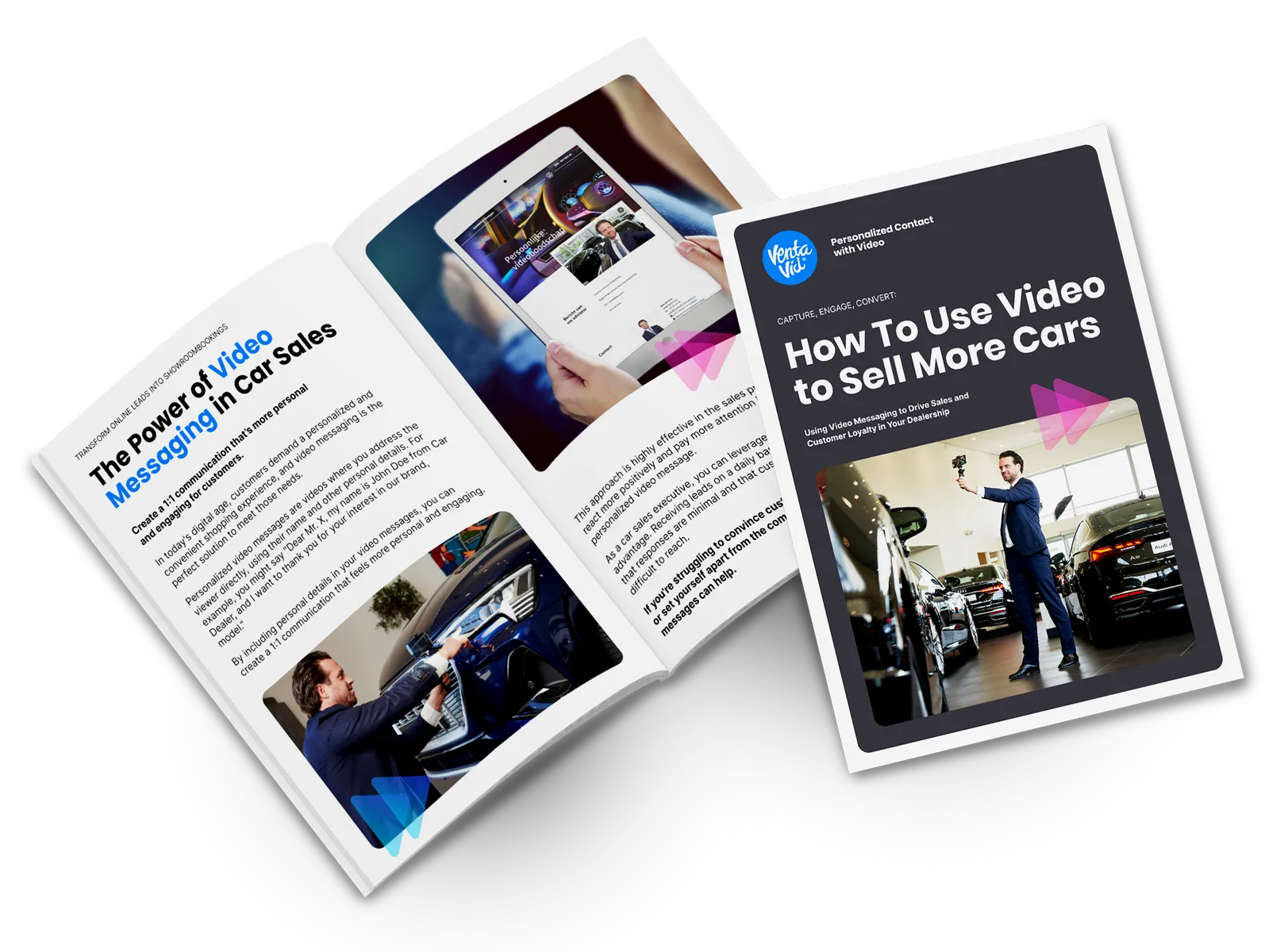
If your store runs on phone tag, on leads that go quiet and approvals that die on voicemail, WhatsApp is the channel fix. Video on WhatsApp is the conversion fix. A 15-minute demo on your own inventory is the fastest way to see both working together.
What it takes to start.
- 7-day free trial, no credit card required, so your team sends real videos to real customers before you commit.
- No editing skills needed. Reps shoot on the phone they already carry.
- We'll show the WhatsApp flow on your own cars during the demo.
A real person from the VentaVid team runs the demo on your own cars, not a slide deck.