
AR support explained: what augmented reality support actually is
Augmented reality support, usually shortened to AR support, is live remote assistance in which the expert can draw onto what the camera is showing. Arrows, circles, labels and part numbers stay anchored to the object in view as the camera moves, so both people are pointing at the same component instead of describing it in words.
For field service
Know what the job needs before the van rolls
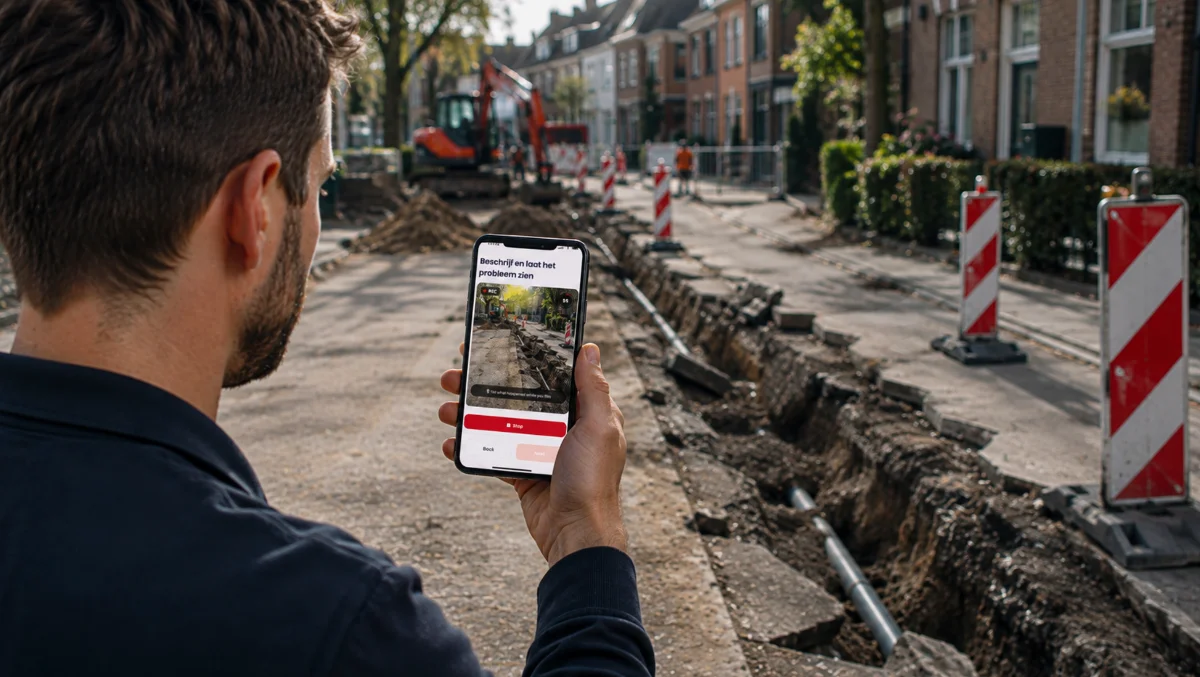
Venta Capture, a product of VentaVid, lets the customer show you the fault first, so the engineer arrives with the right part or does not need to arrive at all.
The same practice appears as AR remote assistance, augmented reality remote support, remote AR guidance and see-what-I-see support with annotation. They all describe one thing: a live video call with a drawing layer that understands the scene.
How does AR support work?
- A session opens. The person on site joins by link or app and points a phone, tablet or headset at the equipment.
- The expert sees the live stream. Usually with the ability to freeze a frame so the picture stops moving while they explain.
- Annotations are placed. The expert draws on the frozen frame or the live view, and tracking keeps the marks attached to the real object rather than to a fixed spot on the screen.
- Extra layers are added where they exist. Text notes, part identifiers, measurements, a document pulled onto the view, or a pre-built step sequence.
- The session is recorded. Most tools save the call and the annotations back into the ticket as evidence of what was advised.
The tracking is the whole trick. Without it, a drawn circle drifts off the valve the moment the technician turns their wrist, and the tool is no better than a phone call with a shared screen.

What does AR support change?
It removes ambiguity from spoken instruction. "The third connector from the left, behind the shield" is a sentence that gets misread daily. A circle on the connector does not.
The research supports that fairly directly. A 2025 systematic review of AR in maintenance, published in Discover Applied Sciences, cites comparative work in which 53 percent of maintenance tasks were performed incorrectly using paper-based instructions, against 13 percent with remote AR support, and reports repair time reductions of up to 40 percent against traditional methods in the studies it reviewed.
Read those numbers as the ceiling from controlled studies rather than the outcome of a rollout. The gap between a research setting and a rainy loading bay with one bar of signal is where most of the benefit gets spent.
Where AR support fits in a support organisation
Adoption has moved from novelty to standard option. Gartner projected that more than 50 percent of field service management deployments would include mobile augmented reality collaboration and knowledge sharing tools by 2025, up from under 10 percent in 2019.
The cases where it earns its cost tend to share three traits:
- The task is physical and specific. A component among many similar components, a wiring order, a torque sequence.
- The person on site is capable but not specialised. They can hold a tool safely. They just have not done this model before.
- The expert supply is scarce. One specialist who would otherwise fly, drive, or be the reason six jobs wait.
AR support: a worked example
A technician on site cannot identify which of four near-identical sensor harnesses feeds the fault. A specialist joins the call, freezes a frame of the loom, circles the correct harness and types the part number next to it.
The technician turns back to the machine and the circle is still on the right harness. The job finishes in twenty minutes instead of being rebooked for the following week with a specialist attending in person, which is the difference AR support is bought to make and the reason it shows up in first time fix rate reporting.
The trade-offs nobody puts in the business case
AR support is live assistance with a drawing layer, which means it inherits every constraint of a live call and adds a few of its own.
- Two calendars have to align. An expert and a person on site must be free at the same moment, with the equipment in front of one of them. This is the binding constraint at volume, not the technology.
- Bandwidth is a hard floor. Basements, plant rooms, rural sites and steel structures are exactly where the specialist is most needed and the connection is worst.
- Hands and hardware. Phone-based AR occupies one of the technician's hands. Headsets free them and add cost, charging, hygiene rules and a device fleet to manage.
- Expert time does not scale. Five hundred assisted jobs is five hundred staffed sessions. Capacity is bounded by specialist hours.
- Evidence is a by-product, not a structure. A recording of a call is not the same artefact as a structured case file, and finding a specific moment in it later takes time.
AR support or asynchronous capture?
The alternative model is asynchronous capture: a guided request goes out, the person on site records what is needed when it suits them, and an expert reviews the submission later. It removes the appointment and the expert attendance entirely, and gives up the two things AR is best at, real-time correction and the unplanned follow-up question.
The honest split runs on interactivity. If the next instruction depends on what the last one revealed, or if someone needs to be told to stop mid-action, that is an AR case. If the questions are known before the session would have started, an appointment is an expensive way to ask them. Most operations end up running both, using AR for the jobs that would otherwise need a second visit and asynchronous requests for the volume that only needs looking at.
For the decision that sits upstream of either choice, see remote triage and the wider case for reducing truck rolls.
In practice: see how field service teams use Venta Capture.