


To reduce truck rolls, stop making the dispatch decision from a typed description. Work out what a roll costs your operation, find out which of last quarter's rolls were avoidable, and put a video triage step between the ticket and the van: the customer films the fault from a link, someone who knows the equipment looks at it, and only then does anyone drive. The visits that still have to happen leave with the right technician and the right part, which is how you cut repeat truck rolls as well.
Seven jobs on the board and one of them reads "unit not working." That is the entire ticket. Somebody at a desk now has to decide whether that sentence justifies a two-hour round trip, a technician's afternoon, and a van that may or may not be carrying the right part.
Most teams that set out to reduce truck rolls start with routing, because drive time is the waste you can see on a map. The expensive waste is the one nobody logs: the dispatch that should never have been raised, decided blind, off a sentence a customer typed into a web page.
If you run field service at a utility, an HVAC network, or an equipment dealer, you already know which jobs cost the most. The ones that turn out to be a tripped breaker, a filter, a reset, or a part nobody had on the van. We built Venta Capture, a product of VentaVid, so the person already standing next to the fault can show it to you before you commit a technician to it. Create a free account and send a test link to your own phone this afternoon.
Truck roll reduction in five steps
- Put a number on one roll. Use the formula below with your own inputs, not a vendor's average.
- Find your avoidable rolls. Tag 90 days of closed jobs by the outcome that closed them.
- See before you dispatch. Guided capture puts the fault on video before a van moves.
- Make the triage call on what you saw. Fix remotely, send a technician, send a specialist, or send the part first.
- Prepare the visits that remain. Right skills, right parts, right access, so the first visit is the last one.
In this post:
How to calculate the cost of a truck roll
Ask five field service managers what a truck roll costs and you get five numbers, most of them quoted from a vendor blog with no source attached. Your own number is more useful than any of them, and it takes five inputs to build.
Cost per truck roll = technician time + vehicle + dispatch overhead + parts that travel + the job that slot could have done.
- Technician time: loaded hourly cost (wage plus taxes, benefits and insurance) times the hours the job takes, travel included.
- Vehicle: round-trip distance times your cost per mile or kilometre, covering fuel, maintenance and depreciation.
- Dispatch overhead: the desk time spent scheduling, calling ahead and closing the job, at the desk's loaded rate.
- Parts that travel: stock that goes out on the van and comes back unused still costs handling and, sometimes, a write-off.
- The displaced job: the margin on the revenue job that would have filled that slot. A technician who burns a morning confirming a tripped breaker has pushed a real repair into tomorrow. This line never shows up on an invoice, which is why most cost figures leave it out.
Here is the arithmetic with hypothetical inputs. They are made up to show how the formula works. They are not an industry average and should not be quoted as one.
In this made-up example one roll costs $195 in direct cost and $295 once the displaced job is counted. Multiply your own figure by your monthly roll count and you have the dispatch budget. Multiply it by your avoidable share (next section) and you have the part of that budget a better dispatch decision could keep.
Published figures are useful as a sanity check on your result. Field Technologies Online, citing the Technology Services Industry Association, puts it at more than $1,100 to roll every truck every day, up from $750 in 2011. The same piece notes estimates that run anywhere from $200 to $2,000 depending on the size of the truck and the salary of the technician driving it.
Per-visit numbers are tighter in a single industry. AEX Inc's benchmarks for fiber operators break the cost into three bands by how the dispatch operation runs:
AEX puts the average at $150 to $300 per roll, and adds that rural operators generally run 15 to 25 percent higher across all three bands, because drive time stretches and job density falls.
For the full build-up (technician time, the vehicle, the parts that travel out and come back, the repeat visit, and the customer who lost a day waiting in), see what an unnecessary field service visit really costs. That is the version of the arithmetic to take into a budget meeting.
Try it on your own phone
Want to see what a guided capture looks like?
Request a capture link and we email you one. Open it on your phone, follow the steps, and see exactly what your customer or field team would see. No app, no account.
How many of your truck rolls are avoidable?
Aquant analysed nearly 160 service organisations, more than 600,000 technician service records, and $9.5 billion in service costs for its 2025 Field Service Benchmark Report. Three findings from it are worth pinning to the wall.
- 14% of truck rolls are unnecessary. One in seven onsite visits, which the report ties directly to inflated costs and technician burnout.
- Avoidable dispatch rates run 3% for top performers versus 24% for the bottom 20%. An eight-fold spread between the best and worst operators in the same benchmark.
- One-third of service queries are solvable without a professional's help. They can be resolved through self-service, if the customer has any way to get the right information across.
That 3% versus 24% spread is the useful part. If avoidable dispatch were a fixed cost of doing business, the top and bottom performers would land in the same place. They don't, which makes truck roll reduction an operating decision rather than bad luck.
So why does the decision go wrong so often? The dispatcher is working from a description, and descriptions of physical faults are unreliable in a way everyone in this industry has learned to live with. "It's making a noise." "The screen is weird." "It was fine yesterday." I've sat in on enough of these calls to stop blaming the customer for it. They are describing a symptom from memory, in a vocabulary nobody ever taught them, to someone who needs a completely different set of facts.
The classic wasted rolls all have the same shape. A unit that needed a reset. A breaker that had tripped. A consumable nobody thought to check. A fault that was real but needed a different skill set or a part that stayed on the shelf. Every one of them was decided from words when a single clear view of the equipment would have settled it.
Find them in your own records
The benchmark is a starting point, not your number. Yours is already sitting in the job history, and pulling it takes an afternoon rather than a project.
Export the last 90 days of closed jobs from your field service system, with the technician's closing notes and the parts used. Then go through them and tag every job that should not have needed a van by the outcome that closed it:
- No fault found. The technician arrived, tested, and left with nothing to repair.
- Reset or consumable. A power cycle, a tripped breaker, a filter, a fuse, a battery. Anything the customer could have handled with a clear instruction.
- Repeat for a missing part. The first visit diagnosed it and the second one fixed it, because the model or the part was not known before dispatch.
- Reassigned on arrival. The wrong skill set turned up and the job went back into the queue.
- Out of contract. The customer was not covered, and nobody checked before the van left.
Count the tags, divide by total closed jobs, and you have your own avoidable dispatch rate. Multiply it by your cost per roll from the formula above and it turns into a budget line. Most teams that do this find the tags cluster around two or three fault types, which tells you which capture workflow to build first.
See first, dispatch second
Remote support has been sold to field service teams for a decade, almost always as a live video call. That works, and it removes the drive. It leaves something else in place that nobody talks about.
A live call removes the travel but keeps the appointment. You still have to align two calendars, and you still need a trained person sitting on the other end of every session. That is a real operating cost, and it caps how much triage you can do. Three hundred open tickets do not need three hundred staffed video sessions.
Asynchronous capture breaks that second coupling. The link goes out when the ticket is raised, the customer films when they get to it, and your team reviews from the desk when they are ready. Capture capacity stops being tied to employee availability, which is the difference between triaging your top five tickets and triaging all of them. Venta Capture's field service workflows report a 79% reduction in field service visits required, and the mechanism is not clever software: somebody looked before dispatching.
Two honest limits, because the vendor version of this story usually skips both.
- Capture doesn't diagnose. The workflow collects the views your best technician would want. Your technician still makes the call, the same way they would with a claims file or a remote claim inspection.
- Remote-first, not remote-only. Nobody should promise you zero truck rolls. Plenty of faults need hands on the equipment, and some need them urgently. The goal is to see first and act second, not to stop visiting customers.

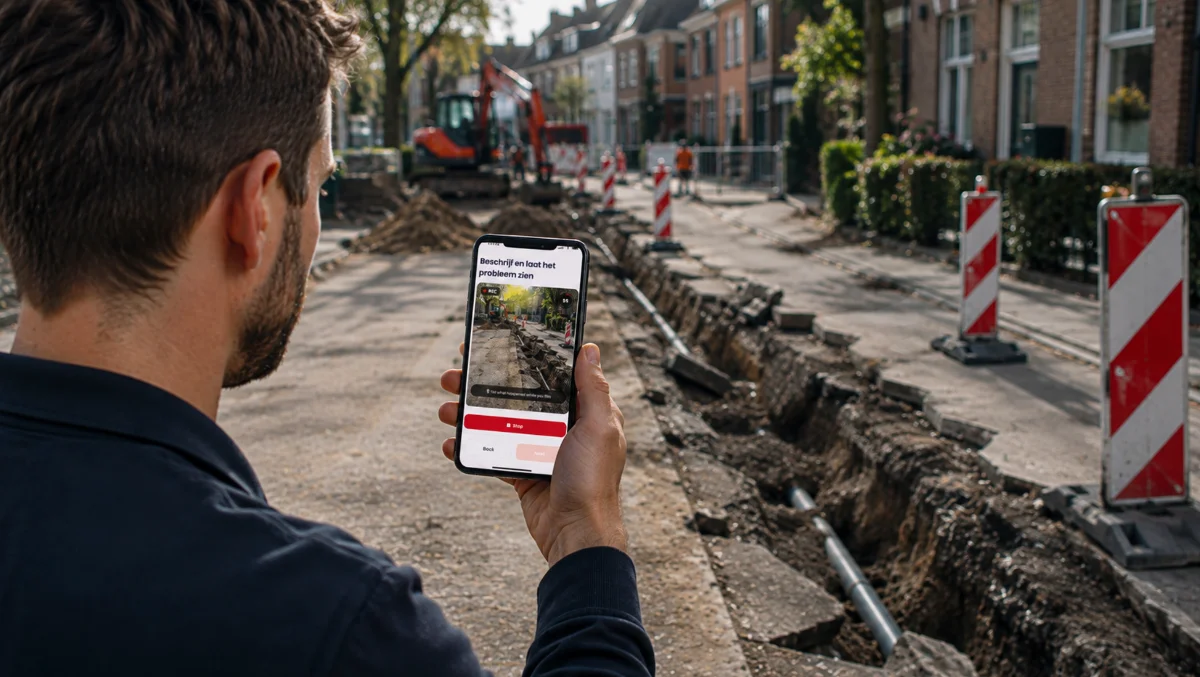
What guided capture looks like before a dispatch
The workflow is short enough to describe in five steps, which is roughly how long it takes to run.
- The link goes out with the ticket. A secure, personal capture link by SMS, WhatsApp, or email, whichever channel the customer already uses. No app to install, no account to create, no password reset call at 8 a.m.
- The workflow decides what gets filmed. Your dispatcher does not ask for "some photos." The guided capture workflow walks the customer through the specific views: the model plate, the display, the connection, the surrounding install, the noise while it happens.
- It arrives as a structured case, not a text thread. Video, photos, answers to the conditional questions, a transcript of what they said, timestamps, and device context, all in the shared inbox rather than scattered across three inboxes and someone's phone.
- Someone reviews it from the desk. Two minutes, usually less. The case gets assigned, commented on, or sent back for a retake if a view is missing.
- The decision gets made with eyes on the problem. That decision is the subject of the next section.
The obvious objection: we already tried asking customers for photos and got useless ones back. Fair, and true. Unguided photo requests fail the same way every time.
- Cropped too tight. The cracked fitting arrives with nothing around it, so nobody can place it in the install.
- Shot too wide. A picture of the whole plant room hides the corroded joint the entire job turns on.
- No identifiers. No model plate, no serial, no display code, so parts can't be pulled with any confidence.
Guided capture inverts who is responsible for knowing what matters. Your organisation puts the expertise into the workflow, and the person on site provides the eyes and the camera. It is the same shift that fixes a vague repair order in digital service intake, applied to a dispatch queue instead of a service lane.
The video triage decision: fix remotely, send a technician, send a specialist, or send the part first
Video triage is the moment the desk looks at the customer's video and decides what happens next. Most dispatch processes have two outcomes, send someone or don't. With the fault on screen you have four, and each one saves something different.
Fix remotely is the outcome everyone counts, and on Venta Capture's customer support workflows, 23% of customer problems are solved without dispatching a technician at all. Not because the platform diagnosed anything, but because a person with the right expertise could finally see what they were being asked about.
Send a technician still saves money when the video was watched first. The technician knows the model, has seen the fault, and knows the unit sits behind a locked plant room before leaving the depot.
Send a specialist is the outcome that kills the "reassigned on arrival" tag from your audit. A cracked heat exchanger, a fault inside an energised electrical panel, a refrigerant leak: the video tells you this is not a job for whoever is nearest.
Send the part first is the one most teams forget. When the model plate and the failed component are both clear on video, a filter, a remote, a battery pack or a plug-in board can go to the customer by courier, or the part can be reserved so the one visit that happens is the last one.
There is a fifth outcome that is not a decision at all: ask for more. If the view you need is missing, send the case back for a retake with a note saying what to film. That costs the customer two minutes and you nothing.
Video triage suits high-volume faults where the answer is visible: error codes on a display, connection and installation problems, consumables, obvious physical damage, and anything where the exact model changes the parts decision. Intermittent faults and safety-critical work still belong on a technician's calendar. For a worked version across a building portfolio, see how a facilities team runs maintenance request triage with video, site by site.
Want to see a workflow built for your own most common fault codes? Book a demo and bring the three tickets that waste the most rolls.
Close the evidence loop. Send a link, get guided video back, sealed and ready to review.
Book a demoStart free account →A ballpark estimate before you send a crew
Contractors and installers who quote jobs have their own version of the wasted truck roll: the survey visit. A roofer, an HVAC installer, a solar or EV charger installer, a kitchen fitter. The enquiry comes in, someone books a slot, drives out, measures, drives back, writes the quote, and then hears the customer had something a third of the price in mind.
The usual sequence is enquiry, appointment, travel, inspection, return, quote. With the customer's video in front of you, it becomes enquiry, guided capture, review at the desk, ballpark range, and a site visit only for customers who are still in.
The point of the ballpark is that the customer and the contractor are in the same range before anyone drives out. "From what we can see, this is a job in the region of X to Y. The site visit firms that up." A customer who balks at that range has saved you a morning. A customer who says "fine, come and measure" is a customer whose quote you are likely to win, and the visit becomes a confirmation rather than a first look.
What to put in the workflow so your estimator can give a range with a straight face:
- The whole area, then the detail. A slow walk around the roof edge, the plant room or the wall where the unit goes, then close-ups of the parts that drive the price.
- Something for scale. A tape measure in shot, or a number field asking for rough dimensions.
- The existing installation. The old boiler, the fuse board, the meter, the inverter, with the model plate in focus.
- The access. Stairs, the driveway, the loft hatch, how far the van can get. Access changes labour more than most customers realise.
- The questions that move the number. Age of the property, which floor, what the customer wants removed. Single-choice buttons keep the answers short.
Two things to be clear about. The range comes from your estimator, not from the software: Venta Capture collects and organises what the customer shows, and a person prices the job. And the range is a range. Say in writing that it depends on what the site visit finds, so nobody treats it as a fixed quote.
How to reduce repeat truck rolls
Avoided visits are the headline. The quieter win is what happens to the visits that were always going to be necessary.
First-time fix rate is the metric that carries this. Comparesoft's benchmark roundup puts the Aberdeen Group average near 75% and the Service Council average around 77%, with best-in-class operations reaching 88% to 90% or higher. Below 70%, the same piece notes, customer retention and SLA compliance start to suffer.
The gap between 77% and 89% is mostly a preparation problem. A repeat visit usually traces back to one of three things nobody knew before the van left.
- Wrong skills. The fault needed an electrical qualification and the nearest available technician was mechanical.
- Wrong parts. The model turned out to be two generations older than the record said, and the seal kit doesn't fit.
- Wrong access. The unit sits behind a locked plant room, on a roof, or in a tenant's flat, and nobody arranged entry.
A pre-visit capture answers all three before dispatch. You see the model plate, the physical install, the access route, and the visible condition, so scheduling can put the right person on it with the right kit in the van. On Venta Capture's field service and support workflows, 4 out of 5 issues are handled and closed the same day. The full method, from intake questions to parts staging, is in how to improve first-time fix rate. It is the same principle a warranty team applies when it reviews a warranty claim inspection before approving a repair: look properly first, then commit resources.
Capture works on the way out as well. A guided completion capture at the end of the job gives you a before-and-after record, remote quality review without a supervisor driving to site, and something concrete to send the customer when they ask what was done.
Run the numbers on your own dispatch queue
Take your own figures rather than anyone's benchmark, because dispatch economics vary wildly by density and trade. As an illustration, here is a mid-sized operation, again with made-up inputs.
- 600 truck rolls a month, at $250 each, is $150,000 of monthly dispatch cost.
- Apply the one-in-seven avoidable rate from the Aquant benchmark and roughly 84 of those rolls did not need to happen, about $21,000 a month.
- Move first-time fix from 77% to 85% and you also stop repeating around 48 of the remaining visits, which is another $12,000 that never appears as a line item because repeat visits usually get logged as new jobs.
Those numbers are an example, not a promise. Swap in your own roll count, your cost per roll from the formula, and your avoidable rate from the audit.
If the arithmetic on your queue looks anything like that, the cheapest next step is to test it on a handful of tickets. Start a free account and run one week of "unit not working" tickets through a capture link before you decide anything.
If you want to go further on the avoidable categories themselves, reduce unnecessary service visits walks through the seven types a field service team can catch before dispatch. And for the step that makes all of this possible, customer video intake covers how to collect a usable view of the fault at the moment the ticket is raised, rather than after the van has already left.
Frequently asked questions
How do you reduce truck rolls?
Decide dispatches on what you can see rather than what the customer typed. Send a guided capture link with the ticket, review the video at the desk, and choose between fixing it remotely, sending a technician, sending a specialist, or sending the part first. Track your avoidable dispatch rate before and after so you know what changed.
How do you calculate the cost of a truck roll?
Add the technician's loaded hourly cost times the hours the job takes (travel included), the vehicle cost for the round trip, the desk time spent on dispatch, any parts that travel and come back, and the margin on the job that slot could have done. Multiply by your monthly roll count for the dispatch budget. Published per-visit benchmarks, such as AEX's $150 to $300 for fiber operators, are a sanity check, not a substitute.
What is a truck roll fee?
It is the charge a provider bills the customer for sending a technician, common in telecom and home services, especially when the fault turns out to be on the customer's side. Compare it with your own cost per roll from the formula above to see how much of the visit it recovers, and what it costs you in goodwill.
How do you reduce repeat truck rolls?
Most repeat visits trace back to the wrong skills, the wrong parts, or no access. A video of the model plate, the install and the route in, reviewed before dispatch, settles all three, so the first technician arrives able to finish the job.
Can video triage replace site visits?
Not all of them, and nobody should tell you otherwise. Video triage, like any remote triage, is remote-first, not remote-only: it settles the visits that a clear view would have settled and prepares the ones that still need a technician on site.
How do I know which of our truck rolls were avoidable?
Pull the last 90 days of closed jobs and tag each one by the outcome that closed it: no fault found, reset or consumable, repeat visit for a missing part, reassigned on arrival, or out of contract. Divide the tagged jobs by the total and you have your own avoidable rate, which is a better number to plan around than any industry benchmark.
Talk to us
If your dispatch queue is full of tickets nobody can assess without driving to them, the fastest way to find out what capture changes is to run it on real jobs for a week. Build a workflow for your most common fault, send it with the next batch of tickets, and count how many rolls it settles.
Cheap to test.
- Free account, no credit card required, so you can build a workflow and send real capture links before committing to anything.
- No app for your customers, which removes the objection that kills most field service pilots.
- Escalation stays yours. Capture surfaces what your team needs to see. The dispatch decision stays with your people.
The VentaVid team builds Venta Capture, and a real person picks up when you book a demo.
Create your free account or book a demo and we'll map a capture flow to the three tickets that cost you the most.