
Callback rate explained: what is a callback, and what counts as one
Callback rate is the share of completed jobs that need a return visit for work that should have been finished the first time, calculated as callbacks divided by completed jobs inside a defined window. It is the quality metric behind every productivity number in field service, because a callback is a job the operation already paid to do once.
For field service
Know what the job needs before the van rolls
Venta Capture, a product of VentaVid, lets the customer show you the fault first, so the engineer arrives with the right part or does not need to arrive at all.
Also called comeback rate, return visit rate, or rework rate. In warranty-heavy trades it gets blurred with warranty visits, which is where most of the reporting trouble begins.
How is callback rate calculated?
Callback rate equals callbacks in the period, divided by completed jobs in the period, times 100.
Two parameters have to be set explicitly before the number means anything:
- The window. How long after completion does a return visit still count as a callback? Thirty days is common in residential service. Ninety days is common on capital equipment. Shorten the window and the rate falls without a single extra job being done properly.
- The trigger. Same fault only, or any return to the same asset? A different fault on the same unit two weeks later is not workmanship, and counting it as one makes the metric unusable for coaching.

What counts as a callback, and what does not
The types get mixed constantly. Separate them at the point of logging, not at the point of reporting:
- Workmanship callbacks. The repair was done wrong or done incompletely. This is the number worth managing.
- Diagnostic callbacks. The wrong fault was fixed. The work was performed correctly on the wrong problem.
- Parts callbacks. The technician left because the part was not available, and returned to fit it. Often logged as a callback, usually a stocking failure.
- Component failure. A new part failed early. Supplier issue, not technician issue.
- Customer expectation calls. The technician attends, nothing is wrong, the customer needed an explanation. This is a communication cost, not a quality one.
Callback rate: a worked example
A service team completes 620 jobs in a quarter and records 34 return visits inside 30 days, giving 5.5 percent. Split them and 11 were workmanship, 9 were diagnostic, 8 were parts return trips and 6 were customers who wanted the work explained. The workmanship rate is 1.8 percent. The headline 5.5 percent would have sent a manager into technical retraining that fixes a third of the problem at most.
What good looks like, and why you cannot benchmark it
Residential trade figures circulate widely: roughly 1 to 2 percent for top-quartile operations, 3 to 5 percent treated as an acceptable band, and anything above 8 percent read as a broken process. Those bands come from trade press and contractor surveys rather than from a published dataset with a disclosed methodology, and the HVAC research site Built on Tenth makes the point plainly: the same operation can report 1.5 percent or 8 percent on identical work depending purely on which of the callback types it counts.
So use the bands to sanity-check your own trend, never to compare yourself to a competitor. Your 3 percent and their 3 percent are almost certainly different measurements.
What a callback actually costs
The lost margin on the return visit is the small part. Aquant's 2025 Field Service Benchmark Report, built from nearly 160 service organisations and over 600,000 technician records, found a failed first visit adds two more visits on average and stretches resolution out by 14 days (reported in 24x7 Magazine).
That is two more slots taken out of a diary that was already full, on an asset the customer expected to be working a fortnight ago. Callback rate is the inverse view of first-time fix rate, and each avoidable return is a truck roll you funded twice.
How callback rate gets gamed or misread
- Raising it as new work. Log the return as a fresh job with a fresh work order and it disappears from the callback count entirely. This is the most common distortion, and it is usually not deliberate.
- Shortening the window. A 14-day window makes any operation look better than a 30-day one. Nothing changed except the reporting.
- Blending the types. Parts return trips and customer explanation visits inflate the rate and point improvement effort at the wrong department.
- Attaching it to technician pay. When a callback costs the technician money, the follow-up visit gets reclassified. You lose the data and keep the problem.
- Ignoring who takes the return. If a different technician attends the callback, the original technician never learns what was missed.
- Reading the average. One installation type or one equipment family usually produces a disproportionate share. Segment before you conclude anything.
Where callbacks are actually prevented
Two points in the job carry most of the risk. The first is intake: an inaccurate fault description sends the wrong skill and the wrong parts, and the diagnostic callback is written before the van leaves. The second is completion: when what was done is not documented clearly, disputes and doubts turn into a return visit weeks later. The practical version of the first half is in how to reduce truck rolls.
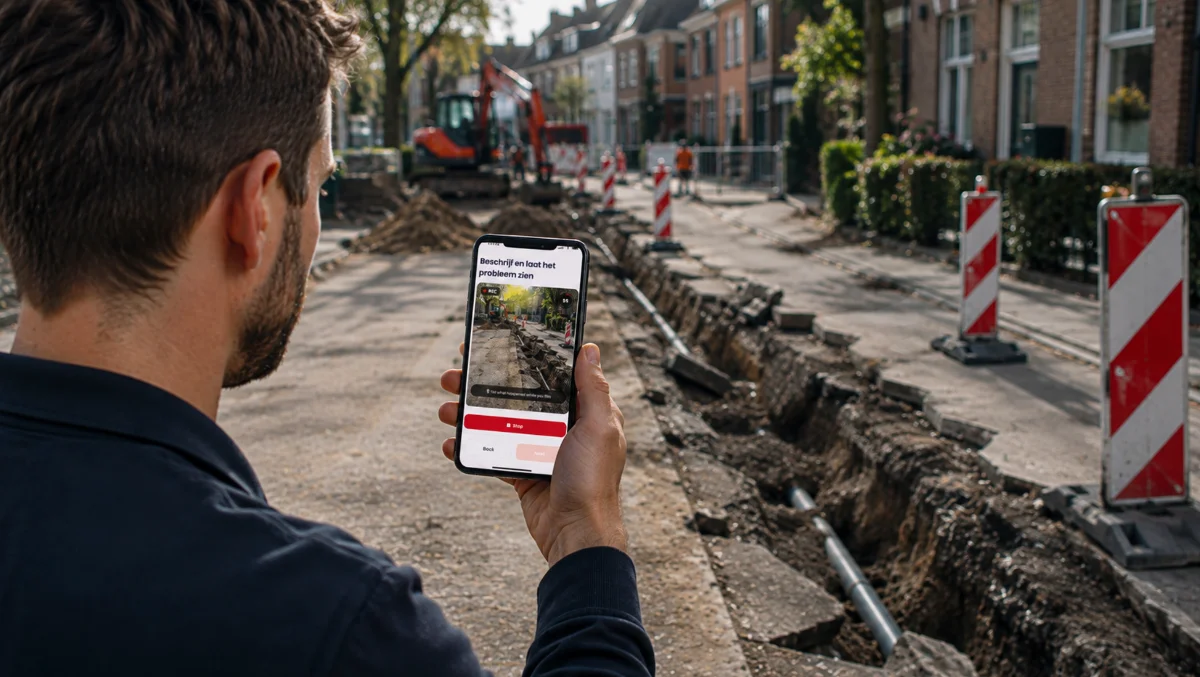
Both are visual problems more than technical ones. Venta Capture, a product of VentaVid, addresses them with guided capture: you send a link, the person already on site records the specific views and answers your team needs before dispatch, and the technician documents the finished work the same way at the end. On its field service page Venta Capture reports 23 percent of customer problems resolved without dispatching a technician, which is the vendor's own reported outcome rather than an industry benchmark. The platform does not diagnose the fault or decide whether a visit is needed. It gives the person making that call something to look at first.
In practice: see how field service teams use Venta Capture.