
Video claims, defined: what the term covers and what the footage can and cannot prove
Video claims are insurance claims in which the damage is assessed from video recorded by the policyholder, the tenant or a third party on their own phone, either during a call with the handler or asynchronously through a guided link, instead of from an assessor's site visit. The recording, the spoken explanation on it and the data captured around it become the primary evidence in the claim file.
The definition matters because "send us a video" describes two operating models with different costs, and because a video that arrives as an attachment is a different thing from a video recorded inside a process that can vouch for it.
How video claims work
After first notification of loss, the insurer asks for video instead of booking a visit. The claimant walks the camera round the damage, shows the wider context, reads out identifiers and says what happened. The handler or engineer watches, decides whether the claim can be settled on the footage, and escalates to a physical inspection only where it cannot.
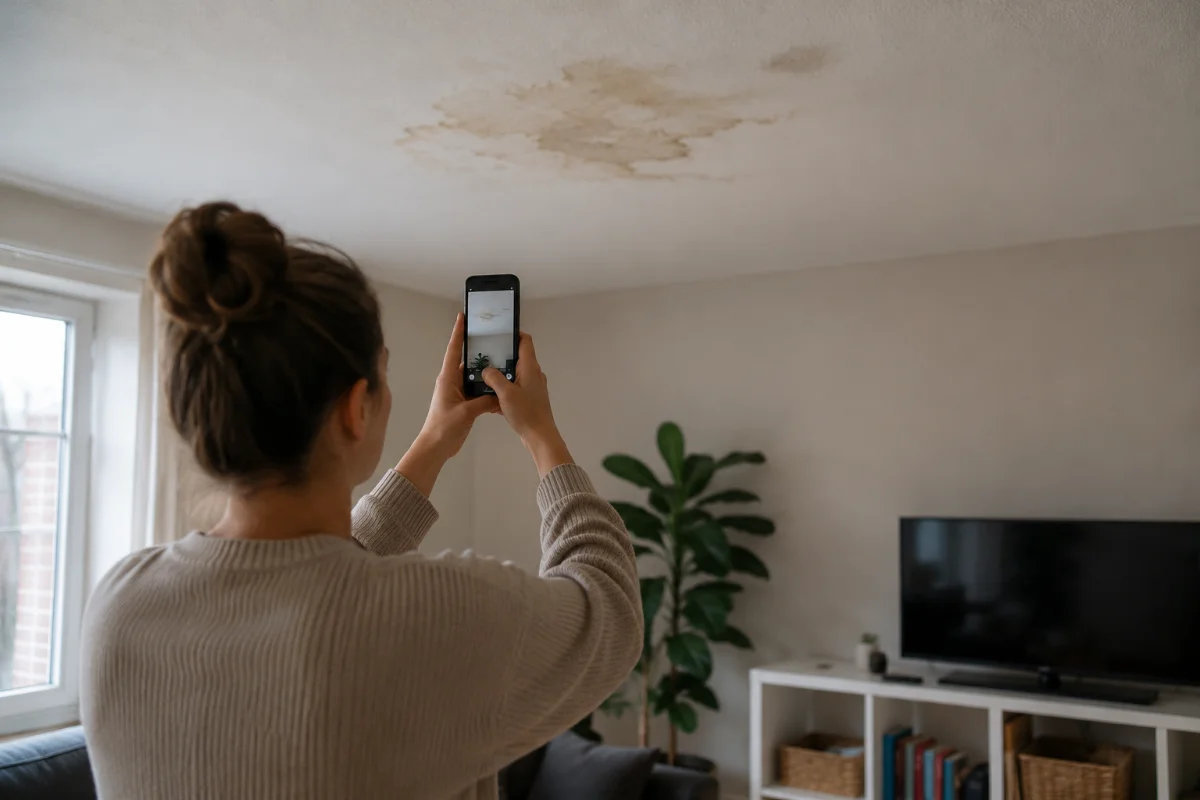
Video earns its place over photographs in three situations: where the damage only makes sense in context (a stain on the ceiling below a bathroom), where the fault has to be shown working or failing (a door that will not close, a boiler that fires and cuts out), and where the claimant's own account, spoken while filming, is worth having on the file.
Live video claims versus asynchronous video claims
The two models share a camera and nothing else in terms of staffing:
- Live video: the handler joins a video call, directs the claimant where to point the phone, and assesses in real time. It solves the travel problem. It still needs an appointment, a handler free at that moment and a claimant with a good signal.
- Asynchronous capture: the claimant is sent a link with the steps built in, records when it suits them, and the handler reviews from a queue. It solves the travel problem and the diary problem, and review time can be batched and prioritised.
A team running a thousand live video claims a month is staffing a thousand calls. The same team on asynchronous capture is staffing review only, with the expert's questions written into the flow instead of asked over the phone. The wider picture is in remote claim inspection.
Video claims example: escape of water in a kitchen
A policyholder reports water damage under a kitchen sink. Instead of a visit, the insurer sends a link. The steps ask for a wide shot of the kitchen, the inside of the sink cupboard with the pipework visible, a close-up of the swollen cupboard base, the floor in front of it, and a short walking shot to the room below, with a spoken account of when the water was first noticed and what was done.
The recording arrives that evening. The handler can see the failed compression fitting, the extent of the swelling and a small stain on the ceiling below, all in one continuous take. A drying contractor is instructed the next morning with the footage attached, the contents claim for the cupboard base is agreed from the same file, and nobody travels. Where the footage had shown water tracking behind the units, the same handler would have sent a surveyor, now knowing what they were going to.
What video proves, what it does not, and the mistakes teams make
A continuous recording is harder to stage than a single photograph, shows what surrounds the damage, and carries the claimant's account in their own words. Inside a controlled capture it can also carry a server-side receipt time, a fingerprint of the file and the session's device signals, which is what turns a clip into a sealed submission.
Video does not prove when the loss happened. A receipt time proves when the file arrived and nothing earlier. Video does not detect fraud. Signals around a recording mark it as worth a closer look; the decision stays with the handler, and a genuine recording can still show a staged scene. Video does not replace every visit. Structural damage, suspected total losses, injury and high-value disputes still need someone on site.
The recurring mistakes: asking for "a video of the damage" with no steps, so the footage misses the one thing the engineer needed; accepting a file uploaded from the gallery as if it had been recorded in the session; requiring the claimant to install an app on the worst day of their month; offering no retake path, so the phone call the process was meant to remove comes straight back; and leaving the spoken account untranscribed, so nobody can search the file for what the claimant actually said.
Where the evidence goes
The video, its transcript, the answers to the questions asked alongside it, the receipt time and the integrity information belong in the claim file as one package, tied to the claim reference, with a log of who viewed it and what was decided. A video in a handler's mailbox is not a claim record, and the difference shows the month the claim is reopened.
Venta Capture, a product of VentaVid, runs the asynchronous model: the claimant is sent a link, follows the guided steps in the mobile browser with no app and no account, records each shot and the spoken account in the session as instructed, and the submission arrives timestamped and sealed for the handler to review, request a retake on, or forward to the claims platform. Details at the Venta Capture pages; the operating detail is in virtual inspection for insurance.
In practice: see how insurers use Venta Capture for remote claim inspection.