


This post in 30 seconds.
- What it is: a virtual inspection in insurance is any inspection where the person on site is the policyholder or claimant with a phone, and the qualified person is somewhere else. It does two jobs: underwriting inspections and claims inspections.
- The frame that matters: there are three models. Physical, live remote video, and asynchronous self-capture. Only the third one stops tying inspection capacity to adjuster availability.
- The test that matters: a virtual inspection is worth exactly as much as the submission is usable at the desk. That means provenance per item, a timestamp that's honest about what it proves, the views you defined, and answers your system can route.
- Written for the claims director, head of claims operations or underwriting operations lead at an insurer, MGA, TPA or loss adjusting firm who is paying for site visits that a phone could have replaced.
Two people in your organisation have the same problem and rarely compare notes. The head of claims has a field calendar that decides cycle time, and the underwriting operations lead has a survey queue that lands weeks after the risk was bound. Both are waiting for a trained person to travel to look at something a policyholder is already standing next to.
The waiting is measurable. J.D. Power's 2026 U.S. Property Claims Satisfaction Study puts the average time to final payment at 40.7 days, and the same study found 49% of claimants already submit photos digitally for an estimate or payment. The phone is in the process. The question is whether what comes back from it can carry a decision.
This post is about that question: what a virtual inspection means in insurance, the three ways to run one, what a submission has to deliver to be usable, where it fits and where it doesn't, the fraud angle, and how to introduce it as a pilot without upsetting your escalation rules.
If you run claims operations or underwriting operations and your handlers spend their week chasing better photos, this one is for you. We build Venta Capture, a product of VentaVid, so a policyholder can film and photograph a loss or a risk on their own phone, guided step by step, and your team gets a sealed case instead of an email with attachments. See how it works on an insurance claim before you read our opinion of it.
In this post:
What virtual inspection means in insurance
Vermont's Department of Financial Regulation defines virtual claims adjusting as settling claims "using photos and videos documenting the damage instead of an adjuster inspecting the damaged property in person". That's a regulator's definition, and it's a useful one because it says nothing about video calls, apps or AI. The only thing that changes is who holds the camera.
Virtual inspection has two jobs in an insurer, and most articles only describe one of them. The mechanism is identical; what has to come back is not.
The underwriting side gets less attention and arguably has the bigger backlog. In UK commercial property, many risk surveys are undertaken after inception, "in the weeks and months that follow" binding: the policy is priced, cover is on risk, and the surveyor arrives later to check that the premises match the proposal form. Every week of that gap is exposure already accepted on trust.
Self-service capture closes it faster than a surveyor's diary can. Security Mutual Insurance, in a case study published by its vendor, reports that its home underwriting inspections used to take 21 to 30 days to turn around and are now captured in minutes by the policyholder. Treat that as one carrier's experience with one tool, but the shape of the gain is the point: the survey queue stops being a diary problem.
On the claims side the same mechanism sits at first notification of loss: the handler sends a secure, personal capture link, the claimant shows the loss the way your best loss adjuster would have asked to see it, and the desk gets its first real look the same day. We've written the step-by-step version of a remote claim inspection separately, so this post stays on what the two jobs have in common.
Three models, and why the third changes the staffing math
"Virtual" gets used for two different things, and the difference is where your staffing model changes.
Live video was a real step. It removed the drive and kept the appointment: your adjuster free at 14:00, the claimant free at 14:00, multiplied across the queue. Asynchronous guided capture removes the appointment as well, which is why it's the only model where inspection capacity stops being a function of adjuster headcount. After a storm weekend, 500 links go out, 500 policyholders capture when they can, and your desk reviews by priority.
That matters more in Europe than the US-centric vendor pages suggest, because our adjuster pools are smaller and our surge events are just as lumpy. A 29.6-day average repair cycle, J.D. Power's 2026 figure, is mostly waiting. The claims cycle time you can attack is the waiting between "reported" and "someone has looked".
One caution the enthusiasts skip: accuracy is the objection your field team will raise, and it's documented. In a survey of building officials cited by Matterport, 59% named inaccuracy as the top barrier to virtual inspection, ahead of communication gaps and the lack of a consistent standard.
Read that survey as a spec rather than a verdict. Inaccuracy is what you get when an untrained person decides what to film.
When we build a claims flow with a customer, the first thing we ask for is the handler everyone trusts and their private checklist, the one that lives in their head rather than the procedure manual. That checklist, turned into steps and questions, is what makes a policyholder produce evidence an adjuster can work with. Our comparison of virtual and physical inspection has the triage rule for deciding which model a given case gets.
What a virtual inspection must deliver to be usable
Speed and cost are outcomes. The input is whether the submission can carry a decision at the desk without a second request. Four things decide that, and none of them is "high resolution".
- Provenance, per item. For each photo and video, can you tell whether it was recorded now, on this device, inside your process, or picked from a gallery where it may have lived for months and passed through an editor? A usable submission labels each item. In Venta Capture, an item recorded in the session is marked "Taken via Venta Capture" with a server-verified receipt time; an item uploaded from the gallery is marked "Provenance: Not verified" and checked on metadata, on signs of editing and on whether it already exists on the internet, with a plain-language line telling the reviewer what that means. Each file also carries a SHA-256 fingerprint and the submission a signed seal, so a year later you can prove the file in front of you is the one you received. The provenance question is the one nobody asks of an emailed JPEG.
- A timestamp that's honest about its scope. The system records when it received the submission, independent of the phone's clock. That proves receipt. It does not prove when the pipe burst or when the hail fell. A sealed submission is credible in a dispute precisely because it doesn't claim more than that.
- The views you defined, not the ones the claimant chose. The insurer sets the required angles, with an example photo and a one-line instruction per step: the whole room, then the ceiling, then the wall below it, then the suspected source. A missing angle becomes a targeted retake request that links to the original case and records why it was asked, not a restarted claim. This is the minimum evidence set your best handler already carries around; the flow just writes it down.
- Structured answers tied to your case reference. "Is the water still running?" as a yes/no that steers the next step, a free-text description, a spoken explanation transcribed and searchable. All of it arrives against your own reference number, not just a number the vendor invented, and can be copied into the claims platform in one action. That is the difference between a video in an inbox and a case a system can route.
A quick way to audit whatever you're using today:
Plenty of vendors exist in this category, and the honest ones differ mostly on those six rows rather than on camera features. Our guide to insurance claim documentation that survives a dispute goes deeper on the file itself.
The stakes on provenance are no longer theoretical. In Verisk's 2026 State of Insurance Fraud study, 36% of consumers said they would consider digitally altering a claim image or document, rising to 55% among Gen Z, and 76% of claims professionals said manipulated submissions have become more sophisticated. If your intake is "reply with photos", you've built a process that can't tell.
Where virtual inspection fits, and where it doesn't
The lines that suit virtual inspection share one trait: the decision turns on something visible, and the visible thing has a known set of required views. Motor is the obvious example and deliberately not the one used here, because the same logic runs through lines where insurers have barely started.
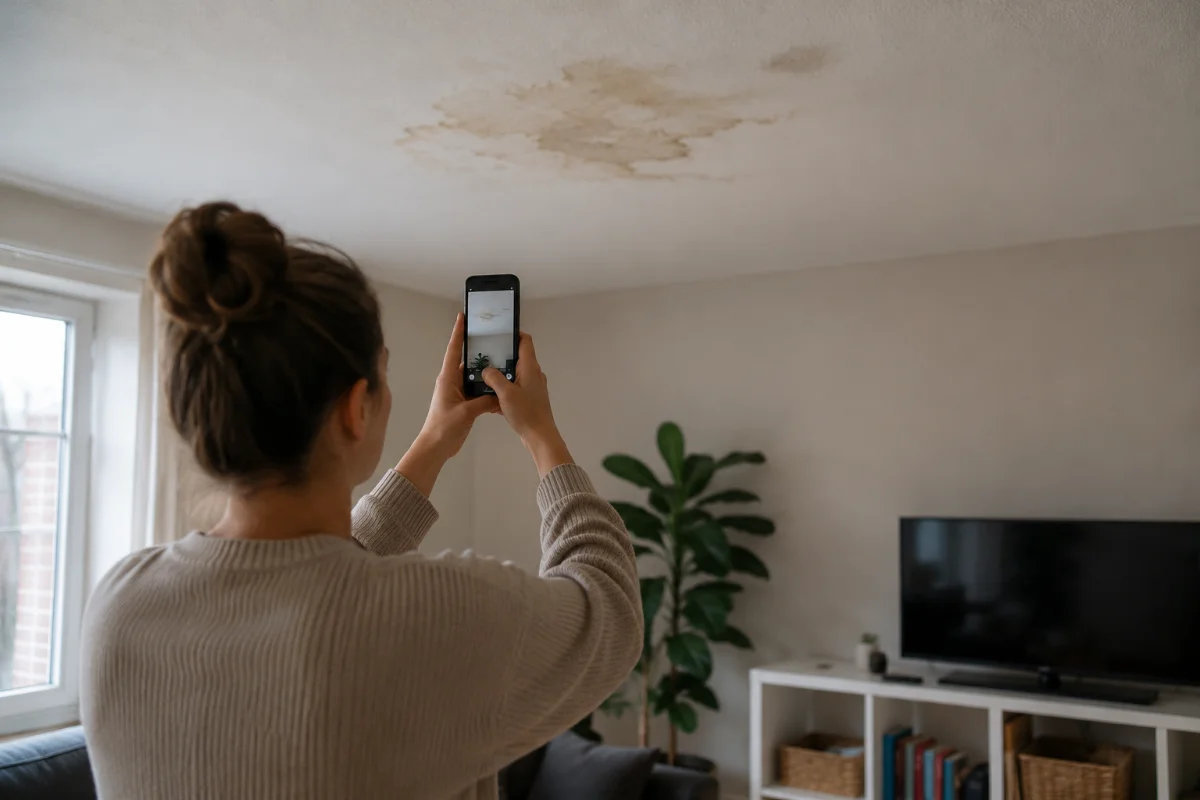
- Property damage. Escape of water, storm damage to a roofline or fence, a cracked bathroom floor. The room, the damage, the adjacent surfaces, the suspected source. A guided property inspection flow follows that order.
- Contents. The item, the damage, the serial plate, the receipt. A contents claim is where guided capture is at its best, because the required views are short and the volume is high.
- Warranty and extended warranty. The appliance, the fault as it presents, the model label, a spoken description of what happened. The warranty claim inspection post covers the flow.
- Commercial risk surveys. Post-inception premises surveys under a size threshold: exits, alarms, extinguishers, storage of flammables, housekeeping. The policyholder walks it with the phone; your surveyor reviews and decides whether a visit is still warranted.
And the lines where you keep sending someone, at least on the first pass:
- Hidden damage. Water behind a wall, movement in a structure, anything where the cause sits under the visible surface. Vermont's advisory is explicit that virtual methods "shouldn't be used if they would prevent an adjuster from fully assessing hidden damages".
- Disputed cause of loss, and high values. When the file will be argued over, attendance buys defensibility.
- Regulated or certified inspections. Where a standard requires a qualified person on site, that requirement is the answer.
- Files already carrying a red flag. A signal is a reason for a trained person to look closer, not a reason to process faster.
Two more things belong in the "fit" conversation. The first is the policyholder's right to a visit: Vermont's rule is that they can request an in-person inspection at any time and you may not refuse it because they first chose virtual. Whatever your jurisdiction says, design the process so that request costs nothing to honour.
The second is a critique worth taking seriously. Chip Merlin argues that "inspection-only" adjusting, where field staff collect photos and a desk adjuster decides from deliberately limited data, leaves nobody owning the outcome. He's right about the failure.
The answer is better data at the desk plus a named handler who owns the file, which is a workflow decision rather than a technology one. Fewer cameras would fix nothing.
Scale keeps this honest. UK insurers detected £1.16 billion of fraudulent claims in 2024 across 98,400 claims, with property fraud at £189 million, up 11%, according to the ABI.
No field team can attend that volume evenly. What it can do is attend the right files, chosen from evidence rather than from the order the phone rang.
Ready to see what your customers see?
Send one link. Get guided, verified video back. No app, no account.
The fraud angle: the editing window
The shallowfake is an ordinary photo edited with an ordinary app. Allianz UK reported a 300% increase in claims involving app-manipulated images, videos and documents between 2021-22 and 2022-23, and Zurich UK's head of claims fraud, Scott Clayton, put the change plainly: "People can now create a fraudulent claim entirely from behind their computer." One of the cases in that report was a business owner's own social-media photo of his van, edited to show a cracked bumper and paired with a fake invoice for over £1,000.
The trend has not cooled. Aviva reports £233 million of suspect claims across more than 18,400 files in 2025, with home insurance fraud up 15% and a growing share supported by AI-generated images and manipulated documents. And the ABI's data says the most common fraud type is still the exaggerated claim, the genuine loss padded with a couple of extra items: the kind an edited photo supports very well.
Every one of those edits needs a window between the moment of capture and the moment of upload, and a virtual inspection built on self-capture is the one intake model that can close it. A file that is recorded now, on this device, inside your flow, sealed on receipt and fingerprinted, has not had that window. A file chosen from a gallery may have, and the point is that you know which is which.
What that does not do is settle the question of truth. A recording made inside your flow can still show a staged scene, a conveniently framed one, or damage that predates the policy. Evidence integrity signals (a device seen on an earlier submission, a video that arrived via file fallback, virtual-camera software present) are reasons for a person to look closer, never verdicts, and each one carries an innocent explanation your fraud team should read alongside it.
Our post on shallowfake insurance claims goes through the editing window in detail; here it's enough to say that provenance-first collection beats detection-only review because it changes what arrives, not just how hard you stare at it.
If your intake still runs on "please send us some photos", look at what a guided claims capture returns instead, item by item, with the provenance label on each.
How to introduce virtual inspection as a pilot
Nobody needs a transformation programme for this. Pick one job, one line of business and one honest measurement, and let a quarter of data argue for you.
- Choose the job and the line. Claims: escape-of-water property claims under your usual desk threshold, or contents. Underwriting: post-inception commercial surveys below a sum-insured limit. Both have high volume, a short list of required views and a low cost of being wrong.
- Build the flow from your best handler's checklist. Sit with the adjuster or surveyor everyone trusts and turn their mental list into steps: what to show, in what order, with what question at each step. The organisation decides what gets captured; the person on site provides the eyes.
- Write the escalation rule down before you start. Which outcomes go to the field, which signals go to SIU, and how a policyholder's request for a visit gets honoured. A pilot that leaves that implicit will feel like a loss of control to the field team, and they'll be right.
- Send links for 90 days on that line only. By email, SMS or WhatsApp at FNOL or at binding. Nothing to install; the flow opens in the phone's browser in the policyholder's own language.
- Measure five numbers. Days from report to first look. Touches per file. Field-visit rate on the pilot line. Retake rate (a high one means your flow is asking for the wrong views). Completion rate, meaning the share of links that come back at all, because a self-service inspection that policyholders abandon is worse than no pilot.
For scale, some round numbers you should replace with your own. A regional carrier sending 150 field visits a month at roughly 2.5 hours each, travel included, spends about 375 adjuster hours on the road. If a guided capture lets the desk resolve a third of those files without a visit, that's around 125 hours a month returned, and the remaining visits start better informed because the adjuster has already seen the loss.
We're not asserting a rate for your book. The pilot exists to find it.
One practical note on tooling. A standard claims or survey flow can be built in minutes on Venta Capture's free plan, with no credit card, and your own team adjusts the steps, example photos and instructions. Flows with branching between paths, routing rules and connections to your claims platform are set up around your process by the VentaVid team.
If you get stuck on the first one, book a free setup call and we build it together.
For the desk that has to decide on what comes back, see desk adjusting: how to settle claims without a site visit.
Frequently asked questions
Is a virtual inspection accurate enough for an insurance decision?
For visually assessable, lower-severity losses and routine risk surveys, yes, provided the insurer defines the required views rather than leaving them to the policyholder. The decision itself stays with your qualified handler, who sees the loss earlier and escalates anything ambiguous. Hidden damage, disputed cause and high values still get a visit.
What's the difference between a virtual inspection and a desk assessment?
The virtual inspection is the collection step: how the evidence is captured and what it carries when it arrives. The desk assessment is the decision made from it. A good virtual inspection makes the desk assessment possible; it doesn't replace the person making it.
Can a policyholder refuse a virtual inspection?
In some jurisdictions they have an explicit right to an in-person inspection at any point in the claim; Vermont's advisory says an insurer may not refuse that request because the policyholder first chose virtual. Design the process so the request is cheap to honour, and treat it as one of the four outcomes rather than an exception.
Does virtual inspection work for underwriting as well as claims?
Yes, and the underwriting queue is often the bigger backlog. Post-inception surveys and condition checks on smaller risks can be captured by the policyholder against your survey checklist within days of binding, with a surveyor reviewing at the desk and visiting only where the capture raises a question.
What does the timestamp on a virtual inspection prove?
A server-side receipt time proves when the system received the submission, independent of the phone's clock setting. It does not prove when the damage occurred. Keeping those two facts apart is what makes the timestamp credible when the file is disputed.
Can a virtual inspection stop shallowfake or AI-edited claims?
No tool stops fraud, and any claim that one does should lower your trust in the vendor. Recording inside the flow closes the editing window for those items and labels the ones that came from a gallery, so your team knows what it can and cannot rely on. Integrity signals point a person to look closer; the verdict stays human.
Does the claimant or policyholder need an app?
No. A secure, personal capture link opens in the phone's browser with no download and no account, and Venta Capture runs the flow in 15 languages. On a computer the page shows a QR code to continue on the phone, because the recording has to happen on the device that's standing at the loss.
See it on one of your own claim types
If your field calendar is deciding your cycle time, or your underwriting surveys are landing weeks after you bound the risk, one guided capture flow on one line of business is the smallest experiment that tells you something. Build it from your best handler's checklist and measure the five numbers above for a quarter.
What it takes to start.
- Free plan, no credit card, and a standard flow is live in about 10 minutes.
- Nothing for the policyholder to install. The link opens in the browser on any phone, in their language.
- Escalation stays yours. Field, SIU or settle is a decision your handler makes, file by file.
Venta Capture is built by the VentaVid team, and a real person walks every demo through on one of your own claim types.
See the claims capture flow in detail, or book a demo and bring a real file to rebuild together.