

This post in 30 seconds.
- Most comparisons treat "virtual" as one thing. It is two, and the difference between live remote and guided asynchronous capture is where the operating model changes.
- Physical inspection still wins on complex losses, regulated and certification work, high values, and anything already carrying a red flag. That list is short and specific, and pretending otherwise costs you credibility.
- The Technology & Services Industry Association puts the true cost of a single dispatch at close to $1,000 once labor, fuel, maintenance and overhead are counted.
- Written for the operations, claims, or field-service leader who has to decide which assessments need someone to attend, and who wants a rule rather than a pros-and-cons list.
Every Monday morning someone in your operation looks at a list of visits and decides which ones have to happen. That list, not a technology preference, is what the virtual inspection vs physical inspection question comes down to. Some of those visits are non-negotiable, and most of the rest have never been tested.
Testing them is worth doing, because attendance is expensive. XOi, citing the Technology & Services Industry Association, puts the true cost of a truck roll at close to $1,000 per dispatch once labor, fuel, maintenance and operational overhead are included, against a more commonly quoted $250 to $500 range. The same piece puts roughly a quarter of all truck rolls in the non-value-add column.
So the honest comparison has three sides, not two. Each one solves a different problem, and picking between them is a triage decision you make case by case.
If you run claims, field service, or an operations team that dispatches people to look at things, this one is written for you. We build Venta Capture, a product of VentaVid, which is the guided-capture side of that triage decision, and the rest of the post is about when it applies and when it doesn't. If you want to see the capture side working before you read our opinion of it, start a free account and send yourself a capture link.
In this post:
An inspection has three jobs, not two
Ask what an inspection is for and you get a fuzzy answer about "assessing the situation." Ask what problem each format solves and the categories separate cleanly.
Read the third row twice. Going from live video to asynchronous capture removes a second constraint, the shared calendar slot. Live remote inspection fixes travel, and then still needs your expert free at 14:00 because the customer is free at 14:00.
Remote isn't the whole story. Asynchronous is.
That distinction is missing from almost every comparison on this topic, and it is the one that changes staffing math. With live sessions, capture capacity is capped by how many experts you can put on cameras. With asynchronous capture, 500 people can document their own situations this week while your team reviews on Thursday.
There's a second thing the third row assumes, and it's worth saying out loud: somebody is usually already standing where the problem is. A customer, a tenant, a driver, a contractor, a technician who happens to be on site for something else. None of them is a trained inspector, which is exactly why the guidance has to live in the flow rather than in their head.
The speed argument is real too, and it is better documented than most vendors bother to show. Hancock Claims Consultants, citing Livegenic data, reports that 60% of minor property claims can be fully documented within 24 hours of a virtual inspection, with average total cycle time landing at 1.76 days.
Where physical inspection still wins
This is the section most vendor comparisons hedge, and it's the reason to trust the rest of the page. Remote assessment is not universally better, and the objection people raise about accuracy is documented rather than anecdotal.
In a survey of jurisdictions across the western United States cited by Matterport, 59% named virtual inspection inaccuracy as the top barrier to adoption, ahead of communication gaps at 39% and the absence of consistent standards at 35%. Those officials are not being difficult. They are describing a real limit: a camera captures what is visible, and plenty of the things an inspector needs are not.
Send someone when the assessment depends on what a camera cannot reach. In practice that comes down to five situations:
- Complex or concealed damage. Water tracking behind a wall, structural movement, a cause-of-loss question that turns on what sits under the visible surface. Vermont's Department of Financial Regulation is blunt about this in its consumer advisory: virtual methods "shouldn't be used if they would prevent an adjuster from fully assessing hidden damages" that were part of the claimed loss.
- Regulated and certification inspections. Where a standard, a statute, or a professional body requires attendance by a qualified person, that requirement is the answer. No capture flow overrides it.
- High values and total losses. The same Vermont advisory notes that condition deductions on a total-loss vehicle must be "detailed, justified and made on the basis of an in-person inspection." When the exposure is large enough that the assessment will be argued over, attendance buys you defensibility.
- Anything already carrying a red flag. If a case has inconsistencies, a history, or signals that warrant a closer look, that is a reason to put a trained person in front of it, not a reason to process it faster.
- Relationship moments. A major loss at somebody's home, a dispute with a long-standing customer, a contract worth protecting. Sometimes showing up is the product.
Worth adding: the same advisory says a policyholder can request an in-person inspection at any point during a claim, and the insurer has to provide one within a reasonable time. If your process cannot absorb that request without falling over, your remote workflow isn't finished. Anyone building a claims process around remote assessment should read our note on what a defensible claim documentation trail needs to contain before deciding where the line sits.

What virtual inspection actually changes
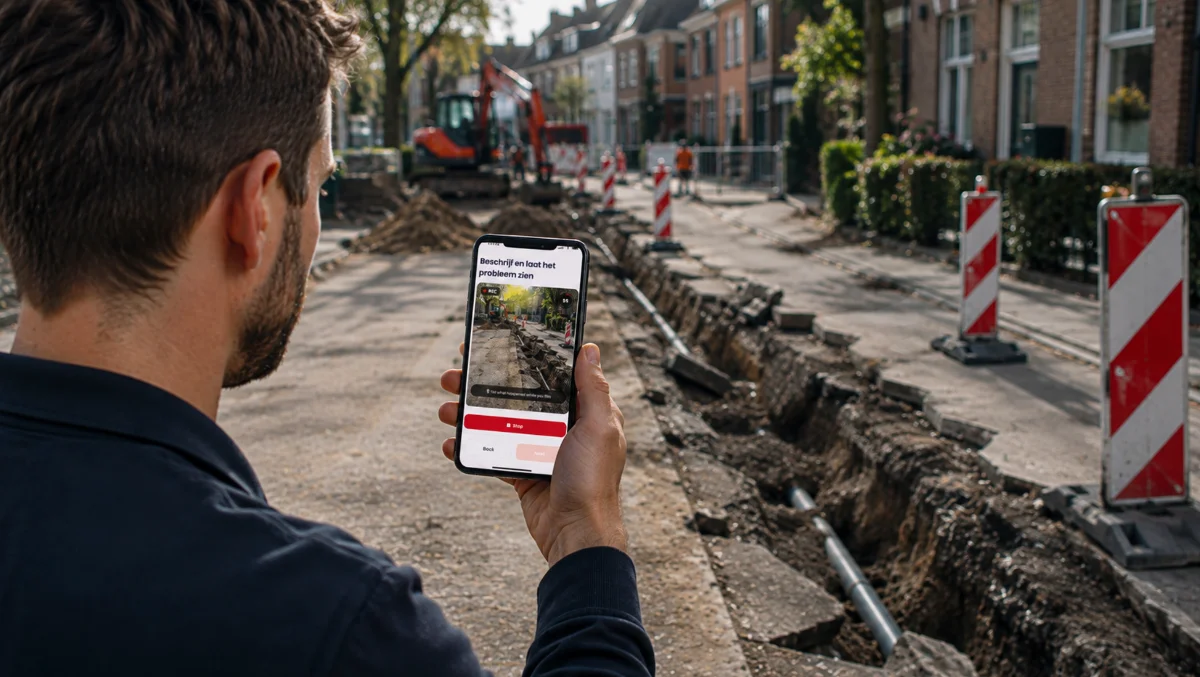
Strip away the marketing and virtual inspection changes three things: who travels, when they look, and what arrives.
Travel is the obvious one, and it is where the money is. At the $250 to $500 per-dispatch figure XOi cites as the common industry range, a team running a few hundred assessments a month is spending real budget on visits, and about a quarter of those visits are non-value-add before anyone leaves the depot.
Timing is the less obvious one. A live video session moves the expert out of the van and onto a call, which is a real win, but the appointment survives and two calendars still have to meet.
Asynchronous capture drops that constraint. The request goes out now, the person captures when it suits them, and the case is reviewed when the reviewer is free.
What arrives is the part operators underestimate. "Send us some photos" asks an untrained person to guess what an expert needs, and they usually guess wrong. Guided capture inverts that: the organisation decides what gets captured, in what order, with what instructions, so the expert's knowledge sits inside the flow rather than in a follow-up phone call.
Venta Capture runs that flow in the mobile browser through a link, with no app to install and no account to create, and the submission lands as a structured, timestamped, sealed case rather than a folder of images. The mechanics of that are on the video inspection platform page, and the same pattern is what makes a warranty claim inspection reviewable without a site visit. One clarification while we're here, because the two get confused: VentaVid's other product runs video in the opposite direction, where the advisor records and sends it to the customer, which is the aftersales use case rather than this one.
The side by side: cost, speed, depth, evidence
Where those numbers come from matters, so here it is plainly. The $1,000 and the $250 to $500 figures are third-party industry estimates from the sources linked above, not measurements from our own customers. The rows about depth, scheduling and evidence come from how each format works, rather than from a benchmark study.
Your own cost per assessment is the number that should drive the decision. Most teams can calculate it in an afternoon from mileage, labor and scheduling overhead.
One row deserves a caveat. A structured visual evidence package is stronger than loose photos because it carries context: what was asked, what was answered, when the system received it, and what the integrity signals looked like.
That is not the same as proof of what happened. A server timestamp proves when a submission was received, never when the damage occurred, and integrity signals are a reason for a human to look more closely rather than a verdict in themselves. The reviewer still decides.
We wrote about how that plays out on the rental condition report side, where before-and-after captures either settle an argument or don't.
How to decide: a triage rule you can run tomorrow
You don't need a policy document. You need three buckets and the discipline to sort into them before anyone books a van.
Send someone when the assessment turns on concealed condition, a regulation or standard requires attendance, the value at stake is high enough to be litigated, the case already carries red flags, or the customer has asked for a person and is entitled to one.
Go live when the situation is urgent and the next action depends on what you see in the next ten minutes, when the person on site needs talking through something awkward, or when a conversation is the point as much as the footage is.
Send a capture link when the assessment is one your team performs often enough to have written down, the person on site can point a phone at the thing, and nothing on the "send someone" list applies. That covers more of a typical dispatch list than most managers expect. The 25% of truck rolls XOi describes as non-value-add is a reasonable floor for this bucket, not a ceiling, and it is the bucket worth measuring first.
Two guardrails keep this honest. Nothing in the remote buckets diagnoses anything: the assessment stays with the qualified person reviewing the case. And a case can move between buckets at any point, which is the whole design.
The obvious objection is what happens when a capture comes back thin. Usually it means the flow asked the wrong question, and that is fixable in an afternoon rather than a quarter. Log the retake reasons for a month and you'll have a better inspection checklist than the one you started with, because it was written by the failures rather than by a committee.
Want to test the third bucket against your own list this week? Create a free account and build one capture flow for your most repetitive assessment type.
Ready to see what your customers see?
Send one link. Get guided, verified video back. No app, no account.
Start remote, escalate deliberately
The framing that survives contact with an actual operation is sequential rather than exclusive. See first, act second.
A case runs: request sent, guided capture completed, remote review, then a decision. That decision has more than two outcomes:
- Resolve it now. The submission answers the question and the case closes, quotes, or progresses.
- Ask for more. One retake request, targeted at the specific thing that was missed, costs minutes instead of a second visit.
- Escalate to live. Some cases need a conversation. Now you're spending expert time on the ones that earned it.
- Dispatch. The visit still happens, but the technician arrives knowing what they're walking into, with the right part on the van.
The last outcome is the one people forget when they hear "remote". Remote-first is not remote-only, and a better-informed visit is a legitimate win even when the visit happens anyway.
On the support and field-service side, Venta Capture deployments report 23% of customer problems solved without dispatching a technician. That figure comes from support-shaped work, so treat it as an indication of what triage can do rather than a number to put in your business case. Your mix will differ.
Run your own arithmetic instead. I spent an afternoon last month going through a field team's dispatch list with their ops manager, sorting each line into the three buckets above, and the argument stopped being about technology within twenty minutes.
Say you handle 300 assessments a month, and some share of them come back complete enough to close, quote, or resolve without anyone travelling. At the $250 to $500 industry range for a dispatch, every ten avoided visits is worth $2,500 to $5,000. That share is a number to measure over one month, not one to borrow from a vendor.
The same logic runs on the claims side, where the escalation ladder decides which losses get attended, and we walk through it in more detail in our piece on remote claim inspection. For insurers specifically, the workflow and the integrity layer are set out on the remote claim inspection page. If you'd rather see it mapped to your own escalation rules than read another comparison, book a demo and bring a real case.
Frequently asked questions
Is a virtual inspection as accurate as a physical inspection?
Not for everything, and the concern is well documented: 59% of jurisdictions in the survey cited by Matterport named accuracy as their main barrier. Virtual assessment is accurate enough for repetitive, visible-condition work when the capture is guided, and it is the wrong tool when the answer depends on concealed damage, instruments, or physical access.
What's the difference between live video inspection and asynchronous capture?
Live video removes the travel but keeps the appointment: your expert and the person on site both have to be available at the same moment. Asynchronous capture removes the appointment too, so the request goes out now, the person captures when convenient, and your team reviews when they get to it.
When should an insurer still send an adjuster to the loss?
When the claim involves hidden damage, a disputed cause of loss, a high-value or total-loss valuation, or any file already carrying red flags. Regulators are explicit that policyholders can request an in-person inspection during claim processing, so any remote-first workflow needs to handle that request without friction.
Can virtual inspection evidence hold up in a dispute?
A structured case with guided answers, transcripts, timestamps and integrity signals is considerably more defensible than a handful of emailed photos, because a reviewer can see what was asked and what the session looked like. It still proves receipt rather than the event itself, and the signals point a human toward a closer look rather than delivering a verdict.
Do customers need to install an app?
No. Venta Capture runs in the phone's mobile browser from a link sent by email, SMS, WhatsApp, or QR code, with no app download and no account to create. That matters more than it sounds: every install step is a place where a submission gets abandoned.
Does virtual inspection eliminate site visits?
No, and any vendor promising that is overselling. The goal is to see first and act second, so the visits that do happen are the ones that needed to happen, with a technician who already knows what they're walking into.
See it before you decide
If you run assessments at volume and you've never sorted 50 of them into the three buckets in this post, that exercise is worth more than any comparison table, including ours. It takes about an afternoon and it tells you how much of your dispatch list is habit rather than necessity.
What it takes to start.
- A free account to start, no credit card required.
- Nothing for the person on site to install, and no account for them to create.
- Build one flow for one assessment type and run it against next week's list.
The VentaVid team builds Venta Capture for the teams who have to decide what happens next without standing where the problem is.
Start a free account and build your first capture flow, or book a demo and we'll map it to your escalation rules on the call.