

This post in 30 seconds.
- The benchmarks: under 60 seconds is elite, under 5 minutes is top quartile, and half the industry now answers within 15 minutes. Every figure below is cited to its study.
- The catch: fast alone doesn't win anymore. Most sub-5-minute replies are templates that answer nothing, and customers treat them that way.
- Who this is for: BDC managers, sales managers, and GMs at a dealership or dealer group who want a first reply that's both fast and personal.
An internet lead rarely lands in one inbox. The customer filled out the same form at three or four stores, and whoever gets back first with something useful usually gets the appointment. According to giosg's dealership research, 78% of customers buy from the company that responds first.
That's the whole speed to lead argument in one number. This guide gives you the 2026 response-time benchmarks, the studies behind them, and the piece the benchmark articles skip: how to make the fast reply personal enough to get answered.
If you run a BDC or a sales floor, you already know the lead that fills out a form and then never picks up the phone. We build personalized video for exactly that gap, and the fastest fix we've seen is making the first reply a 30-second video instead of a fourth template email. Book a 15-min demo and we'll show it on your own inventory.
What speed to lead actually measures at a dealership
Speed to lead is the time between a customer raising their hand and your store making first meaningful contact. Not the auto-responder. The first reply a human would recognize as an answer.
The clock starts at different moments depending on the lead:
- Website form: the second the customer hits submit. They're still on your site, probably still on your VDP.
- Third-party lead (marketplace or lead provider): when it hits your CRM, which can already be minutes after the customer clicked.
- Phone-up: immediately. A missed call that gets a callback 40 minutes later is a speed to lead failure too.
- Chat: seconds, not minutes. Chat that goes quiet is worse than no chat.
The industry is measurably improving on this. In the 2026 Pied Piper Internet Lead Effectiveness study, 51% of franchise dealerships delivered a complete answer within 15 minutes, and the industry averaged an all-time-high ILE score of 71 out of 100.
Which sounds encouraging until you notice what it means. Half of all stores still take longer than 15 minutes to properly answer a customer who is comparing four dealerships in real time. If your sales floor answers in 5, you're competing against that half.
Speed to lead benchmarks for 2026
The table below is the benchmark ladder as the current studies draw it. Use it to place your store, not to celebrate hitting "average."
A note on where these numbers come from, because benchmark posts love to blur this. Every figure above is a named third-party study, linked at the row. Where a stat only existed as a screenshot of a LinkedIn post (the famous "391% lift in the first minute" claim, for example), I left it out rather than launder it. And later in this post, where I use example math, the inputs are labelled as examples for you to replace with your own store's numbers.
The pattern across every study is the same: the payoff isn't linear, it's a cliff. Minutes one through five are worth more than the entire rest of the day.
Why the clock is this brutal
The classic research here is Harvard Business Review's study of 1.25 million sales leads. Firms that contacted a lead within an hour were nearly seven times more likely to qualify it than firms that waited even an hour longer.
That was 2011, before customers could get an instant answer from a marketplace app while your CRM notification sat unread. The window has only tightened since.
Think about what the customer is doing when the form goes in. They're on their phone, engaged, comparing. Five minutes later they're on a competitor's site. An hour later they're back at work, and your call goes to voicemail with the other three stores'.
So the first responder advantage compounds:
- They set the anchor. The first store to answer frames the car, the price conversation, and the next step.
- They catch the customer live. Everyone after them is interrupting dinner.
- They look like the store that has its act together. Which is exactly what a customer buying a $30,000 vehicle is screening for.
None of this requires better inventory or a bigger ad budget. Response time is the one funnel metric your team controls completely, which is also why it shows up in every virtual sales strategy that works.
Fast but generic still loses
Now the uncomfortable part the benchmark posts don't touch. Plenty of stores have automated their way to a sub-minute reply that says absolutely nothing.
A DAS Technology study of 1,700+ dealerships (cited in Flai's 2026 speed to lead guide) found that 91% of first responses skipped payment details and 74% didn't answer the price question the customer asked. Fast, and empty. The customer reads "Thanks for your inquiry!", recognizes the template, and goes back to comparing.
Speed gets you into the conversation. What you say in that first reply decides whether the conversation continues. A phone call answers that, but internet leads famously don't pick up unknown numbers on the first try, which is why lead follow-up with a personalized video message has quietly become the play at stores that win on response.
Wait, can I put a number on "quietly become the play"? Yes: video messages get an 81% response rate, VentaVid's verified figure across its dealer base. Compare that with your current email reply rate and you can see why the medium of the first reply matters as much as its timing.
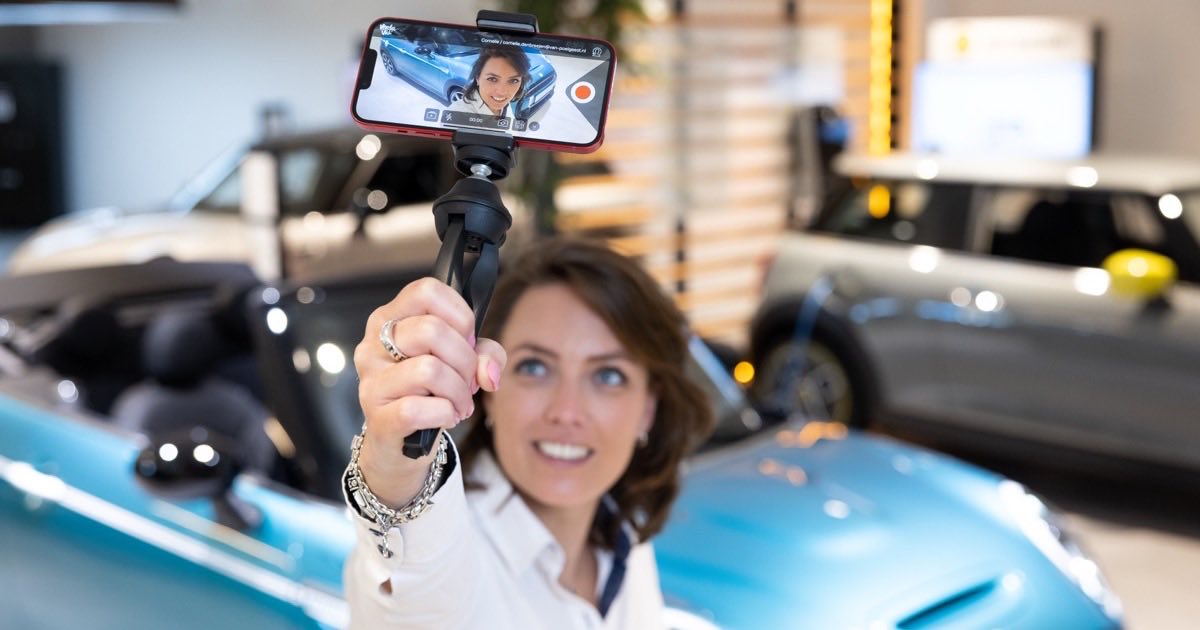
A 30-second handheld video is the only first response that is simultaneously fast, personal, and proof you have the actual car. It works on cold leads too, which is a separate playbook, but it starts in the same first five minutes.
The first five minutes: a video-first response workflow
This is the workflow to steal. It assumes nothing fancier than a phone, a CRM alert, and VentaVid or a comparable tool that turns a clip into a sendable page. I spend my working week watching dealership teams handle first replies, and the difference between the stores that win and the rest is almost never effort. It's sequence.
Minute 0 to 1: acknowledge honestly, route instantly
- An auto-reply goes out that tells the truth: "Got your question about the Tiguan. A real answer from our team is coming inside 15 minutes."
- The lead routes to a named rep. No cherry-picking, no shared inbox where every lead is somebody else's job.
Minute 1 to 5: the rep shoots the reply
- The rep walks to the car and records 30 seconds on their phone: their face, their name, the actual vehicle, and one direct answer to whatever the customer asked.
- No editing, no script. The point is a real human at the real car.
- The clip becomes a branded page with the dealership's name on it and buttons to reply or book a time, sent wherever the customer is: SMS, WhatsApp, or email. One link that carries the whole message.
Minute 5 to 15: the call
- Now the rep calls. The customer has a face and a name on their phone, so the unknown number isn't unknown anymore.
- If it's voicemail, fine. The video is still sitting in their texts, and the "video seen" notification tells the rep the moment it gets watched.
After hours: don't fake it
- Over half of dealership leads arrive outside opening hours, per Flai's compilation of industry data. Send the honest auto-reply at night and have the video reply be the first thing a rep records at 8:30 the next morning.
- An 8:30 video beats a 9:15 cold call, and it beats a fake "we're on it!" midnight template by more.
Three mistakes wreck this loop at otherwise well-run stores:
- Routing to a round-robin nobody owns. If the CRM pings five people, it pings no one. Every lead needs one name on it inside a minute.
- Perfectionism about the video. Reps who wait for a quiet showroom, better light, or a cleaner car miss the window. A slightly windy 30 seconds at minute three beats a polished clip at minute forty.
- Treating the auto-reply as the response. It stops the clock in your CRM report and nowhere else. The customer knows the difference between a bot and an answer.
Dealers running this loop aren't guessing about whether it converts.
"We convert leads that received a VentaVid video better than those who have not. That's a fact. We have also been able to establish a direct correlation between customer satisfaction and the usage of VentaVid."
by Nicolas B. Verneuil, Managing Director, Petromin Stellantis
Set an SLA and run it like a scoreboard
A workflow without a number attached to it erodes by Friday. The stores that hold a sub-5-minute standard write it down as an SLA and put the results where the team can see them.
Three tiers that map onto the benchmark ladder above:
- Minimum standard: every lead gets a human reply within 15 minutes during opening hours. This only matches the 51% of stores already there, so treat it as the floor, not the goal.
- Competitive standard: first personal reply (the video) inside 5 minutes, call attempt inside 15. This is top-quartile territory that most rooftops can reach with routing alone.
- Elite standard: acknowledgement inside 60 seconds, video inside 5 minutes, every lead, including Saturdays.
Then measure four things weekly, split by lead source:
- First response time, median and worst-case. Averages hide the Friday-evening lead that waited 14 hours.
- Contact rate, because a fast reply that never becomes a conversation is theater. Phone connection is hard: Car Wars data across 3,000 dealerships found 31.8% of unconnected calls were customers hanging up while on hold.
- Video watch rate. A sent video that gets watched is a live customer even when the phone goes unanswered. The view notification tells your rep exactly when to call back.
- Appointment set rate per lead source, the number the GM cares about, and the one that moves when the first two improve.
One warning from experience: don't let the SLA turn the first reply back into a template. The 60-second acknowledgement can be automated. The 5-minute reply is a person, on camera, at the car. Automate the clock, never the human part.
Review the scoreboard in the Monday sales meeting next to the appointment board. When reps see that leads answered with a video in under 5 minutes book more appointments than leads that waited half an hour for a call, the SLA starts enforcing itself.
What faster, personal response is worth on your floor
Walk the shape of the math with example numbers, then plug in your own.
Even without inventing the lift number for you, the shape is visible. At 300 leads, every extra percentage point of appointment rate is three more customers in the showroom on the same ad spend, before you touch your marketing budget.
Two verified figures to weigh against your own test: VentaVid users report a 1.5x faster sales cycle with personalized video, and the tool is used by teams at 1000+ dealerships in 43 countries. Pricing scales by team and video volume, and it isn't public, so the honest guidance is the pricing page plus a conversation.
Want the math run on your own lead count instead of my example? Book a 15-min demo and we'll do it live on your numbers.
Lead response is the first of seven leaks covered in how to sell more cars at a dealership.
Frequently asked questions
What is a good speed to lead for a car dealership?
Under 5 minutes puts you in the top quartile; under 60 seconds is the elite standard top BDCs run at. Under 15 minutes is now merely average, since 51% of franchise dealers hit it per the 2026 Pied Piper study.
What is the average dealership lead response time?
For leads from third-party providers, 25 to 40 minutes is typical. Website leads get answered faster on average, but only 13% of dealers manage a reply within 5 minutes.
Do third-party leads need the same response speed as website leads?
Yes, arguably more, because the same lead went to several stores at once by design. The 25-40 minute average on third-party leads is exactly why a 5-minute store wins so many of them.
How should we handle leads that come in after hours?
Send an honest auto-acknowledgement at night that promises a real answer in the morning, then make a 30-second video reply the rep's first task at open. Over half of leads arrive after hours, so this single habit covers more volume than any daytime heroics.
Doesn't shooting a video slow the first response down?
No. A rep can walk to the car and record 30 seconds faster than most people write a proper email, because there's nothing to edit or format. The auto-acknowledgement covers minute one; the video lands well inside the 5-minute benchmark.
Which KPIs should a BDC track for speed to lead?
Four, split by lead source: median and worst-case first response time, contact rate, video watch rate, and appointment set rate. Response time is the input; appointments are the output that proves the input matters.
What should the first reply to an internet lead actually say?
Answer the customer's actual question, show the actual car, and give one clear next step. The DAS Technology study found 74% of first responses dodge the price question, so simply answering it puts you ahead of three quarters of the market.
Talk to us
If your leads are answered in 25 minutes with a template, the benchmarks in this post are the gap between your ad spend and your showroom traffic. The fastest way to see what a video-first reply changes is to watch one built on your own inventory, alongside the video tools your team already compares.
What it takes to start.
- 7-day free trial, no credit card required, so your reps can send real video replies to real leads this week.
- No editing skills needed. They shoot on the phone they already carry.
- We'll map the first-five-minutes workflow to your BDC on the call.
A real person from the VentaVid team runs these demos on your inventory.