
End of lease inspection explained: what the inspector is grading, and why it costs money
An end of lease inspection is the formal condition assessment carried out when a leased vehicle goes back, grading bodywork, glass, wheels and tyres, interior, equipment and paperwork against the return standard in the contract. Its output is a condition report, and that report is what any end-of-contract charge is calculated from.
For dealerships
See the car before it arrives
Venta Capture, a product of VentaVid, sends the customer a guided capture link, so appraisals, intake and returns start with the vehicle you can actually see.
It is also the moment the fleet's liability is fixed. Whatever is not recorded then is very hard to argue about later, in either direction.
Inspection or return: the distinction worth holding
A lease return is the event, the physical handover of the vehicle and its documents at the end of the term. The end of lease inspection is the assessment made during that event. One is a transfer of possession, the other is a judgment about condition, and they answer different questions: who has the vehicle now, and what state was it in when they got it.
The practical consequence is that an inspection can happen without a return. That is what a pre-return appraisal is, and it is the only one the fleet controls the timing of.

What does an end of lease inspection cover?
- Bodywork and paint: dents, scratches, scuffs, corrosion, panel alignment, and whether previous repair work meets standard.
- Glass and lights: chips and cracks, position relative to the driver's line of sight, lenses and housings.
- Wheels and tyres: tread depth, uneven or illegal wear, kerbing on rims, matched specification, spare or repair kit present.
- Interior: seats, trim, headlining, load area, odours, burns, and anything removed or added.
- Equipment and documents: every key working, charging cables for electric and hybrid vehicles, parcel shelf, load cover, handbook, and service history.
- Mileage: read and recorded, and settled separately from condition.
When does it happen?
In most fleet programmes there are two or three assessments, and they are not the same exercise.
- Pre-return appraisal: run by the fleet before collection while repairs are still an option. The BVRLA advises appraising the vehicle ten to twelve weeks before return so that any work can be booked and done properly.
- Collection inspection: carried out at handover, usually by an independent inspection company appointed by the lessor rather than by the lessor directly. The BVRLA advises being present and having both parties sign off the condition report.
- Defleet re-inspection: done on arrival at the auction or preparation centre. This one grades the vehicle for buyers, not for liability, and it feeds the wholesale valuation rather than the invoice.
End of lease inspection explained: a practical example
A van comes back with a 30mm scratch on the side panel, a cracked nearside mirror housing, and one of two keys missing. The scratch is measured and judged against the standard for that vehicle type. The mirror housing is damage regardless of size, because it is a broken component rather than surface wear. The missing key is charged as a missing item, on a separate line, and none of the three arguments is really about the same thing.
How much rides on the report
More than most fleets budget for. Fleet News research in the 2025 FN50 study of the UK's largest leasing companies found that 48% of returned cars attracted an end-of-contract charge, at an average of £421, a record high and up 14% year on year. On vans, 58% of returns attracted a charge, averaging £597.
Those are averages across whole leasing books, which means a fleet with weak return discipline sits well above them.
How to challenge an inspection outcome
Charges are contestable, and the strength of a challenge is almost entirely a function of what the fleet can show.
- Compare the reports: a pre-return appraisal dated before collection, set against the collection report, isolates anything that appeared in between.
- Produce the repair evidence: invoices and photographs for work already done close off items the inspector has flagged.
- Check the standard applied: confirm the vehicle was graded against the standard the contract actually adopts, and against the guide for its own vehicle type.
- Escalate properly: the BVRLA notes that a customer who disagrees can pay for an independent engineer's examination, with the cost refunded if their position is upheld.
The pattern behind successful challenges is dull and consistent. Fleets that win them have a dated record of the vehicle before it left, and fleets that lose them do not.
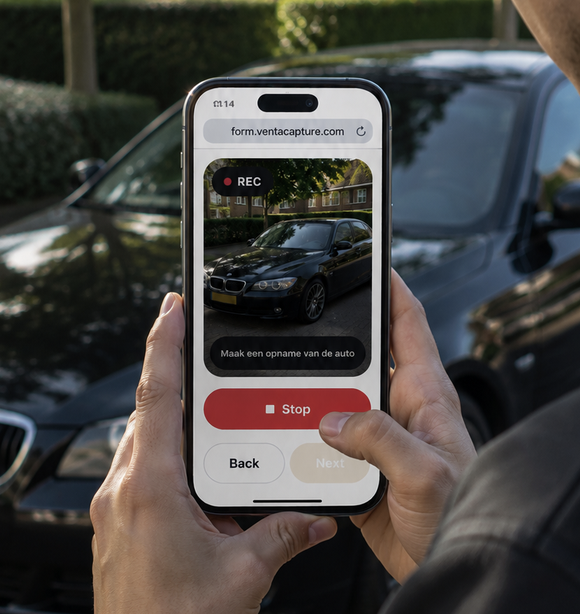
Getting that dated record from every driver, in every depot, in the same format, is the part that breaks down at volume. Guided capture tools exist for exactly that step. Venta Capture, a product of VentaVid, sends the driver a link that walks them through a fixed sequence of shots in their phone browser, with no app to install, and the submission lands as a timestamped, structured record rather than a folder of loose photos.
Keep the claim honest, though. A capture proves what the vehicle looked like at the moment it was recorded, and it does not grade anything. The inspector still decides what is fair wear and tear and what is chargeable damage. What changes is that the conversation now has a shared reference point with a date on it.
See lease return inspection for how fleets run this in practice.
In practice: see how car dealerships use Venta Capture.