
What is an odometer reading? Odometer readings explained
An odometer reading is the distance figure shown on a vehicle's odometer at a specific moment, captured with a date so it can be compared against earlier readings of the same vehicle. On its own it is a data point about what a display showed. Placed in a sequence, it becomes one of the strongest fraud signals in the used vehicle market.
For dealerships
See the car before it arrives
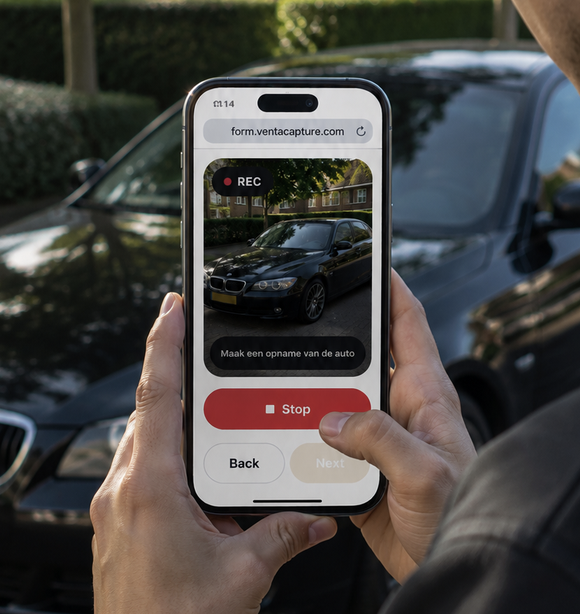
Venta Capture, a product of VentaVid, sends the customer a guided capture link, so appraisals, intake and returns start with the vehicle you can actually see.
Mileage moves money. It sets valuation, it sets lease excess charges, it decides warranty eligibility, and it is the number buyers anchor on before anything else.
What does an odometer reading mean on a record?
Readings enter the record at events, not continuously. The usual capture points are title transfers, roadworthiness or MOT inspections, service and repair visits, lease returns, auction intake, and insurance claims. Each one produces a dated snapshot, and the gaps between snapshots are where manipulation hides.
Two details decide how useful a reading is. First, whether the figure is the total odometer or a trip meter, which is a mistake that happens more often than it should. Second, whether the units are miles or kilometres, which matters enormously on imported vehicles and is a favourite ambiguity of anyone selling one.

Odometer rollback: how big the problem actually is
Rollback, or clocking, is the alteration of the recorded distance with intent to mislead. The scale is not marginal:
- United States: NHTSA estimates that more than 450,000 vehicles are sold each year with false odometer readings, costing consumers over 1 billion dollars annually.
- European Union: research prepared for the European Parliament puts manipulation at between 5% and 12% of used cars in national sales, rising to between 30% and 50% in cross-border sales.
That cross-border figure is the tell. Mileage fraud follows the gaps between national registers, because a car whose history sits in one country's database arrives in another with nothing to contradict the dashboard.
Digital odometers did not fix this
A common assumption is that electronic instrument clusters made rollback obsolete. They made it cleaner. Tools that write directly to the cluster leave no scratched-off digits and no misaligned wheels, which is exactly why the old physical checks matter less than they used to and record-keeping matters more.
What still catches it is corroboration. Mileage stored in other modules, service stamps and workshop records, tyre and pedal wear against the claimed distance, and above all a dated sequence of readings that has to run monotonically upward.
Odometer reading example: a sequence that breaks
A van shows 142,000 km at its 2023 inspection, 148,500 km at a service in early 2024, and 121,000 km on the dashboard at sale in 2025. No single one of those numbers is impossible. The order is. Either a digit was mistyped at one of the three capture points and the seller can produce the document that proves it, or the cluster has been rewritten.
What a photographed odometer actually proves
This is where remote buying gets careless. A photograph of a dashboard proves what the display showed when the photograph was taken. It does not prove the true distance the vehicle has travelled, and it never has.
Capture the reading so it is at least worth something:
- Ignition on, full cluster visible, so the total odometer is legible and clearly not a trip meter.
- Units in shot, mi or km, without cropping.
- The VIN in the same session, so the reading is tied to a specific vehicle rather than a generic dashboard.
- A date and time on the capture itself, not typed in afterwards from memory.
- The wider dashboard, since warning lights and service messages in the same frame are context a cropped number throws away.
Done that way, the reading becomes a defensible statement: this vehicle's display showed this figure on this date. That is a real, checkable claim, and it is enough to sit in a sequence and be compared. Treat any single reading as a claim to be corroborated, never as a verified fact about the vehicle.
Where the reading fits with the rest of the file
Mileage is the one field that appears in almost every other document about a vehicle, which is what makes contradictions findable. Cross-check it against the vehicle history report, against the physical condition written up in the vehicle condition report, and against the excess mileage position at lease return inspection. Remote valuations lean on it hardest of all, which is why online trade-in appraisal lives or dies on whether the mileage evidence is real.
In practice: see how car dealerships use Venta Capture.