
Remote adjusting explained: what it means when the adjuster never attends
Remote adjusting is the handling and settlement of a claim without the adjuster physically attending the loss, working instead from images, video, measurements and documentation captured at the scene by whoever is already there. The adjuster's judgement does not change. What changes is how they get their eyes on the loss.
For insurers
See the damage before you send anyone
Venta Capture, a product of VentaVid, sends the policyholder a link. They film the damage on their own phone, guided step by step, and the evidence lands with the claim.
The term overlaps with desk adjusting and virtual adjusting, and most claims operations use them interchangeably. Where a distinction is drawn, desk adjusting means working the file from submitted paperwork, and remote adjusting means the adjuster also directs what visual evidence gets captured.
How does remote adjusting work?
Four beats, and the order matters:
- Triage. The claim is assessed at notification against criteria for whether it can be handled remotely. This is the decision that determines whether everything downstream works.
- Capture request. The adjuster specifies what needs to be recorded: which angles, which identifiers, which measurements, which context shots.
- Capture. The policyholder, a contractor, a repairer or a third party records it from the site.
- Assessment and decision. The adjuster reviews the submission, requests anything missing, scopes the loss and settles, authorises repair, or escalates to a physical visit.
Two of those four get skipped constantly. Skip triage and losses go down the remote route that were never suitable for it. Skip the capture request, send "please send us some photos", and the file takes three rounds.
What remote adjusting is used for
- Motor: damage appraisal on drivable vehicles, third party inspections, pre-repair scoping, total loss verification.
- Property: escape of water, storm damage, contents claims, small commercial losses.
- Catastrophe response, where the number of claims exceeds the adjusters available to attend and remote handling clears the straightforward volume so field capacity goes where it is needed.
- Liability and third party claims, where the adjuster needs to see a location or a defect rather than assess a repair.
Remote adjusting example: the ceiling that stayed a desk claim
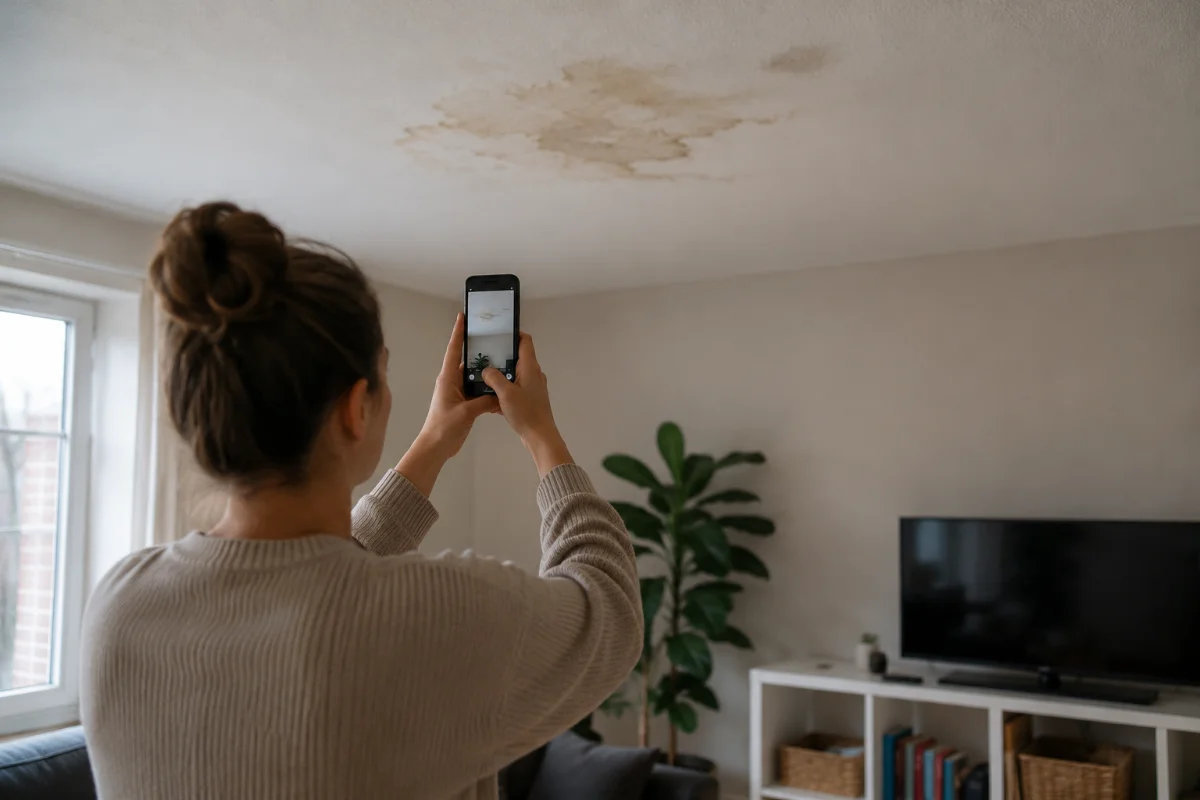
A policyholder reports water staining across a bedroom ceiling. The adjuster sends a capture request specifying the stain from three metres back, a close shot of the affected area, the room above showing flooring and any appliance, the loft space, and the stopcock.
The submission shows a failed washing machine hose in the room above and a stain of roughly 1.2 square metres with no sagging plaster. The adjuster scopes a strip and reskim plus redecoration, authorises it the same day, and never books a visit. Had the loft images shown a compromised joist, the same request would have surfaced it immediately rather than three days later.
Live or asynchronous: two different remote models
Teams often assume remote adjusting means a video call. It does not have to, and the difference decides how far the model scales.
- Live remote adjusting puts the adjuster on a video call with the person at the loss. Good when the adjuster genuinely needs to direct the camera in real time or ask follow-up questions as they look. The cost is calendars: both people have to be free at the same moment.
- Asynchronous remote adjusting sends a structured capture request. The person on site records when it suits them, and the adjuster reviews when the file reaches the queue.
At volume the two behave very differently. Five hundred live inspections need five hundred staffed sessions. Five hundred asynchronous captures need a review queue. Most operations run both and reserve live sessions for cases where real-time interaction earns its cost. The comparison is worked through in virtual inspection versus physical inspection.
When remote adjusting is the wrong call
Remote-first, not remote-only. That framing exists because pushing the wrong claim down the remote route costs more than the visit would have.
- Contested liability or suspected fraud. When the file is likely to be argued over, evidence collected under controlled conditions carries more weight.
- Structural or safety questions. Someone qualified needs to be able to lift a panel, sound a wall, or get under the vehicle.
- High severity or high complexity losses, where scope discovery matters more than speed.
- Vulnerable customers, or anyone who cannot reasonably operate a phone camera at the loss. A remote process that assumes capability the claimant does not have is an access problem.
- Anything where the submitted evidence keeps coming back incomplete. Two failed rounds is a signal to send someone, not to send a third request.
How remote adjusting is measured
Four numbers, tracked together so no single one can be gamed:
- Remote settlement rate: claims closed without a site attendance.
- Escalation rate: claims routed remotely that later needed a visit anyway. A high remote settlement rate with a high escalation rate means triage is broken.
- Supplement and reopen rate: how often the remote scope proved wrong once work started.
- Touches to decision: how many rounds of evidence requests it took. This is the number most directly tied to claims cycle time, and the one most operations do not track.
Two cautions on the evidence itself. A system timestamp records when a submission was received, not when the damage occurred, and should never be presented as the latter. And automated signals about device, location or image manipulation are a reason for a person to look closer. They are not a verdict. The adjuster remains the decision-maker.
Fuller treatment of the motor case sits in remote claim inspection, and the definitional groundwork in remote inspection.
On tooling: Venta Capture, a product of VentaVid, is built for the asynchronous half of this. A link goes to whoever is already at the loss, no app and no account, they are guided step by step through what the adjuster specified, and the submission lands as a structured case with answers, transcript, timestamps and integrity information in one place. It does not assess the loss. It gives the adjuster who does something better to assess it from.
In practice: see how insurers use Venta Capture for remote claim inspection.