
What is subrogation: the right of recovery explained
Subrogation is the right of an insurer that has paid a claim to step into the policyholder's legal position and recover that payment from whoever caused the loss. The insured's rights against the responsible party transfer to the insurer, up to the amount it has paid out.
For insurers
See the damage before you send anyone
Venta Capture, a product of VentaVid, sends the policyholder a link. They film the damage on their own phone, guided step by step, and the evidence lands with the claim.
It exists to keep two things from happening: the person at fault escaping the cost because someone else was insured, and the policyholder being paid twice for the same loss.
How subrogation works
- The insurer pays the claim: subrogation rights normally attach on payment, and the policy wording will confirm them.
- The file is screened for recovery: was there an identifiable at fault party, and are they worth pursuing, insured or solvent.
- Evidence is preserved: the failed component, the scene, the timeline, the invoices. This is the step that decides most cases.
- Notice goes out: to the third party or their insurer, putting them on notice before evidence disappears.
- The claim is negotiated: most recoveries settle between insurers or through inter-company arbitration rather than in court.
- Proceeds are applied: against the insurer's outlay, with the policyholder's excess usually returned out of a successful recovery.
What limits a recovery
An insurer cannot acquire better rights than the policyholder had. That single principle drives most of the obstacles:
- The made whole doctrine: a common law rule applied in many US states holding that the insurer cannot take from a limited recovery until the insured's own uncompensated losses are covered first. States differ on whether clear policy wording can override it, and some, Montana among them, do not permit that override.
- Waiver of subrogation: the insured signed the right away in a contract, often long before the loss.
- Comparative or contributory negligence: the insured's own share of fault reduces or defeats the claim.
- Limitation periods: the clock runs from the underlying event, not from the date the insurer paid.
- The defendant's position: an uninsured or insolvent party can be entirely liable and still not worth suing.
Benefit plans face their own version. In Montanile v. Board of Trustees of the National Elevator Industry Health Benefit Plan, decided by the U.S. Supreme Court in January 2016, a plan that had paid over $120,000 in medical expenses lost its ability to enforce its reimbursement lien once the participant had spent the third party settlement, because the remedy reached identifiable funds rather than general assets. The operational lesson was about speed, not doctrine.
Waiver of subrogation, and why contracts contain it
Construction contracts, commercial leases and equipment agreements routinely include a mutual waiver of subrogation. The logic is that the parties agreed insurance would absorb the risk, and would rather not spend the project suing each other through their insurers.
For a claims team the consequence is procedural: check the contracts before building a recovery file, not after. Discovering a waiver in month four means the file cost money and returned nothing.
Subrogation example: a failed appliance hose
A supply hose on a two year old washing machine splits overnight and floods a ground floor. The insurer settles the property claim at £34,000 and screens it for recovery against the manufacturer.
Whether that recovery survives comes down to one decision made in week one: whether the machine and the failed hose were retained rather than skipped by the drying contractor. With the component, dated photographs of the installation, and the plumber's statement, the claim is arguable. Without the component, it is a story about a flood.
Why subrogation is won or lost at first notification
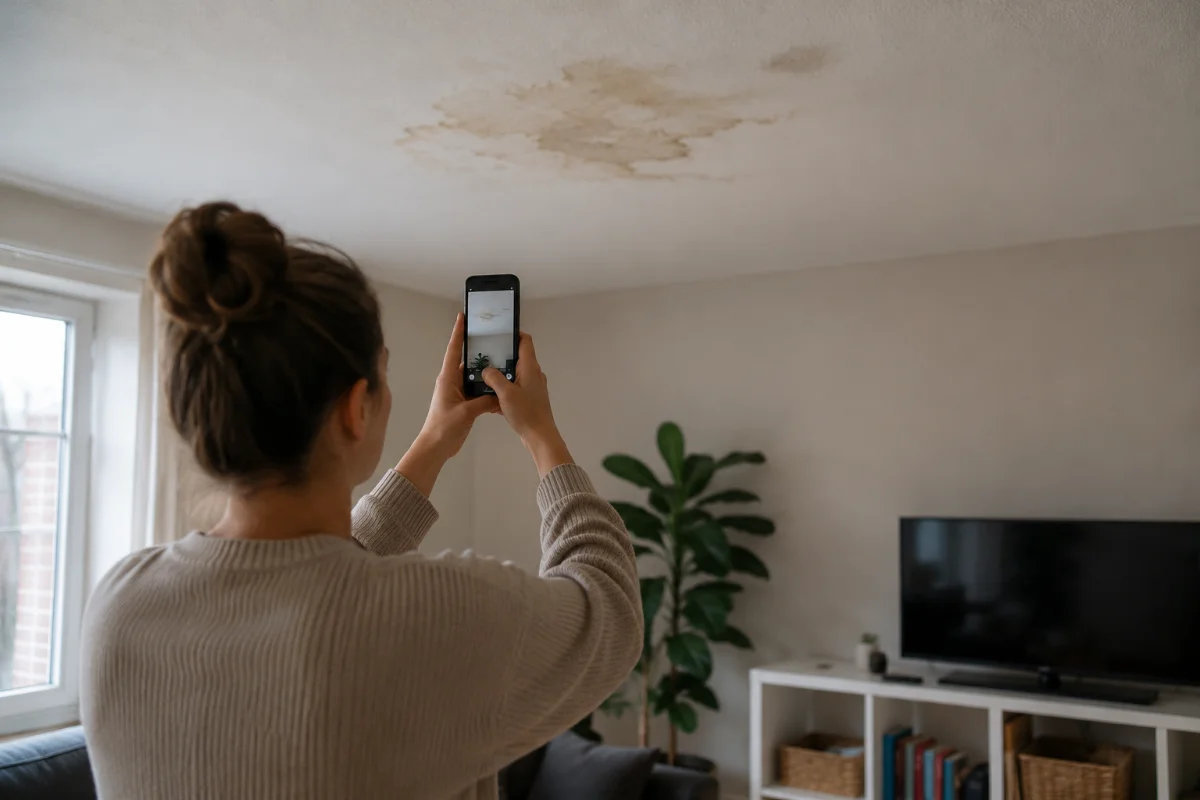
Recovery teams inherit whatever the intake process captured, and by the time a file reaches them the vehicle is repaired, the room is dry and the part is gone. What survives is the evidence someone thought to keep on day one.
- The scene before repair: wide context shots, not just close ups of the damage.
- The failed item itself: photographed, labelled and retained, with a record of who held it. Destroying it can also raise spoliation arguments against the insurer.
- Identification: model, serial number, registration plate, batch or installation date, legible in the image rather than typed into a form.
- A defensible timeline: when the loss was discovered, when it was reported, when each step was taken.
- Provenance of the images: where they came from and when, which is what an opposing insurer will probe first.
The standard to aim at is in photo evidence in insurance claims, the handling discipline in chain of custody, and the file level view in insurance claim documentation. A subrogation file is the one place where evidence quality converts directly into money recovered, which makes it the easiest business case in claims to measure and the easiest to lose in week one.
In practice: see how insurers use Venta Capture for remote claim inspection.