
Used car inspection explained: what it covers and where it sits in the buying process
A used car inspection is a structured condition check of a used vehicle against a defined checklist, recording identity and specification, mileage, mechanical and electrical condition, safety-critical wear items, bodywork and interior. It establishes what state the car is in. It says nothing at all about what the car is worth.
For dealerships
See the car before it arrives
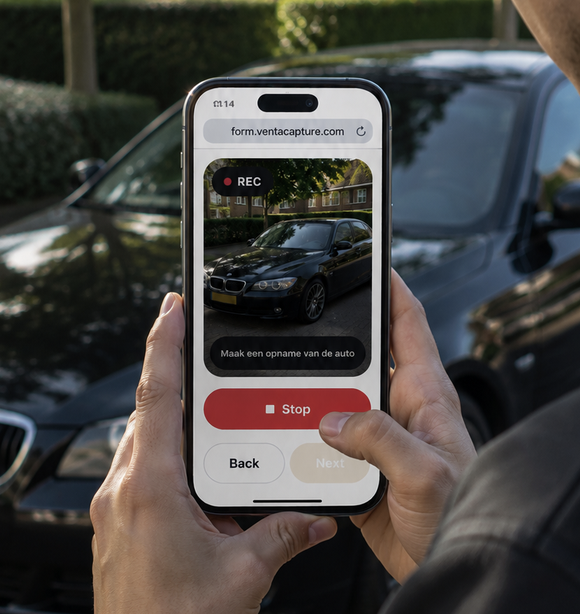
Venta Capture, a product of VentaVid, sends the customer a guided capture link, so appraisals, intake and returns start with the vehicle you can actually see.
Depending on where you sit it is called a used vehicle inspection, a pre-purchase inspection or PPI, a condition report, or on the wholesale side simply the CR.
What does a used car inspection cover?
Any checklist worth using groups into six areas:
- Identity and paperwork. VIN matched to the plate and the documents, trim and specification confirmed, service history, outstanding recalls, keys.
- Mileage. Odometer photographed and cross-checked against test records and service entries.
- Mechanical and electrical. Cold start, road test, fault codes read, fluid condition, leaks, noises under load.
- Safety and wear. Tread depths on all four plus the spare, brake pad and disc measurements, suspension play, lights, wipers, glass.
- Bodywork. Panel by panel, with a wide shot of every corner for context, paint depth readings where structural repair is suspected, and the underside.
- Interior. Upholstery, trim, electronics tested individually, smells, water ingress.
The bodywork section is where most inspections quietly fail. A tight photo of a dent with no wide shot tells whoever reads it nothing about panel alignment or how far the damage really runs.

When does a used car inspection apply?
More often than people expect, and with a different purpose each time:
- At appraisal, feeding the condition half of a vehicle appraisal.
- At wholesale purchase, as the condition report a buyer bids from without standing next to the car.
- At intake to recon, producing the work list the shop runs from.
- Before frontline sign-off, confirming the work list was completed.
- At delivery, as the record of the state the car left in.
- At a lease or rental return, deciding what falls outside fair wear and tear.
Why the inspection record matters after the sale
Because in wholesale, whatever you failed to disclose becomes somebody's claim. Under the National Auto Auction Association arbitration policy effective 1 June 2025, a single arbitral mechanical defect with a repair cost of 800 dollars or more is subject to arbitration on vehicles sold under qualifying lights where the seller made no announcement. The same policy defaults vehicles over 20 model years to as-is unless the seller states otherwise.
An inspection that was done properly and recorded properly is what protects you in that conversation. One that lives in somebody's memory does not.
Used car inspection explained: an example
A buyer takes a saloon on a condition report showing 5mm front tread, no structural announcement, and three cosmetic notes. On arrival the nearside sill carries a repaired section with paint depth at three times factory, and the front tyres are a mismatched pair at 3mm.
Neither item appeared after the sale. Both were on the car when the report was written, and neither was captured. The dispute that follows is not really about the car. It is about what the inspection recorded.
How a used car inspection differs from the things it gets confused with
- Inspection versus appraisal. An inspection produces facts about condition. An appraisal attaches money to those facts. Give the same inspection to two appraisers and you can still get two numbers.
- Inspection versus MOT or state safety test. A statutory test asks whether the car is legal to drive today. It does not grade wear, cosmetics, or history.
- Inspection versus vehicle history report. A history report covers recorded events. An inspection covers the physical car in front of you, and the two disagree more often than either supplier likes to admit.
- Inspection versus certification. Certified pre-owned programmes use an inspection as their entry gate, then add a warranty and a badge on top.
What separates a good inspection from a box-ticking one
Consistency, mostly. The same checklist, the same shots, in the same order, whoever is holding the phone and whatever the weather is doing. That is what makes two cars comparable, and what makes a report defensible three weeks later.
The consequences run straight downstream. A thorough inspection makes the trade-in appraisal accurate, an accurate appraisal makes the reconditioning work list right first time, and a work list that is right first time is why one store's recon cost lands on estimate while another's runs well over it. Missed at inspection means paid for in the shop.
Where the car is not in front of you, the practical problem is that the person holding the camera is not an inspector. Venta Capture, a product of VentaVid, addresses that by sending a link and walking the customer or the driver through the exact shots the checklist requires, step by step, with the submission arriving as a structured case rather than an email of attachments. It assesses nothing itself: guided capture collects the views, and the qualified person still makes the call. The same approach applied at contract end is covered in lease return inspection.
In practice: see how car dealerships use Venta Capture.