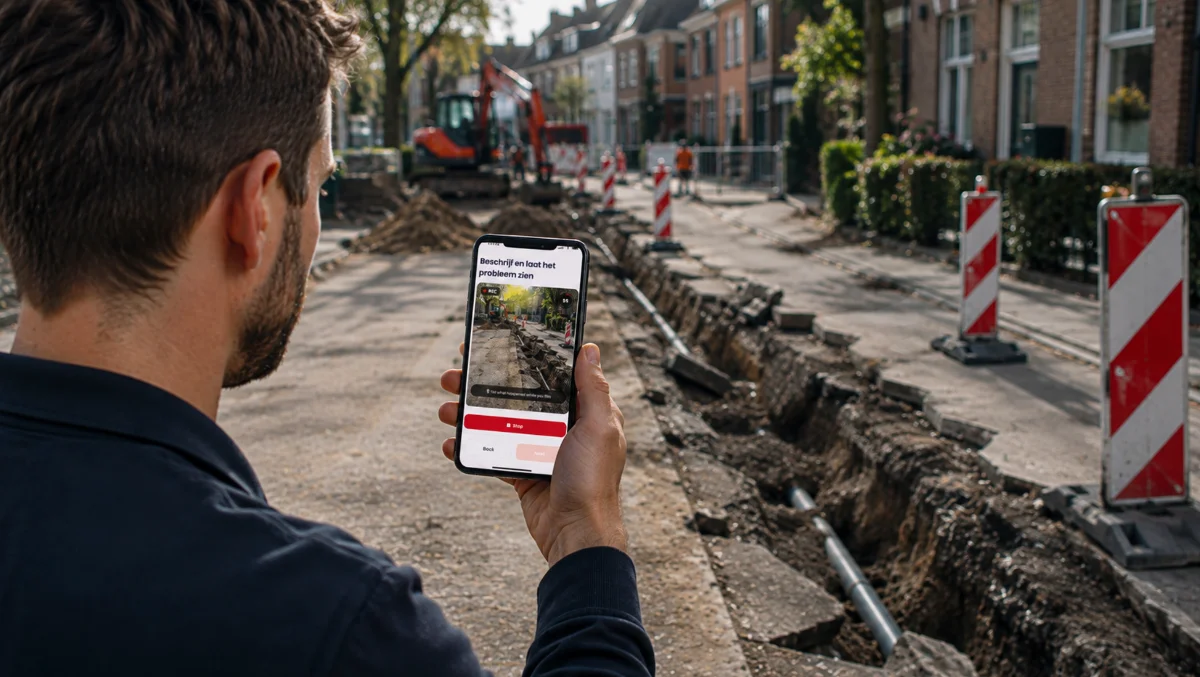
What are before and after photos: a matched pair of images of the same subject from the same position, one taken before work starts or before an event and one after, used as evidence of the work completed, the damage caused or the change in condition.
Before and after photos are the simplest form of visual evidence in trades, property, fleet and claims: a picture of the thing as it was, and a picture of the thing as it is now. A contractor uses the pair to show a repair was done and done properly; a landlord uses it to show a carpet was clean at check-in; a fleet uses it to show a van had no dent at the start of a shift; an insurer uses it to separate the damage claimed from the damage that was already there.
The term matters because the pair is only as good as its weakest half. Everybody takes the "after" photo, because it is the one that gets paid. The "before" is the one that gets forgotten, taken from the wrong angle, or taken on a phone with the date wrong. In the US the same idea is often called pre and post job photos or progress photos; in UK property it appears inside the schedule of condition and the check-out report.
What a good before and after pair contains
- Same subject, same position. The after photo is taken from where the before photo was taken, so the two can be compared without argument about what is in frame.
- A wide shot and a close-up. The wide shot proves which room, vehicle or unit it is. The close-up shows the defect or the finish.
- An identifier in frame. A registration plate, a door number, an asset tag or a job reference on a card. Without it, the photo could be of anything.
- Time and place. A server-side timestamp and a location recorded at capture. The phone's own EXIF data can be edited or stripped and should be treated as unverified.
- A note. A sentence or a spoken explanation: "existing scratch on the driver's door before hire", "sealant replaced along the full tray edge".
How before and after photos are used
The pair carries a claim. For a contractor the claim is "I did this work to this standard", so the after photo supports the invoice and the before photo supports the scope: the client cannot later say the damage was smaller than the quote suggested. For a rental company or landlord the claim runs the other way: the before photo is the baseline, the after photo is the return, and the difference is what the customer is charged for. In field service the before capture also decides what the visit needs, which is covered in before and after documentation in field service.
Before and after photos example: a kerbed alloy on a hire car
A customer collects a hire car on a Friday. At the counter, the rental agent starts a guided capture: four corners, each wheel, the roof, the interior, the mileage. The nearside front alloy shows a light scuff, which is photographed close up and noted. The customer receives the same record by email before driving off.
On return the same flow runs again from the same positions. The nearside front alloy now has a deep gouge across three spokes. The two photos sit side by side: same wheel, same angle, three days apart, each with its time and location. The customer looks at their own Friday copy and pays for the refurbishment. Without the Friday close-up, the argument is one word against another and the rental company usually loses it.
What before and after photos do not do, and the mistakes people make
They do not show what happened in between. A pair proves two states. It does not prove who caused the change or when within the interval it occurred. That is why the interval should be as short as the process allows.
They do not prove quality on their own. An after photo of a painted wall shows a painted wall, not how many coats. Where the standard matters, add a photo of the process or the materials, or a spoken note.
The mistakes are the same across trades and sectors. No before photo at all. A before photo of the whole room and an after photo of one corner. Photos in a phone gallery that get sent to the wrong job or deleted with the phone. Uploads from the gallery instead of capture in the moment, so nobody can prove the before was taken before. And a pair held only by one party, so the other side cannot check it and does not trust it. The property version of that last mistake is covered under deposit dispute.
Where the photos are kept and who holds them
The pair should be filed against the job, the vehicle or the tenancy, not against the person who took it, so it survives a staff change. Both halves need the same treatment: captured in the moment, timestamped by the server, located, and sealed so the file can be shown to be unchanged. Where two parties have an interest, both should hold a copy from the day the before photo is taken. The proof of work entry covers the contractor side of that in more depth.
Venta Capture, a product of VentaVid, runs the before and the after as two guided captures with the same steps. The participant (a tenant, a driver, a contractor, a customer at the counter) is sent a secure, personal capture link or scans a QR code, follows the steps in the mobile browser with no app, and each submission arrives timestamped, located and sealed. The two cases are linked in one file so a reviewer compares them side by side, and the submitter can be sent their own copy the moment they finish. Details at the Venta Capture page.