
Digital retailing explained: what is digital retailing in a dealership?
Digital retailing is the set of tools and processes that let a dealership structure and progress a real deal online: the price, the part exchange allowance, the finance quote, the add on products, the deposit and the paperwork, with the same numbers carried through when the customer arrives in the showroom.
For dealerships
See the car before it arrives
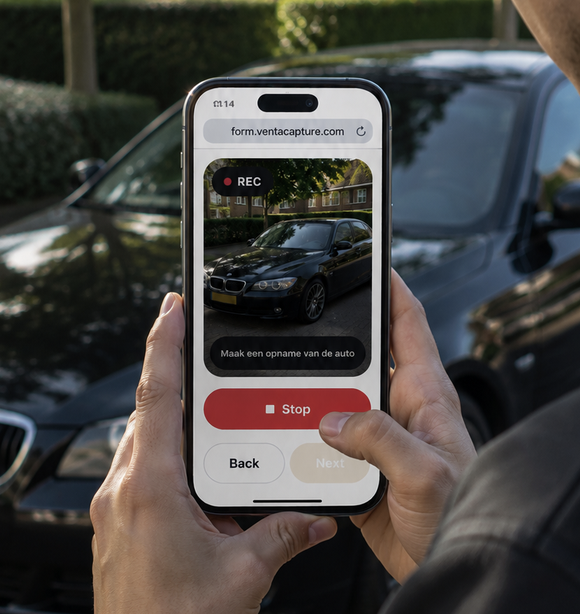
Venta Capture, a product of VentaVid, sends the customer a guided capture link, so appraisals, intake and returns start with the vehicle you can actually see.
What does digital retailing mean in practice?
The defining word is deal. A website with stock on it is merchandising. A form that sends an enquiry to the sales desk is lead generation. Digital retailing starts at the point where a customer can put together a structure they could actually sign: a specific car, a specific monthly payment, a specific deposit and a specific allowance for their own car.
Cox Automotive, which sells tooling in this category and therefore defines it narrowly, describes digital retailing as letting dealers and shoppers start a deal online and finish it in store, with real payments, taxes and fees, part exchange value and finance products in the mix.

How digital retailing differs from ecommerce
- Ecommerce completes the transaction end to end with no human intervention required.
- Digital retailing assumes a handover point. The deal is built online and finished by a person, which is why the numbers have to survive the transition intact.
- A digital showroom displays stock and specification, but does not price a deal.
- A lead form collects an enquiry and starts the process again from zero at the desk.
Most dealer groups describe themselves as doing ecommerce and are in fact doing digital retailing, which is not a criticism. It reflects what buyers do: online car buying is overwhelmingly hybrid in practice.
What sits inside the stack
- Payment calculator. Real finance products, real rates, real terms, not an illustrative APR.
- Part exchange valuation. Registration, mileage, condition input, and a figure the desk will honour. Covered in detail under trade-in appraisal.
- Credit application. Prequalification or a full application, with affordability and identity checks.
- Add on products. Warranty, paint protection, service plans, presented with prices rather than as a surprise in the business office.
- Reservation. A deposit that removes the car from the market for a set period.
- Handover into the DMS. The step that decides whether any of the above was worth building.
Digital retailing example: the desk that disagrees with the website
A customer builds a deal on the dealer site at 312 pounds a month, including a 7,900 pound allowance for her car, and drives over to sign it. The sales executive opens a fresh worksheet, re quotes at 341 pounds, and explains that the website figure was indicative.
She has now had two prices from the same business inside an hour. Nothing in that exchange was dishonest, and the deal may well still close. But the tool has cost trust rather than built it, which is the most common way digital retailing fails.
The gap between what buyers want online and what they get
Cox Automotive's 2025 Car Buyer Journey study, based on 2,300 US buyers surveyed in autumn 2025, measured this precisely. 37 percent of buyers wanted to finalise the purchase price online and only 19 percent did. 48 percent wanted to apply for credit online and 33 percent did. 40 percent wanted to select finance and insurance products online, and just 16 percent managed it.
The same body of Cox research found that the number of dealers offering every purchase step online has doubled in two years. Availability is improving faster than completion, which suggests the obstacle is less about the tools existing and more about whether the process behind them holds together.
Where digital retailing runs into limits
Three problems account for most failures, and none of them is a software problem.
- The part exchange. A remote allowance built on a handful of self reported answers gets revised on handover day, and the revision undoes the goodwill the whole online journey earned.
- Condition of used stock. The more of the deal that happens before anyone sees the car, the more weight the description carries, which is the same exposure described under sight unseen sale. In many markets the consumer also holds a cancellation right on distance sales, the UK under the Consumer Contracts Regulations 2013 and the EU under Directive 2011/83/EU, though the detail varies by country and by how the contract was concluded.
- The handover. If the desk starts again from scratch, the customer's online effort is simply deleted, and they notice.
Judged properly, digital retailing is not measured by how many steps are available online. It is measured by how few of them have to be repeated in person.
In practice: see how car dealerships use Venta Capture.