
What is a field engineer: field engineer explained
A field engineer is a technically qualified person who works at customer sites rather than from a fixed workshop or office, installing, commissioning, diagnosing, repairing and certifying equipment or infrastructure where it actually sits. The role pairs hands-on technical skill with decisions made alone, on site, usually under time pressure.
For field service
Know what the job needs before the van rolls
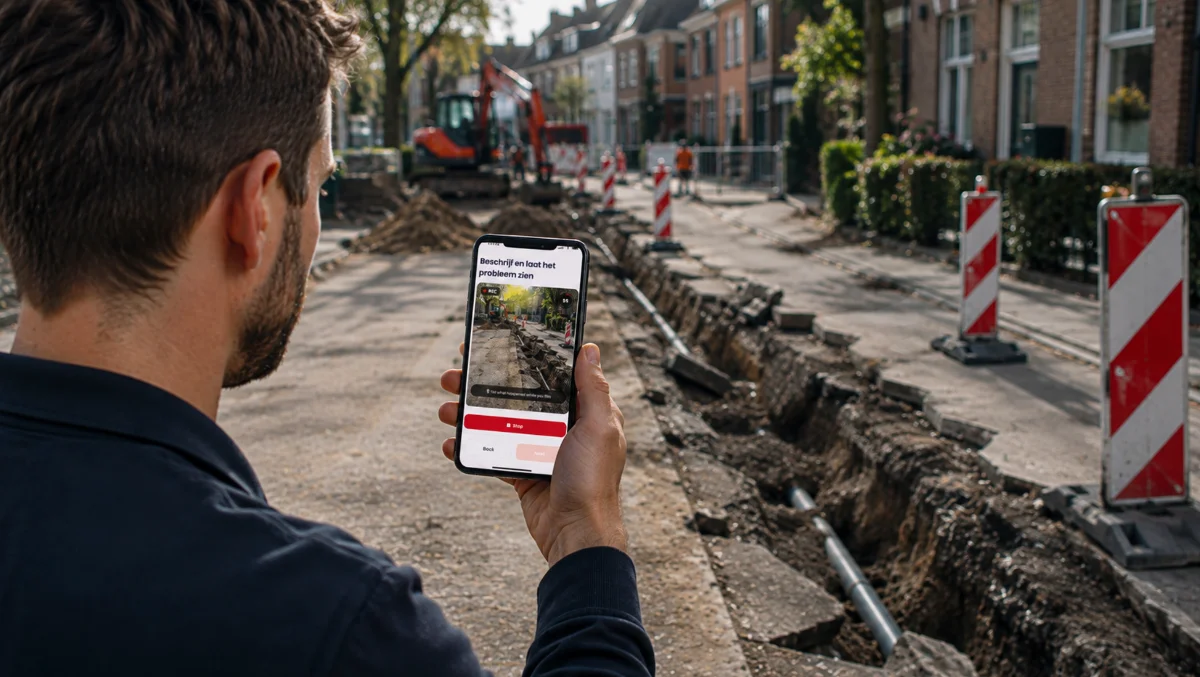
Venta Capture, a product of VentaVid, lets the customer show you the fault first, so the engineer arrives with the right part or does not need to arrive at all.
The same job gets advertised as field service engineer, service engineer, field technician, or just FSE. The title shifts by industry and by country. The work does not shift much: someone with the training travels to the thing that needs attention, because the thing cannot travel to them.
What does a field engineer actually do?
Most of the job falls into five buckets, and a single visit can touch several of them.
- Install and commission. Put new equipment in, set it up, prove it performs to specification, hand it over with documentation.
- Diagnose. Work out why something failed, which is rarely the same as what the caller reported.
- Repair or replace. Fix it, or swap the failed part, with whatever is on the van.
- Inspect and certify. Carry out scheduled checks and sign the record that says the asset is safe or compliant to operate.
- Report. Close the job with evidence: readings, photographs, parts used, time on site, and what the customer was actually told.
That last one is the bucket engineers most often shortchange, and the one that causes the most trouble months later when a dispute lands. It is why proof of work has become its own discipline in service organisations.

Field engineer or field technician: where is the line?
In practice the two titles overlap heavily and plenty of employers use them interchangeably. Where organisations do draw a line, it runs along scope of judgement rather than hands-on skill.
- Field technician. Executes defined procedures: the work instruction, the checklist, the planned maintenance schedule.
- Field engineer. Also executes, but is expected to diagnose novel faults, deviate from a procedure with justification, advise the customer on options, and sign off technical outcomes.
Two things blur the picture. In several countries "engineer" is a protected professional title tied to a register, so the person attending a service call is legally a technician no matter what the job advert said. And "sales engineer" is a different role entirely: pre-sale technical support, not on-site repair.
A field engineer's day: a worked example
An engineer covering commercial refrigeration takes three jobs. The first is a supermarket display case reported as "not cooling", which turns out to be a choked condenser and a dead fan, sorted in forty minutes. The second is a planned inspection with a certificate to sign at the end. The third was booked as a compressor replacement, but the compressor on the van is the wrong displacement, so the job goes back on the schedule and the customer waits another week. That third job is the one the whole industry is trying to design out.
What the job depends on before anyone arrives
Field engineering has an awkward property: most of what decides whether a visit succeeds is settled before the engineer leaves the depot. Four inputs carry the most weight.
- Correct asset identity. Make, model, serial number, firmware version. Wrong identity means wrong parts.
- Real fault evidence. A verbal description of a fault is not a fault. An error code on a display is.
- Site conditions. Access, parking, working height, isolation points, and who holds the keys.
- Safety documentation in place. A risk assessment, a method statement where the work needs one, and a permit where the activity is one that a permit governs.
That last point is not administrative decoration. Where the work involves height, the UK Health and Safety Executive states that the purpose of the Work at Height Regulations 2005 is "to prevent death and injury caused by a fall from height", and that duty holders must make sure work is "properly planned, supervised and carried out by competent people". The specific legal instruments differ by country and by industry, but the sequence of plan first, then work, is close to universal.
How is a field engineer's performance measured?
Individual scorecards are contested and easy to game, so most service organisations measure the visit rather than the person.
- First-time fix rate. The share of jobs closed on the first visit with no return needed. See first-time fix rate for how it is calculated and how it gets gamed.
- Repeat visits per job. How many times someone had to go back.
- Avoidable dispatch. Visits that never needed to happen. See truck roll.
- Mean time to repair. Elapsed time from report to working asset, not time on site.
- Documentation completeness. Whether the job record would let a different engineer pick it up cold.
Good service managers pair these with something the numbers miss entirely: whether the engineer left the customer understanding what happened and what comes next.
Where field engineers work
The role turns up wherever assets are distributed, expensive and unwilling to move: utilities (water, gas, power networks), HVAC and refrigeration, medical devices and lab equipment, lifts and escalators, telecoms and broadband, industrial machinery, renewables, marine, and property maintenance. The technical content varies enormously across those sectors. The operating pattern, one qualified person alone at a location deciding what to do, does not.
The pressure on the role is consistent too. Experienced engineers retire faster than new ones are trained, travel time eats a large share of the working day, and every unnecessary visit costs a slot that a genuinely broken asset needed. That is why so much service investment now goes upstream of dispatch rather than into the visit itself, through remote diagnostics and better information gathering before anyone is scheduled.
In practice: see how field service teams use Venta Capture.