
Image forensics, defined: what the discipline examines and how far its findings actually reach
Image forensics is the examination of a digital image or video file to establish how it was produced and whether anything about it has been altered since the moment of capture. Analysts work from metadata, compression history, sensor noise, lighting and physical consistency, and the output is a set of indications rather than a verdict.
The spelling varies by region. Image forensics, photo forensics, forensic image analysis and multimedia forensics all describe the same field, which sits inside the wider discipline of digital forensics.
What does image forensics mean in a claims context?
For a claims investigator it means answering three questions about a file that arrived by email, WhatsApp or a portal upload. Where did it come from, has anything happened to it since it was recorded, and does what it shows agree with the rest of the file.
The third question is often the most productive and the least technical. A photo of storm damage with dry ground behind it is a problem no compression analysis is needed to see.
How does image forensics work?
- Metadata examination: EXIF fields record camera make and model, capture settings, software history and sometimes GPS coordinates. Missing or rewritten metadata is common in genuine files too, because messaging apps strip it routinely.
- Compression analysis: JPEG images carry a history of how many times they were saved and at what quality. Inconsistencies across a frame can indicate a pasted region. They can also indicate an ordinary re-save.
- Noise and sensor analysis: every camera sensor leaves a faint characteristic pattern. Where a pattern is absent in one region and present elsewhere, something was inserted.
- Copy-move detection: automated searching for duplicated regions within a single image, the tell of cloning a patch of bumper or a section of roof.
- Physical consistency: shadow directions, reflections, perspective and vanishing points. This is where the most defensible findings usually come from, because physics is harder to argue with than an artefact map.
- Provenance and reuse checks: reverse image search and hash matching against known files, to catch material that was never the claimant's to begin with.
Image forensics explained: a worked example
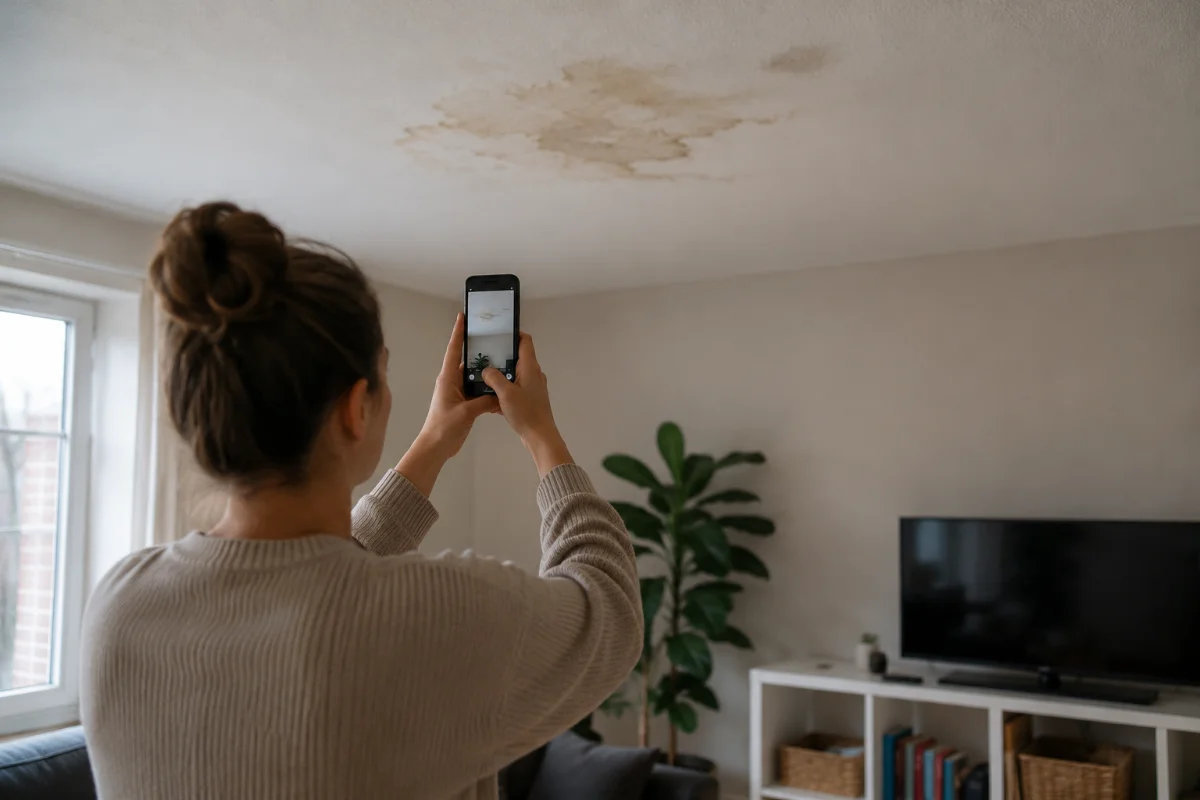
A household claim arrives with three photographs of a damaged kitchen ceiling. Two carry full EXIF data from the same phone, taken four minutes apart. The third has no EXIF at all and a slightly different colour profile.
That difference is a reason to ask a question, not a finding. The claimant may have sent the third image through a messaging app that stripped the metadata, or screenshotted it, or received it from a neighbour. The investigator's job is to ask where that file came from and to note the answer, not to declare the image manipulated because a field is empty.
What image forensics cannot tell you
This matters more than the technique list, because the failure mode in claims work is over-reading a result.
- A negative result is not proof of authenticity: finding no manipulation means the analysis found no manipulation. A competent edit, a lossless format, or a re-encode that flattens the evidence all produce clean results on manipulated files.
- Most single techniques carry high false positive rates: error level analysis is the notorious case, and it is not the only one.
- Detection is an arms race: every published detection method becomes a target for the next generation of tools. Methods that worked reliably on 2019 image generators degrade against 2026 ones, and the same is true in reverse as detectors are retrained.
- It rarely tells you when: an image can be shown to be internally inconsistent without any indication of when it was recorded or when it was altered.
- It does not read intent: a cropped, brightened, filtered photo from a genuine claimant is altered, and entirely innocent.
How image forensics differs from image authentication
Forensics asks a file to give itself away after the fact. Authentication asks the capture system to vouch for the file at the moment it was made, through cryptographic signing at source. The Coalition for Content Provenance and Authenticity publishes the main open standard for this, and Leica's M11-P, released in October 2023, was the first consumer camera to sign images with it in hardware.
The distinction is worth holding onto, because the two approaches age in opposite directions. Forensic detection gets harder as generation improves. A signature made at capture does not become less checkable because a better image generator was released.
Where image forensics belongs in a claims workflow
Treat it as triage that earns a closer look, never as the thing that settles a claim. A signal is a reason to ask the claimant a question, request a retake, or escalate to an SIU referral, and every one of those actions survives being wrong. A decline based on an artefact map does not.
The most reliable checks are also the cheapest. Does the image agree with the FNOL narrative, the repair estimate, the weather record and the other photos in the file. Cross-referencing beats pixel analysis on most real files, and it is defensible in front of an ombudsman. The wider standards are set out in photo evidence in insurance claims, and the manipulation patterns in shallowfake and synthetic media.
Venta Capture, a product of VentaVid, sits on the provenance side of that line rather than the detection side: the claimant records in the mobile browser at the moment of capture instead of uploading from a gallery, and the submission arrives with a server-side receipt time, a cryptographic digital fingerprint and a session timeline attached. That is a stronger position than trying to catch manipulation afterwards, and it is not a guarantee. A genuine live recording can still show a staged scene, and harder to manipulate has never meant impossible to deceive.
In practice: see how insurers use Venta Capture for remote claim inspection.