
Touchless claims, defined: a claim settled without a site visit, or in the strict sense without any human handling at all
A touchless claim is, in the broad sense, a claim settled without anyone from the insurer visiting the loss: the policyholder supplies the evidence, and a handler decides from the desk. In the strict sense the term means more than that: the claim runs from notification to payment with no handler touching it, because rules and models do the reading and the deciding on evidence the policyholder submitted.
The two senses matter because most programmes that call themselves touchless are the first kind, and the metrics get quoted as if they were the second. Before comparing numbers, ask which touch was removed: the drive to the property, or the person at the desk.
The two senses of touchless, side by side
- No human visit. The field adjuster's trip is removed. A desk handler still reviews the photos, the video and the answers and authorises the repair or the payment. This is remote adjusting with a new name, and it is where most carriers actually are.
- No human touch. The handler is removed too. Intake questions, evidence checks, a photo estimate and a payment rule run end to end, and a person only sees the claim if it falls out of the rules. This is straight through processing applied to the whole claim, and it only works for a narrow band of simple, low-value, well-evidenced losses.
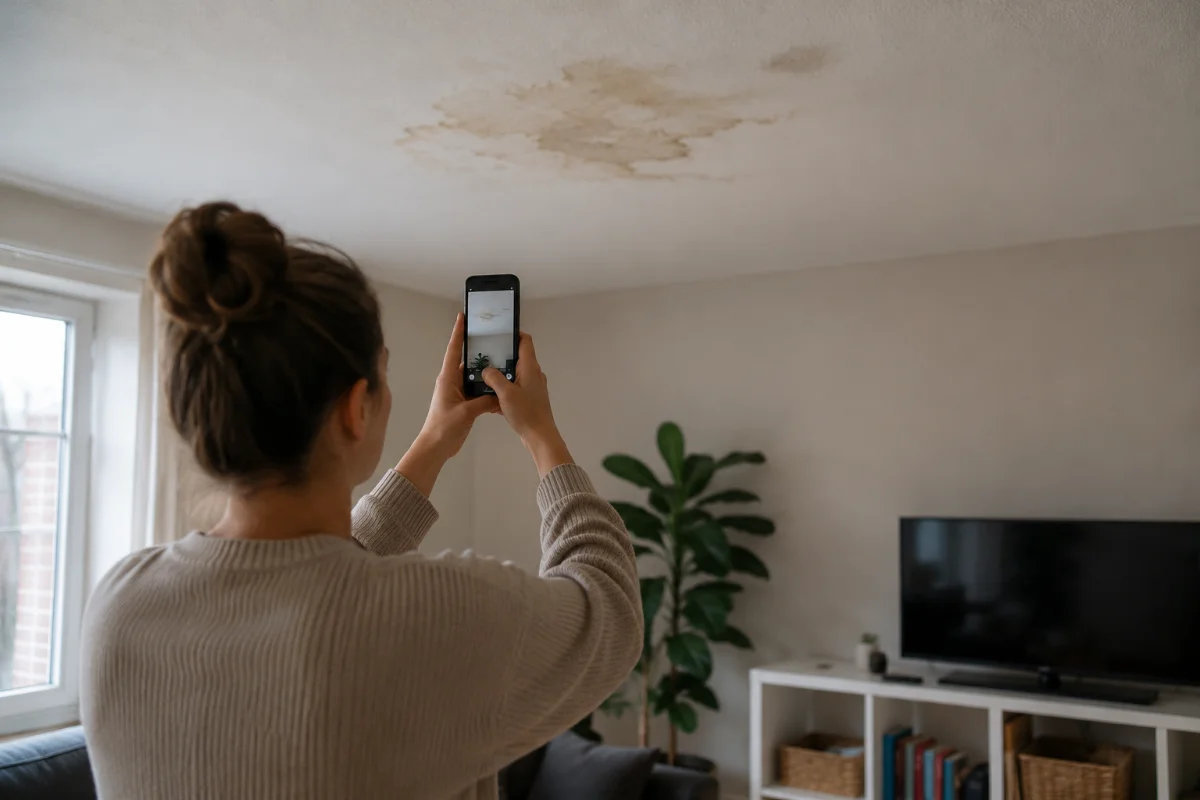
How a touchless claim works
The sequence starts at FNOL. The policyholder notifies through an app, a portal or a link, answers structured questions about the peril and the damage, and is guided through capturing the evidence on their phone. The system checks the policy is in force and the peril is covered, checks the evidence is complete and shows no signals worth a human look, and then either estimates and pays within a threshold or routes the claim to a handler with the file already built.
Everything downstream depends on the quality of that first submission. If the photos are the wrong angle, undated or chosen from a gallery, the rules cannot trust them and the claim falls back to a person. Touchless is therefore less a claims technology than an evidence technology: the automation is only as good as the capture that feeds it.
Touchless claims example: a cracked windscreen and a stolen bicycle
A motor policyholder reports a stone chip that has spread into a crack. The flow asks for the whole windscreen from outside, a close-up of the crack with a coin next to it for scale, the registration plate, and a yes-or-no on whether the crack is in the driver's line of sight. The images arrive recorded in the session, timestamped on receipt and sealed. The rules confirm glass cover, match the plate to the policy, and authorise a replacement with the approved glazier the same hour. No handler opened it. That is the strict sense.
A contents policyholder reports a bicycle stolen from a shed. The flow captures the broken hasp, the empty shed, the crime reference number and a photo of the receipt. The value sits above the automatic threshold, so the claim lands with a handler, who settles it from the desk that afternoon. Nobody visited, but a person decided. That is the broad sense, and it is the more common outcome.
What touchless claims do not do, and the mistakes teams make
Touchless does not mean unchecked. A claim that pays without a human looking at it has to be checked harder by the system, not softer: server-side receipt times, a file fingerprint on arrival, device and session signals, and a rule that anything amber goes to a person. Removing the handler without adding those checks is an invitation to opportunistic claims.
It does not fit every claim. Large losses, injury, disputed liability and anything structural still need a person, and often a visit. The honest scope is the simple, frequent, low-severity perils where speed matters more to the customer than a conversation.
The mistakes are predictable. Counting every remote settlement as touchless and reporting it as automation. Building the automated path on emailed photos with no provenance, so the fraud team switches it off within a quarter. Requiring an app install at notification, so the customers who most want the fast path drop out of it. And treating the human fallback as a failure rather than the design: a clean triage into a handler's queue, with the evidence already structured, is most of the cycle-time gain even when the payment is not automatic.
Where the evidence goes
Because no person reads the file at the time, the file has to be able to defend the decision later. The submission, the answers, the timestamps, the integrity record and the rule version that approved it belong together on the claim in the core platform, unaltered and verifiable, so an audit, a complaint or a subrogation months on can see exactly what the system saw. A sealed submission is the practical form of that. The intake side is covered in FNOL automation.
Venta Capture, a product of VentaVid, supplies the evidence layer a touchless path rests on: the policyholder is sent a link, follows the guided steps in the mobile browser with no app and no account, and the submission arrives timestamped and digitally sealed, with signals for a person to weigh, ready to hand to the claims platform. See the remote claim inspection flow.
In practice: see how insurers use Venta Capture for remote claim inspection.