
What is reverse logistics: the term explained
Reverse logistics is the physical and financial flow of goods travelling backwards through a supply chain, from the customer towards the seller, manufacturer, refurbisher, or recycler. It covers the transport, the receiving, the inspection, and the decision about what happens to every item that comes back.
What does reverse logistics cover?
Forward logistics moves product towards demand: one origin, many destinations, predictable volumes, uniform packaging. Reverse logistics runs the other way and breaks all four of those properties. Many origins, one destination, unpredictable volume, and every item arriving in a different condition.
That is why it costs more per unit than the forward journey. You cannot batch what you cannot predict, and you cannot handle at speed what has to be individually assessed.
The flow is not only consumer returns. It also carries warranty returns, recalls, end of lease equipment, trade ins, dealer stock rebalancing, faulty components going back to a supplier, packaging, and end of life goods heading for recycling.

How does reverse logistics work?
- Authorisation and collection. A return reference exists, a label or collection is generated, and the item enters the network.
- Consolidation. Individual parcels are gathered at drop off points or hubs so the long haul leg is not run one parcel at a time.
- Receiving. The item is matched to its reference and its stated reason. Unmatched arrivals are one of the more expensive things that happen in a returns centre.
- Inspection and grading. Condition is assessed against a grade scale: as new, open box, used, damaged, faulty, beyond economic repair.
- Disposition. The decision about where the item goes next.
- Financial settlement. Refund, supplier recharge, warranty recovery, stock revaluation, and write off.
The disposition decision
Disposition is where most of the recoverable value is won or lost, and it is a per item judgement:
- Restock at full value, only if the item is genuinely as new and the packaging survived.
- Refurbish and resell through a secondary channel at a lower price.
- Repair under warranty and return to the original customer.
- Harvest for parts where the whole unit is not economic.
- Liquidate in bulk to a clearance buyer.
- Recycle or dispose, increasingly under producer responsibility rules that make disposal a compliance question as well as a cost.
Every day an item sits between receiving and disposition, its recoverable value falls. In seasonal and technology categories that decay is steep enough that speed of grading matters more than accuracy of grading.
How reverse logistics differs from returns management
Returns management is the customer facing process: the request, the policy, the authorisation, the refund, the communication. Reverse logistics is what happens to the object.
The clean split: returns management decides whether an item comes back and what the customer is owed. Reverse logistics decides where the item goes and what it is still worth. They share a reference number and very little else, which is exactly why the handover between them is where information gets lost.
Reverse logistics explained: forty units back from one retailer
A retailer returns 40 units of a kitchen appliance, all coded as faulty. At the returns centre, 11 are genuinely defective, 19 power on and pass test, 6 have damaged outer packaging but intact product, and 4 are missing accessories.
Four different dispositions, four different costs, and only the first 11 should ever have travelled. The other 29 each consumed a collection, a transit leg, a receiving slot, and a grading bench before anyone established that.
Where the cost concentrates
Volume is the reason this became a board level topic. The National Retail Federation, with Happy Returns, projected 849.9 billion dollars of United States retail returns in 2025, or 15.8 percent of annual sales, and 19.3 percent of online sales. Every one of those units enters a reverse flow that was designed, if it was designed at all, after the forward one.
The cost concentrates in three places: transit on single items, the labour of individual inspection, and the value lost between the moment an item leaves the customer and the moment it is finally graded. Only the third is really recoverable by working faster.
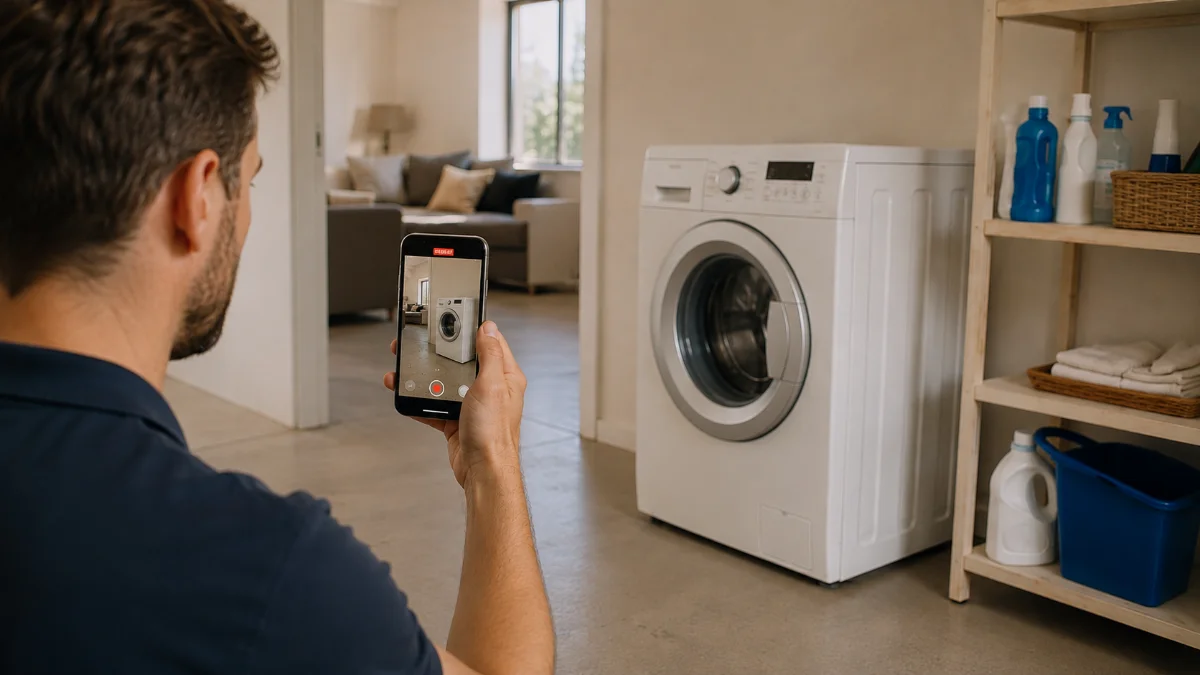
The fourth cost is the one that never shows up in a reverse logistics budget, because it belongs to the units that should not have moved. When the item is assessed visually before the label is issued, through the same visual support methods a service desk uses, the grading decision starts earlier and some of the journey is avoided entirely. Warranty flows work the same way: a covered or not covered call made from evidence, as described under warranty support, decides whether the unit travels as a repair, a replacement, or not at all.
In practice: see how customer support teams use Venta Capture by VentaVid.