
Returns management explained: the customer facing half of a return
Returns management is the customer facing process a business runs when a customer wants to send goods back. It covers taking the request, deciding whether it is accepted, authorising it, arranging the return journey, and settling the outcome as a refund, a replacement, or a repair.
What does returns management cover?
It starts at the moment a customer decides something is going back and ends when the money or the replacement has moved. Between those two points sit the policy, the decision, the authorisation, the label, the tracking, and the communication.
The policy is doing more work than most teams admit. Window length, condition requirements, who pays the postage, what counts as faulty, what needs proof: those choices set both the return rate and the cost of every return that follows.
The volumes involved are why the function has its own department at all. The National Retail Federation, working with Happy Returns, projected total United States retail returns of 849.9 billion dollars in 2025, equal to 15.8 percent of annual sales, with an estimated 19.3 percent of online sales returned. The same 2025 Retail Returns Landscape report found that 9 percent of all returns are fraudulent, and that 82 percent of consumers treat free returns as an important factor when shopping online.
That last figure is the tension the function lives inside. Easy returns sell more and cost more, and the policy sits between those two facts.

How does returns management work step by step?
- Request. The customer states what is going back and why, through a portal, an email, or a call.
- Validation. Order lookup, window check, condition check, and a reason code. This is where an avoidable return can still be stopped.
- Authorisation. A return merchandise authorisation number, usually shortened to RMA, is issued. It is the reference everything downstream is tracked against.
- Transit. A label or collection is arranged and the parcel moves.
- Receipt and inspection. The item arrives, is checked against the stated reason, and is graded.
- Settlement. Refund, exchange, credit, or repair, plus the record of what actually came back.
How returns management differs from reverse logistics
These two are often used as synonyms and they describe different halves of one problem. Returns management is the customer facing process: the request, the rules, the decision, the communication, the money. Reverse logistics is the physical and financial flow behind it: transport, receiving, inspection, grading, restocking, refurbishment, resale, recycling, disposal.
One way to hold the distinction: returns management decides whether an item comes back and what the customer is owed. Reverse logistics decides where the item goes and what it is still worth. Different owners, different metrics, one shared record.
Returns management explained: a monitor that was never faulty
A customer reports that a monitor arrived with no picture and requests a return. The agent asks for a short guided capture instead of issuing the label immediately: the screen, the cable at both ends, the port it is plugged into, and the serial label.
The clip shows the cable seated in the wrong port. The customer moves it, the monitor works, and the return never happens. The same three minutes would otherwise have produced a collection, a transit leg, a receiving inspection, a restock, and a refund on a product with nothing wrong with it.
Which returns are avoidable
Not all of them, and pretending otherwise leads to policies that just make returning things unpleasant. But a meaningful share of returns fall into categories where seeing the item first changes the outcome:
- Not actually faulty. Setup, configuration, or usage issues reported as defects. These come back, test clean, and get restocked at full handling cost.
- Wrong remedy. A whole unit returned when a part, a setting, or a five minute fix would have resolved it.
- Wrong route. An item that should have gone to warranty support for repair, gone for exchange, or stayed with the customer pending a part.
- Transit damage claims. Where condition on arrival decides who pays, and the evidence is a photo taken after the packaging went in the bin.
Reason codes are the honest way to find out which of these you have. A returns operation where 40 percent of items are coded "faulty" and 25 percent of those test clean has a diagnosis problem, not a product problem.
What returns management is measured on
- Return rate by channel, category, and product line.
- No fault found rate among items returned as faulty.
- Time to refund, which drives satisfaction more than almost anything else in the process.
- Cost per return, including handling, transit, and value lost on the item.
- Recovery rate, the share of original value the returned item still realises.
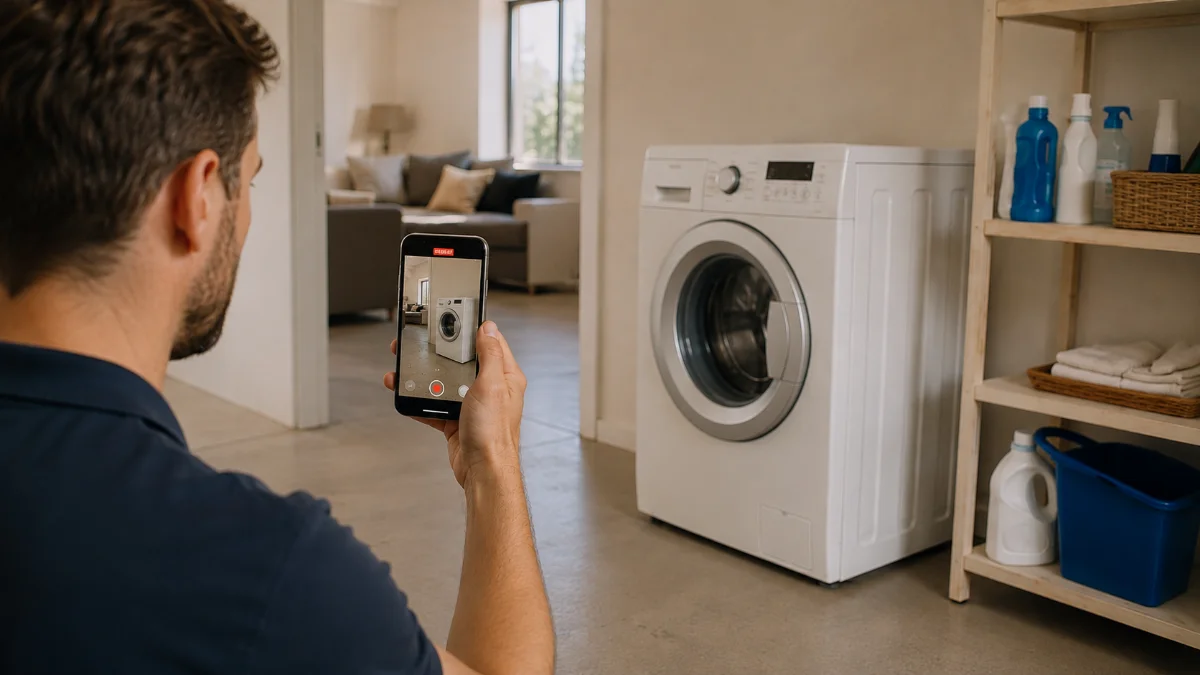
Seeing the item before it ships back is the specific job guided capture does here. Venta Capture, a product of VentaVid, sends the customer a link, walks them through showing the product, the fault, the packaging and the serial number in their phone browser, and returns a structured case the returns team can decide from. Some of those cases end in a return authorisation. Some end in a fix that was never a return at all. The same guided photo capture approach is what keeps the evidence consistent enough to act on.
In practice: see how customer support teams use Venta Capture.