
What is warranty support: the function explained
Warranty support is the function that handles contacts about products failing inside their warranty period, establishes whether the reported fault falls within the terms, and turns a covered fault into a repair, a replacement, a part, or a refund. It sits between customer service and the manufacturer's claims process.
What does warranty support cover?
Three questions, in order, and the order matters:
- Is it still in warranty? Date of purchase or of installation, the term length, whether the term is calendar based, usage based, or both.
- Is this fault covered? Manufacturing defect and premature failure usually yes. Wear items, accidental damage, misuse, unauthorised modification, missed servicing and consequential loss usually not.
- What is the remedy? Repair, replacement, a shipped part, a credit, or a refund, depending on the terms, the cost of each route, and how far into the term the failure sits.
Behind those sits a fourth question the customer never sees: who pays. The retailer, the manufacturer, a component supplier, or an extended warranty provider, and whether the cost can be recovered up the chain.

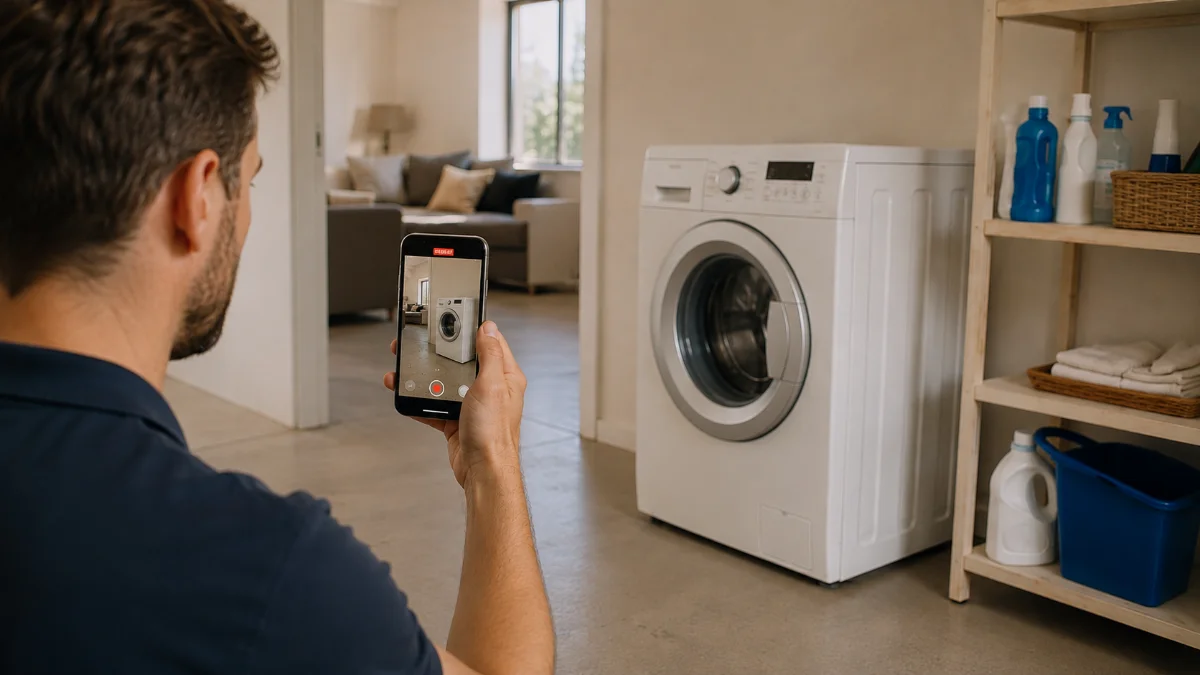
How a warranty contact moves through the process
The customer reports the fault and gives proof of purchase. An agent verifies coverage. The fault is then assessed, which is where most of the cycle time goes, because assessment usually means either a description over the phone, a set of photos the customer chose, or someone physically looking at the item.
A decision follows: covered, not covered, or needs more information. Covered cases get a claim reference, a repair booking, a replacement despatch, or a return authorisation. Rejected cases need a reason the customer can understand, because a badly explained rejection is a complaint and often an escalation.
How warranty support differs from ordinary customer support
General support is trying to resolve an issue. Warranty support is trying to resolve an issue and simultaneously build a defensible record about a contractual obligation. That second job changes the work.
The evidence has to survive later scrutiny, because the claim may be recharged to a manufacturer or a supplier who was never on the call. Decisions have to be consistent across agents, because inconsistent adjudication becomes a pattern customers notice and regulators sometimes ask about. And the outcome carries direct cost in a way a password reset does not.
The scale of that cost is not small. In its 23rd Annual Product Warranty Report, the industry publication Warranty Week found that United States based manufacturers paid 30.37 billion dollars in warranty claims during 2025 and held 71.89 billion dollars in warranty reserves at year end. The vehicle sector alone accounted for 20.81 billion dollars of claims paid, 69 percent of the total.
Warranty support explained: a compressor that failed in month 14
A customer reports that a commercial fridge has stopped cooling, 14 months into a 24 month warranty. The agent confirms the term and asks for the fault to be shown: the unit, the model plate, the display, the condenser coil, and the installation space around it.
The coil turns out to be packed solid with dust and the unit is installed 40 millimetres from a wall, against a documented 150 millimetre clearance requirement. That is a maintenance and installation issue rather than a component defect, and the agent can now explain the rejection with something the customer can see rather than with a clause number.
What warranty support is measured on
- Time to decision. Contact to covered or not covered, which is the number customers experience as the whole process.
- No fault found rate. Items returned or repaired that turn out to have nothing wrong with them. High rates almost always point at a diagnosis problem upstream, not a product problem.
- Claim recovery rate. The share of costs successfully recharged to the responsible party, which depends almost entirely on the quality of the record.
- Rework and repeat claims. The same unit coming back for the same fault.
- Cost per claim. Parts, labour, freight, and the handling time itself.
Where the evidence problem sits
Nearly every failure mode in warranty support traces back to the same thing: the person deciding cannot see the item. A written description cannot distinguish a manufacturing defect from misuse, and a photo the customer picked rarely shows the clearance, the serial number, and the installation context at once.
That drives three expensive outcomes: items shipped back that did not need to be, technicians dispatched to faults they cannot fix on the first visit, and claims paid or rejected on thin evidence. Structured visual evidence collected at the point of contact addresses all three, which is why warranty teams increasingly use the same visual support methods as service desks. In automotive aftersales the same logic runs through warranty claim inspection, where the covered or not covered decision hinges on what the technician can actually see.
Where the remedy is a replacement rather than a repair, warranty support hands off into returns management, and the item enters the reverse logistics flow with a claim reference attached to it.
In practice: see how customer support teams use Venta Capture by VentaVid.