
What is an RMA: return merchandise authorisation explained
A return merchandise authorisation (RMA) is the approval a supplier issues before a customer ships an item back, carrying a reference number that ties the returning unit to a specific fault, order and outcome. No number, no return. It is also the last cheap moment to ask whether the item needs to travel at all.
What does RMA mean on a returns desk?
It does two jobs. It records a decision (yes, send it back, and here is what happens on arrival), and it creates a reference that follows the box to your goods-in bench. You will meet the same control as a return authorisation (RA), a goods return note, or the American spelling, return merchandise authorization.
Skip it and goods-in receives a carton with no order reference, no fault description and no owner. The customer then waits for a credit nobody can raise, because nothing says the unit was coming.

How does the RMA process work?
- Request. The customer, dealer or field engineer reports a fault with the order reference, the serial number and the symptom.
- Eligibility check. Is the unit yours, is it inside warranty, is the request inside the returns window.
- Technical assessment. Someone qualified decides whether the symptom points at a returnable fault, a settings problem, a spent consumable, or an installation error.
- Issue. The number goes out with shipping and packaging instructions, a return address and an expiry date.
- Receipt and inspection. Goods-in matches the box to the open RMA, checks the serial against the one authorised, and records condition.
- Disposition. Repair, replace, credit, scrap or reject, with the reason coded so the failure data is worth something.
Two details decide whether this stays tidy: an expiry date, because open RMAs running forever make the returns liability unreadable, and the rule that the serial received must match the serial authorised.
What a good RMA process checks before the number is issued
The authorisation is the gate. Once the number exists, freight, handling, inspection labour and usually a replacement shipment are committed, so the useful questions come before it:
- Is there actually a fault? No fault found is the most expensive outcome in after-sales. Full return cost, nothing recoverable, and a customer still without a working machine.
- Is this the right part? A failed control board and a failed transformer look identical from the front panel. Returning the wrong one costs two shipments.
- Can it be resolved where it stands? A blown fuse, a wrong voltage tap, a loose connector, a filter nobody changed. None of those need to travel.
- Is the unit yours, and is it in cover? The serial number and the date of manufacture answer both in seconds.
- Is it safe and legal to ship? Lithium cells, pressurised components and anything contaminated carry rules the customer will not follow alone.
- Is it worth the freight? On low-value parts the return costs more than the part, so scrap in field against photo evidence is the honest answer.
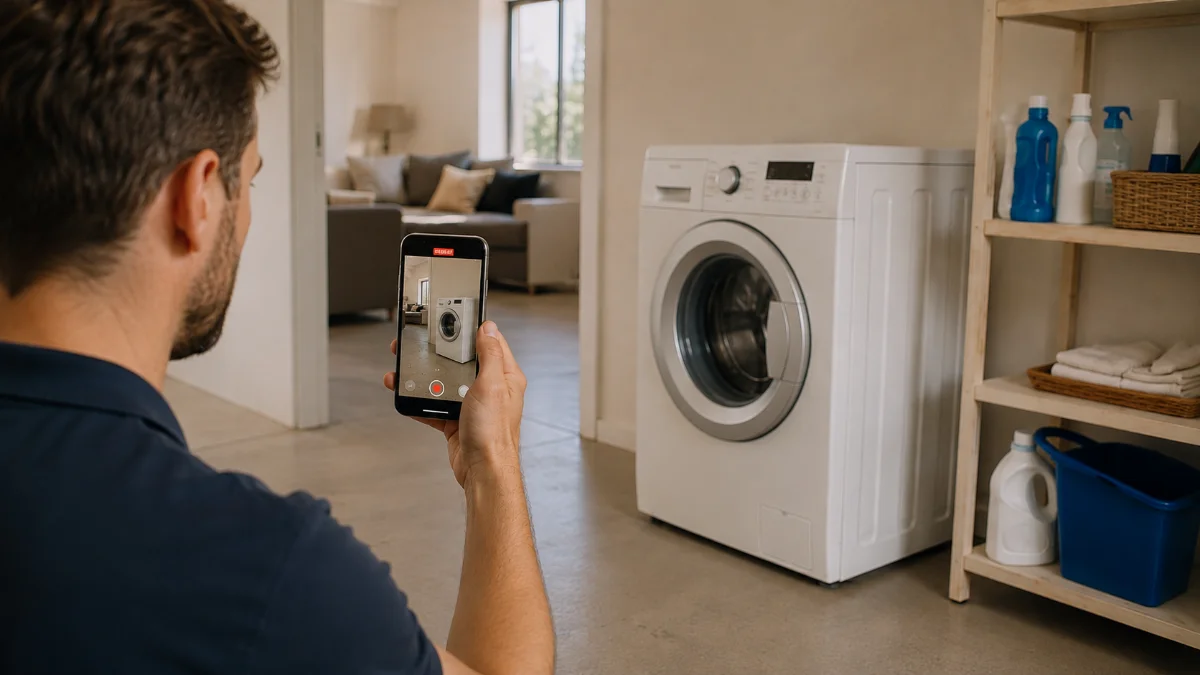
An RMA issued without anyone seeing the item is how unnecessary shipping happens. What reaches you by phone or email is a customer's reading of a symptom, wrong often enough that words alone cannot be trusted. A photo of the rating plate, the fault code and the damage turns a guess into an assessment, and the assessment keeps the box where it is.
The volumes make that worth doing properly. The National Retail Federation's 2025 Retail Returns Landscape put returns at 15.8% of annual US retail sales, 849.9 billion dollars, rising to 19.3% of online sales, with 9% judged fraudulent.
An RMA example from a spare parts desk
A catering distributor reports a dead control board in a commercial dishwasher and asks for a warranty replacement. Before issuing the number, the desk asks for two photos: the rating plate, and the board in place. The plate confirms a machine built eleven months earlier, but the second photo shows scorching around the mains terminal block, not the board.
The board was the symptom. A second one fitted to the same loose terminal would have failed the same way. One RMA is raised, the terminal block is repaired on site, and the returned board arrives with the root cause on the paperwork.
How an RMA differs from a warranty claim and a returns policy
These four get muddled constantly, usually in front of an unhappy customer:
- The returns policy is the rule set. What may come back, in what condition, within how long, who pays freight.
- The RMA is one decision made under that policy, for one unit, with a number attached.
- The warranty claim is the commercial question of who pays. A unit can be authorised for return and still fail the claim, through age, misuse or no fault found.
- The credit note is the accounting outcome, raised after inspection, never when the RMA is issued.
Reading an RMA as an automatic promise of credit is the biggest single source of returns disputes. Word it as authorisation to ship and be inspected, and the argument disappears. Wider process design sits under returns management, and the vehicle equivalent is our guide to warranty claim inspection.
When an RMA is the wrong answer
Sometimes the right decision is that nothing ships. Spent consumables, installation damage, parts cheaper than their own freight, and faults a five-minute guided check would clear are all cases where a number just moves the problem into a warehouse. Track the share of RMAs closing as no fault found. If it runs high, the fix is better information at the request, not a stricter policy.
Venta Capture, a product of VentaVid, is built for that moment: send a link, the customer records the rating plate, the fault code and the damage in a guided flow in their phone browser, and it arrives as a structured case with timestamps attached. It does not decide the claim. Your team still does, with the item in view instead of described.
In practice: see how customer support teams use Venta Capture.