
Spare parts identification explained: finding the right part for the right unit
Spare parts identification is the process of determining exactly which replacement part fits one specific unit, using the serial number, the build variant and the manufacturer's parts catalogue. It replaces guesswork from a description of what the broken part looks like. Get it wrong and you ship twice.
What does spare parts identification actually involve?
Four questions, in order, and skipping any of them is where the errors come from:
- Which unit is this? The model plus the serial number, because the model alone is rarely enough.
- Which build variant? The serial resolves the production window, and with it the supplier, revision and specification actually fitted.
- Which part failed? Named from the exploded diagram or illustrated parts catalogue, with its position number, not from a description of its appearance.
- Which part number ships today? The catalogue number, run forward through any supersessions.
Only the last one goes on the order. The first three are what makes it correct.

Why the same model needs different parts
Because a model name is a marketing label with a long life, and the thing behind it changes constantly. Manufacturers switch suppliers mid-run, revise a board to fix a fault, change a seal material, or build the same product in two factories with different sourcing.
None of that reaches the badge on the front. It reaches the serial number, which is why parts catalogues are indexed by serial range rather than by model. A pump that fitted every unit until serial 44,000 and a different pump afterwards is ordinary, not an edge case.
Supersessions, revision levels and kits
Part numbers do not stay still either. A superseded part number is one the manufacturer has replaced with a newer number, and the chain can run several steps deep, so the number printed on the component in front of the engineer may be two generations behind what actually ships.
- Direct supersession. The new number replaces the old, fits identically, and the old number simply stops existing.
- Conditional supersession. The new part fits only with an adapter, a new harness or a firmware update, and the catalogue note carrying that condition is the one everybody misses.
- Kit replacement. The individual part is no longer sold and only exists inside an assembly or service kit, which changes both the price and the labour time quoted.
- Backward incompatibility. The revised part fits later units only. Ordering forward without checking the serial range is the classic way to ship a part that physically will not go in.
A worked example from a parts desk
An engineer calls in a failed fan motor on a rooftop condensing unit and reads the number stamped on the motor. The desk finds it superseded twice, and the current number carries a note: the replacement uses a different connector and ships with a pigtail harness.
Ordered on the stamped number alone, that job needs a second visit for a harness nobody knew was required. The serial range check took under a minute and saved the return trip.
Where identification goes wrong on support calls
Almost always at the input, not at the lookup. The catalogue is usually right. What reaches it is wrong.
- The wrong number gets read out. Batch codes, EAN barcodes, approval numbers and supplier codes sit on the same plate and all look plausible over the phone.
- The described part is not the failed part. A caller reports the visible symptom, so a burnt-looking board gets ordered when the fault sits in the connector feeding it.
- The plate is unreadable. Faded, painted over, corroded, or facing a wall.
- The unit has already been repaired. A component fitted on an earlier visit no longer matches the assembly's own history, so catalogue and reality diverge.
- Nobody checks the mating parts. Gaskets, fixings and seals get discovered on site, with the van already unloaded.
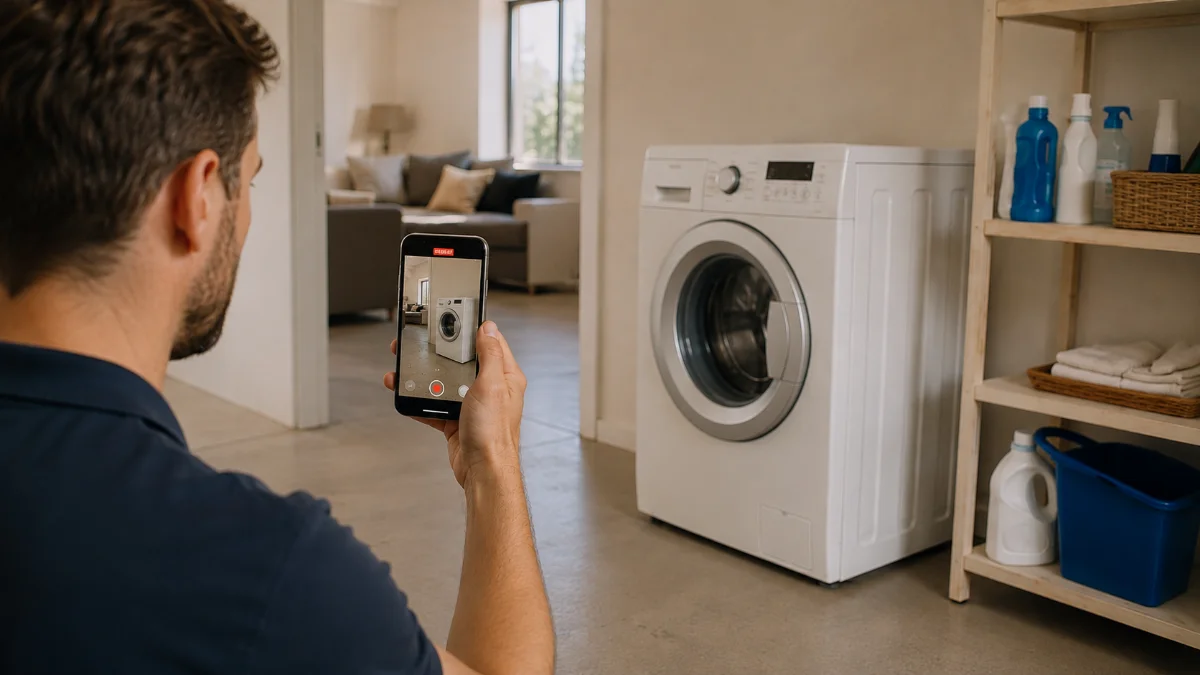
All five failures share one cause. The person holding the part and the person who can identify it are not looking at the same thing. That is also why photographs beat descriptions: a picture of the rating plate and a picture of the component in place carries more usable information than five minutes of careful spoken explanation, and it can be re-read when the first reading turns out wrong.
What the EU right to repair rules change
Identification is becoming a legal obligation as much as an operational one. Directive (EU) 2024/1799 on common rules promoting the repair of goods, published in the Official Journal on 10 July 2024 and applying from 31 July 2026, requires manufacturers to offer spare parts and tools at a price that does not deter repair, and bars them from using contractual clauses or hardware and software techniques to impede repair, including impeding independent repairers' use of original, second-hand, compatible or 3D-printed parts.
The practical consequence for an after-sales team: independent repairers will increasingly need to identify parts for equipment they did not sell, from a plate and a catalogue rather than from an internal record. Clear serial ranges and published supersession chains stop being a courtesy.
Making identification repeatable
Ask for images before you ask for numbers: the full rating plate rather than a transcribed serial, the component in place rather than a name, and the surrounding installation, because mounting orientation and connector type often decide the variant.
Then record what was fitted against the unit's serial, so the next call starts from evidence rather than memory. That record is what turns a repeat visit into a first-time fix, and it is the same discipline behind a clean RMA.
Venta Capture, a product of VentaVid, is the everyday version of that: a link sends the customer or engineer through guided capture in their phone browser, step by step, so the rating plate, the part number and the installation context arrive together as one structured case. The identification decision stays with your parts specialist. They just stop making it blind.
In practice: see how customer support teams use Venta Capture.